
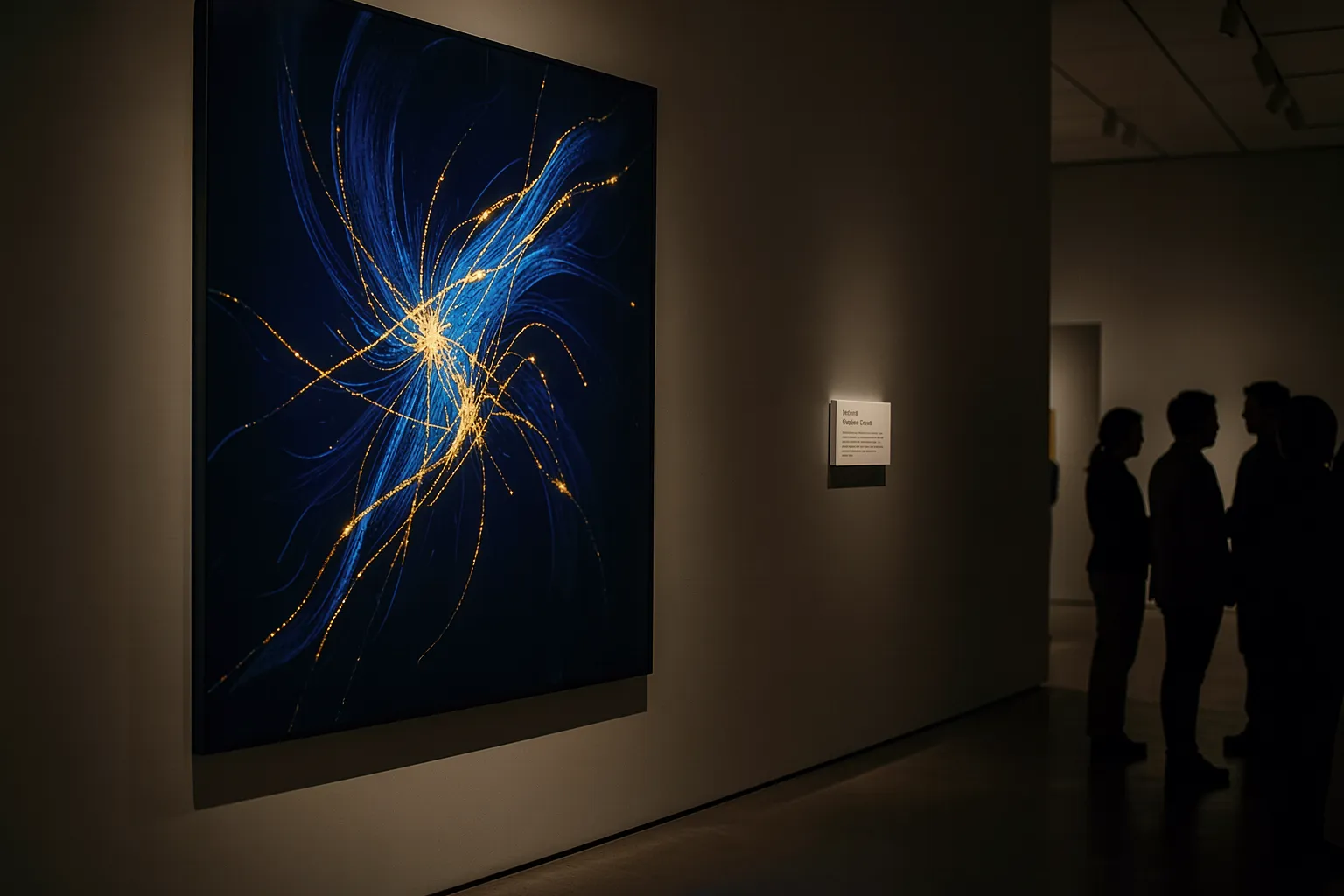
Walk into a major museum in 2026 and you notice a new line of wall text. Beside the artist’s name and the medium, a small tag now reads “AI-assisted” or “generative.” A quiet policy shift has become one of the loudest debates in contemporary art. Institutions, auction houses, and platforms all race to define how they label work made with machines.
This is not a footnote. Disclosure rules now shape what collectors buy, what curators show, and how artists describe their own practice. The art world spent years arguing about authorship. In 2026 it argues about transparency instead.
Why the label wars started
Collectors drove the first wave. Buyers wanted to know whether a “painting” came from a brush or a diffusion model. Auction houses answered with disclosure fields in their catalogs. Sotheby’s and Christie’s now flag generative works openly, and specialists explain the tools during previews. Transparency, it turns out, protects value rather than eroding it.
Museums followed for a different reason. Curators need clear provenance to build shows that survive scrutiny. When a work blends photography, painting, and AI, vague credits invite trouble. So institutions expanded their wall text and their acquisition forms. They ask artists to name the models, the datasets, and the degree of human intervention.
Artists split into two camps
Some artists embrace the tag with pride. They treat “generative” the way earlier painters treated “oil on canvas” — a medium, not a confession. These artists publish their prompts, their fine-tuning steps, and their editing choices. They argue that openness builds trust and teaches audiences to read the new medium.
Others resist. They worry a label flattens their work into a single category. A sculptor who uses AI for one study fears the tag will define an entire career. Photographers who retouch with generative fill ask where assistance ends and authorship begins. The line refuses to sit still, and every institution draws it slightly differently.
The market rewards clarity
Galleries watch these debates closely because money hangs on them. A confused buyer hesitates; a confident buyer bids. So dealers now train staff to explain process without apology. They frame AI as a tool inside a longer tradition of technical experiment, from the camera obscura to the airbrush.
Prices reflect the shift. Works with clear, documented process command steady demand. Pieces with murky origins struggle at resale. Provenance has always mattered in art. Generative work simply makes that old rule visible again, and dealers who master the story win the sale.
Platforms and the fine print
Online marketplaces face the hardest version of the problem. They handle thousands of listings a day and cannot inspect each one. So they build disclosure into the upload flow. Sellers tick a box, name their tools, and accept penalties for false claims. The systems stay imperfect, yet they push the whole field toward honesty.
- Museums expand wall text and acquisition records to name models and human input.
- Auction houses add disclosure fields and brief buyers during previews.
- Galleries coach staff to explain process and defend value.
- Platforms bake AI declarations into listings and enforce them after the fact.
What comes next
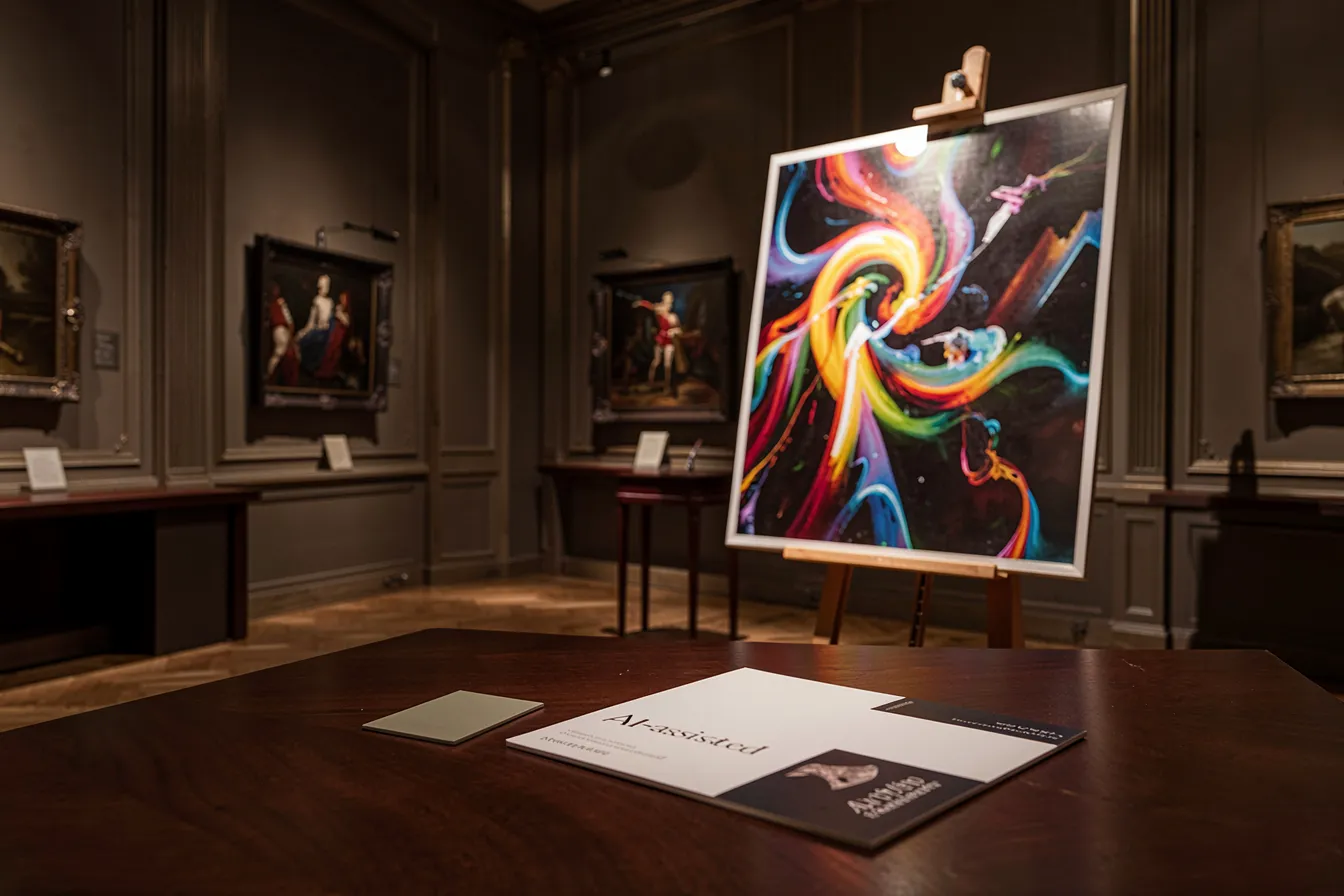
Expect the labels to grow more precise, not less. Today a single tag covers a huge range of practice. Tomorrow institutions will distinguish a fully generated image from a lightly retouched photograph. Standards bodies already draft shared vocabularies so a “generative” tag means the same thing in Berlin and New York.
The deeper lesson runs beyond AI. The label wars force the art world to describe how any work gets made. That honesty serves everyone — the artist who wants credit, the collector who wants confidence, and the visitor who wants to understand what hangs on the wall.
Curious how generative tools shape the styles and images defining this moment? Explore more on the AI art scene at ai-art-designer.de.
Images: AI-Designed
Dieser Beitrag ist auch verfügbar auf:
 English