Still images taught a generation of artists to speak in prompts. Now the frontier moves. Artists are steering generative AI through time, turning diffusion models into a genuine motion medium. They no longer render a single frame. They choreograph hundreds, then shape how one dissolves into the next. This shift changes what AI art can say.
Motion adds a dimension that a still can only imply. A painting freezes a gesture; a moving image lets that gesture unfold. When artists gain real control over that unfolding, they stop generating clips and start composing sequences. The medium grows a grammar of its own.
Time Becomes the New Canvas
Early text-to-video felt like a slot machine. You typed a line, waited, and prayed the motion held together. Faces melted, hands multiplied, backgrounds boiled. Artists tolerated the chaos because the novelty carried the work. That grace period ended.
Today’s video models keep a subject coherent across seconds, not just frames. They track a face, hold a color palette, and respect a camera move. Artists exploit that stability the way a painter trusts a primed canvas. They plan arcs, beats, and reveals. The tool finally holds still long enough to build on.
This reliability rewards intention. An artist who knows what a shot should feel like can now chase that feeling directly. The model stops fighting the vision and starts serving it.
New Controls, New Craft
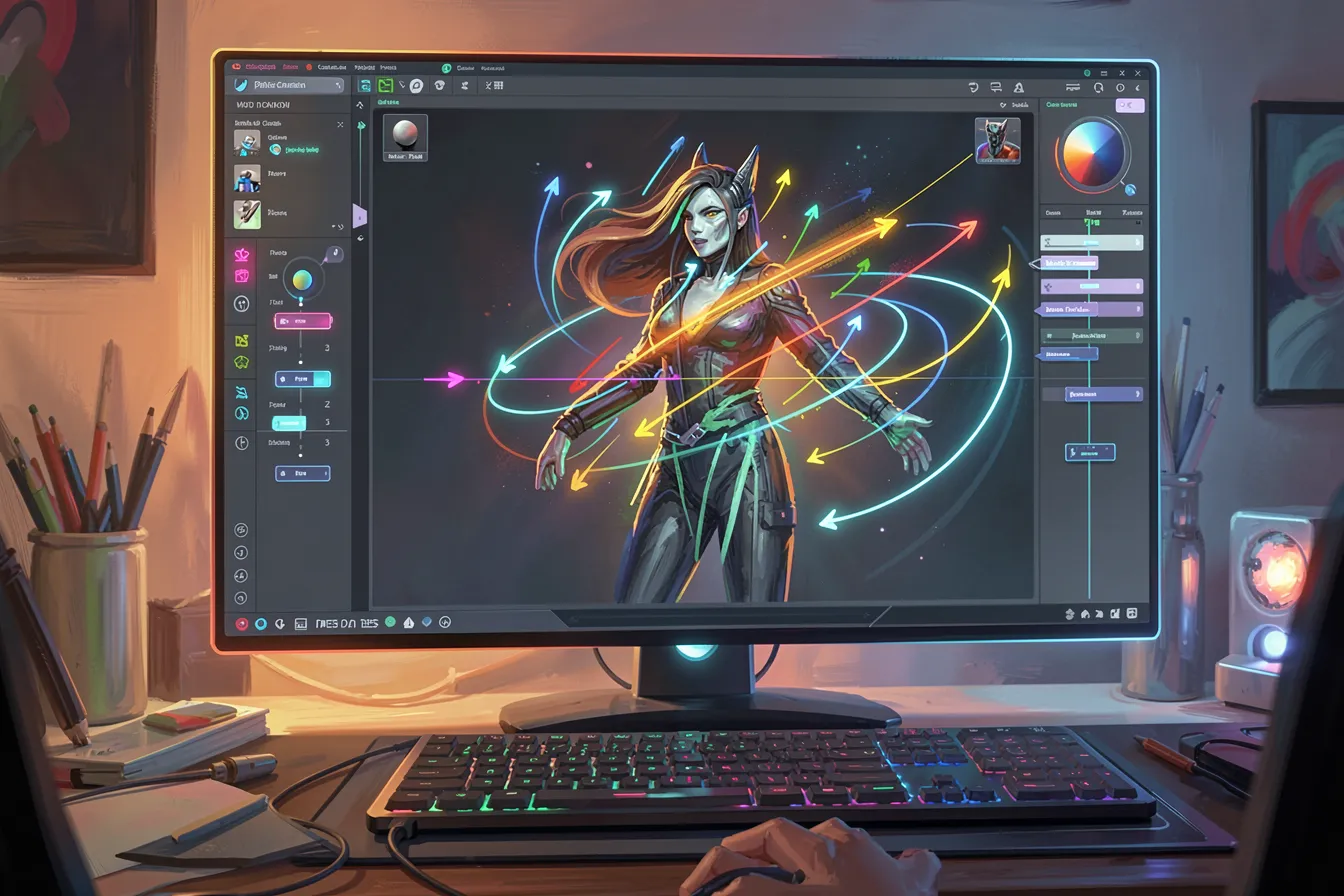
The real leap comes from control rather than raw quality. Artists now guide motion with tools that borrow from film and animation. They set keyframes, drive camera paths, and mask regions that must stay locked. Each control turns a lucky output into a repeatable decision.
- Keyframing: Artists anchor a start image and an end image, then let the model interpolate the drama between them.
- Motion brushes: They paint arrows onto a scene to push clouds left, hair right, or water downward.
- Camera control: They dictate a slow push-in or an orbit, so the frame moves like a real lens.
- Reference conditioning: They feed a pose video or a depth map, and the model dresses that skeleton in a chosen style.
These handles convert guesswork into authorship. An artist stops accepting whatever the model offers. They demand a specific motion, then judge whether the render obeyed. That loop mirrors how directors and animators have always worked.
The Craft Lives in the Edit
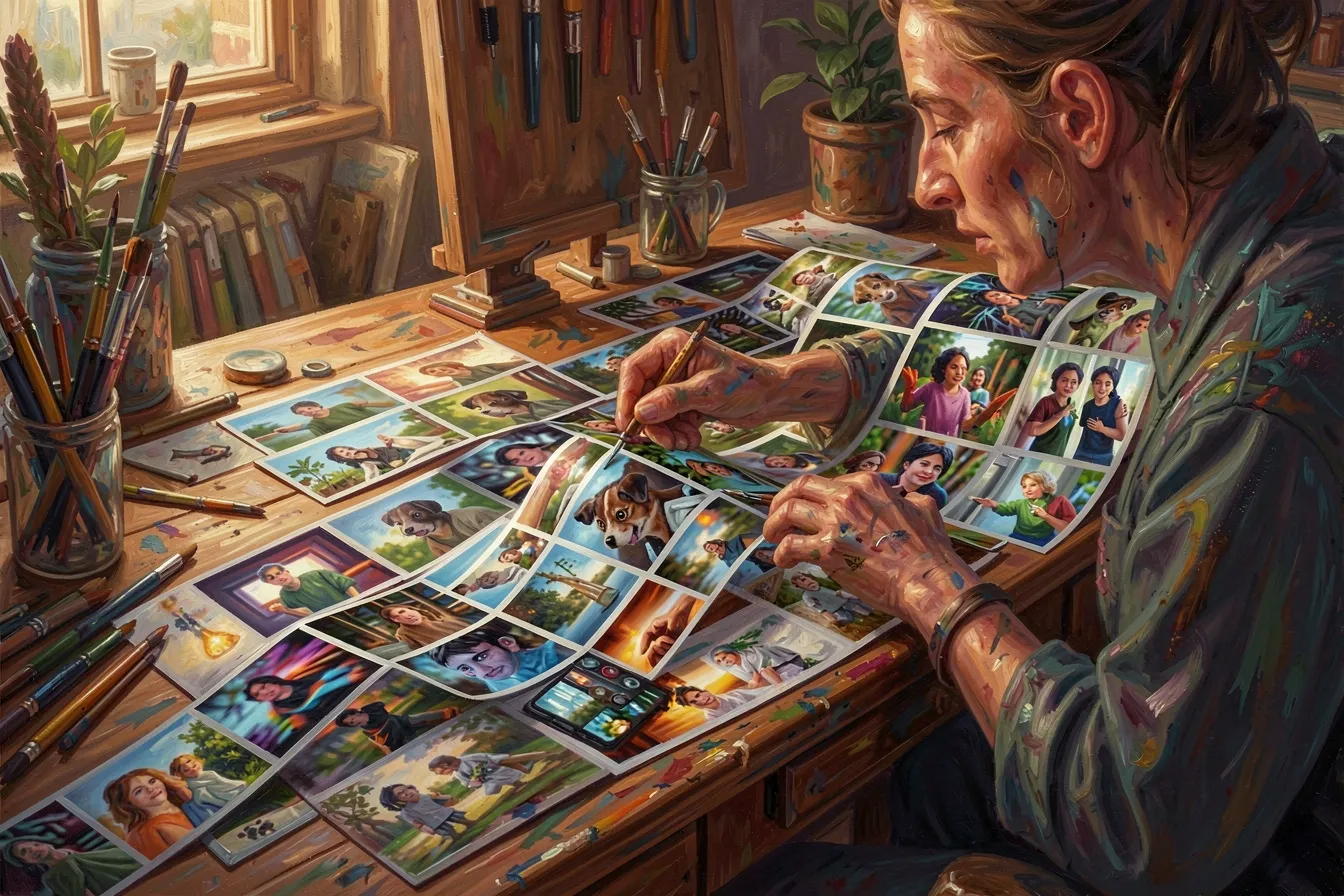
Generating a clip rarely finishes the job. The art emerges when an artist cuts, layers, and sequences the raw material. They stitch short renders into longer passages. They match color across shots. They cull ninety weak takes to keep the one that breathes.
This editing discipline separates a showpiece from a scroll-past. A strong AI motion piece hides its seams. It moves with rhythm, not with the jitter of an unfinished model. The artist earns that smoothness through selection and repair, not through a single magic prompt.
What Motion Unlocks for Artists
Motion opens subjects that stills cannot hold. An artist can show a style morphing, a city breathing, or a portrait aging across ten seconds. They can loop a hypnotic gesture or build a slow crescendo of color. The extra dimension carries meaning, not just spectacle.
It also lowers a wall that once blocked solo creators. Traditional animation demanded a studio, a budget, and years of skill. Generative motion lets one artist prototype a moving world in an afternoon. That access reshapes who gets to tell stories in moving images.
A Medium Still Finding Its Voice
None of this makes the medium finished. Long coherence stays hard, and sound remains a separate craft. Artists still wrestle with drift, flicker, and the uncanny. Yet every constraint doubles as an invitation. The best work often leans into the strangeness rather than hiding it.
Generative motion now sits where still-image AI sat a few years ago: raw, fast-moving, and full of room. The artists who master its controls today will define its language tomorrow. They treat the model as an instrument, not an oracle.
Curious how generative AI reshapes art, design, and architecture? Explore more experiments, techniques, and style studies at ai-art-designer.de and see where the medium heads next.
Dieser Beitrag ist auch verfügbar auf:
 English