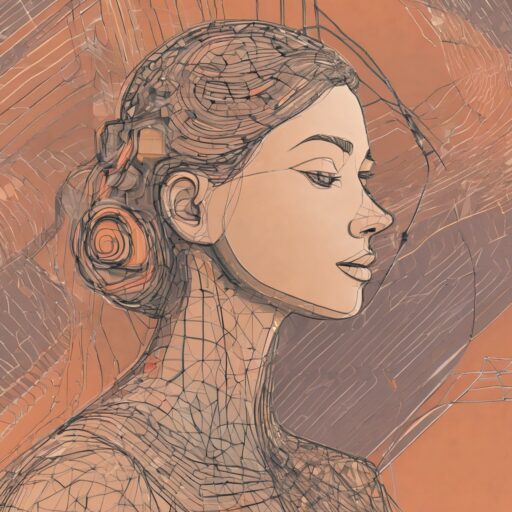
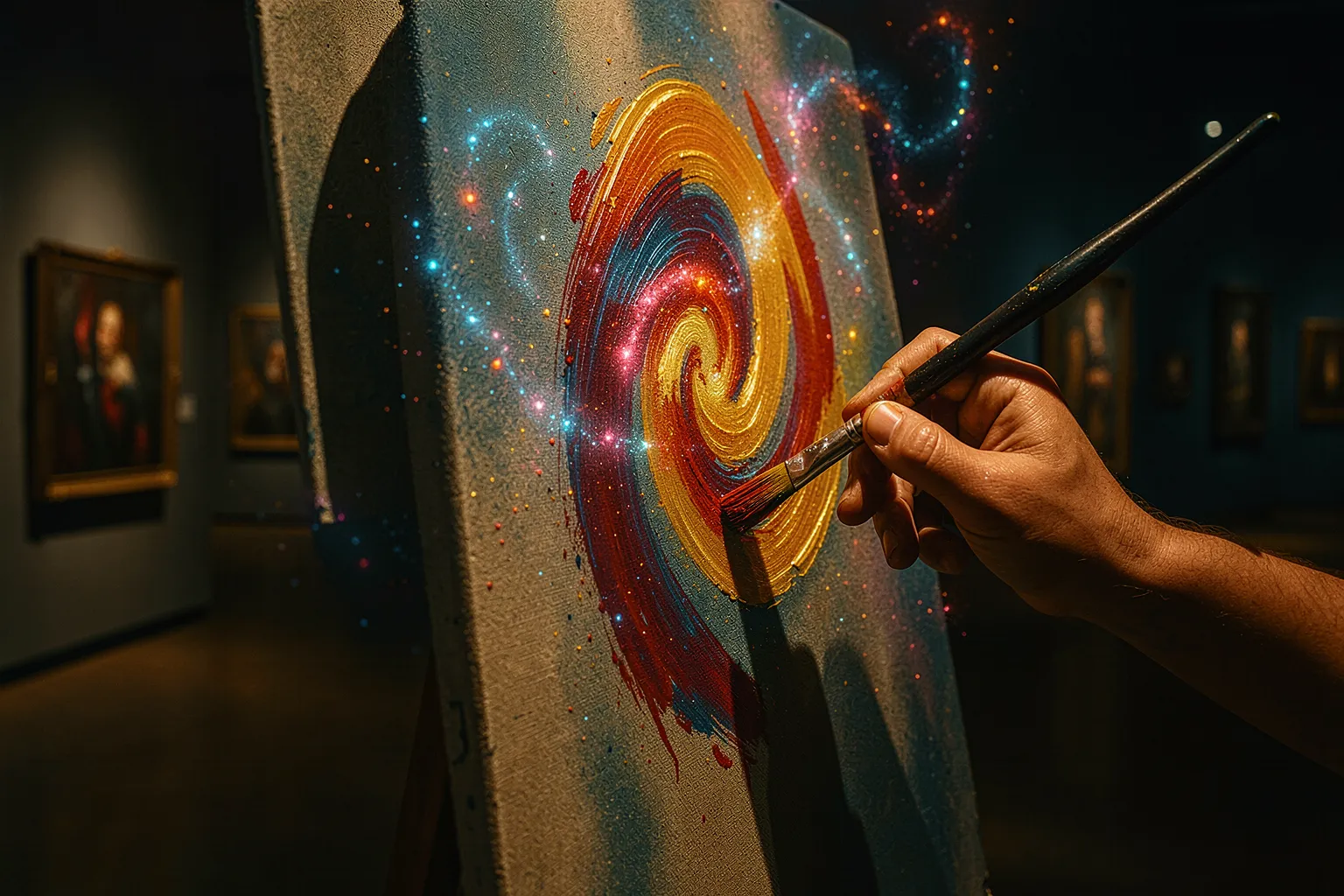
Something strange is happening in the contemporary art world in 2026. The technology behind AI-generated art has never been more capable — models render light, texture and composition with a fluency that would have looked impossible three years ago — yet the market’s emotional center of gravity is drifting the other way. Collectors, it turns out, are increasingly willing to pay a premium for work that is unmistakably made by a human hand. Welcome to the year of the “human premium.”
The paradox at the heart of 2026
Every serious market read this year tells a version of the same story. AI art is advancing fast and is now a permanent fixture of the calendar — Christie’s dedicated AI sales have moved from novelty to routine, and forecasts put AI-influenced work at a small but growing slice of the contemporary market. And yet, collector demand for purely machine-made pieces remains cautious. There is curiosity, plenty of it, but curiosity is not the same as conviction.
The counter-current is just as real. Buyers are gravitating toward art marked by intuition, risk and the small imperfections that signal a person made a decision. In a moment when a flawless image can be conjured in seconds, flawlessness has quietly lost its status. Evidence of a human choice — a visible brushstroke, an odd crop, a color that shouldn’t work but does — is becoming the scarce, prized commodity.
What galleries actually think
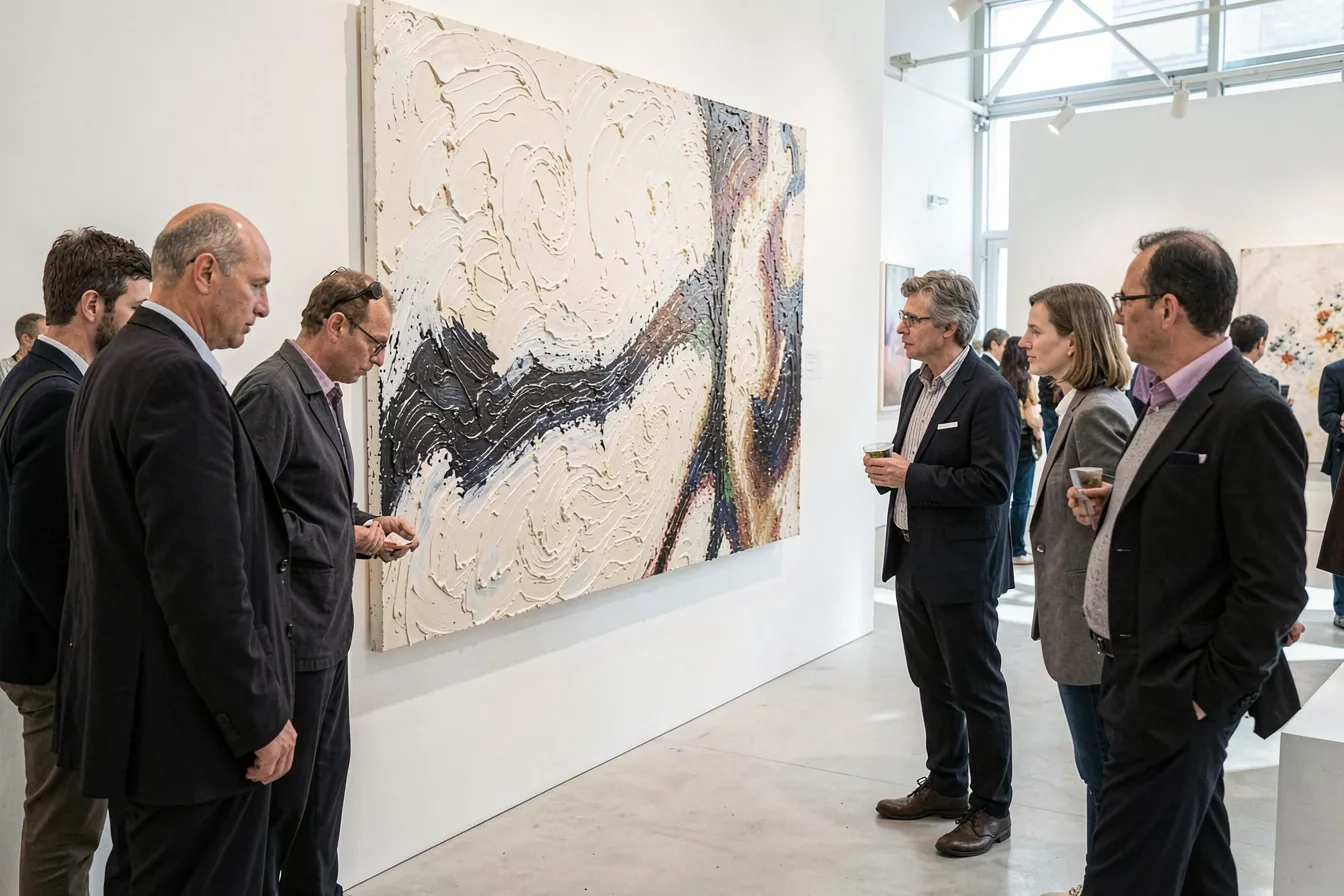
The most telling signal this year is not an auction result but a mood. Surveys of galleries in 2026 reveal a field that is genuinely split rather than uniformly excited or dismissive. Some dealers see AI as an indispensable studio tool and a legitimate medium in its own right; others treat it as a threat to the very idea of authorship they sell. Most sit somewhere in between — happy to use AI for research, mood-boarding and back-office analytics, far more hesitant to build a program around fully generative work.
That ambivalence is shaping how the technology enters the market. Rather than replacing the artist, AI is being absorbed into the connoisseurship apparatus around the artwork: pricing analytics, provenance tracking and authentication tools that make the trade more transparent. The machine is proving more welcome in the back office than on the gallery wall.
Authorship becomes the story
When anyone can generate a competent image, the interesting question is no longer “how was this made?” but “who decided it should exist, and why?” That shift is pushing authorship to the front of the conversation. The artists thriving with AI in 2026 are the ones who make their decisions legible — who train models on their own archive, who edit and overpaint and discard, who treat the tool as an instrument rather than an oracle. Their fingerprints are the point.
- Provenance is prestige. A clear, documented account of how a work came to be is now part of its value, not a footnote.
- Process is content. Studios that show their working — the prompts, the rejected variants, the hand-editing — are winning trust that pure outputs cannot.
- Scarcity is human. The rarest thing in an age of infinite images is a considered, singular, irreproducible choice.
Why the “human premium” is healthy for AI art
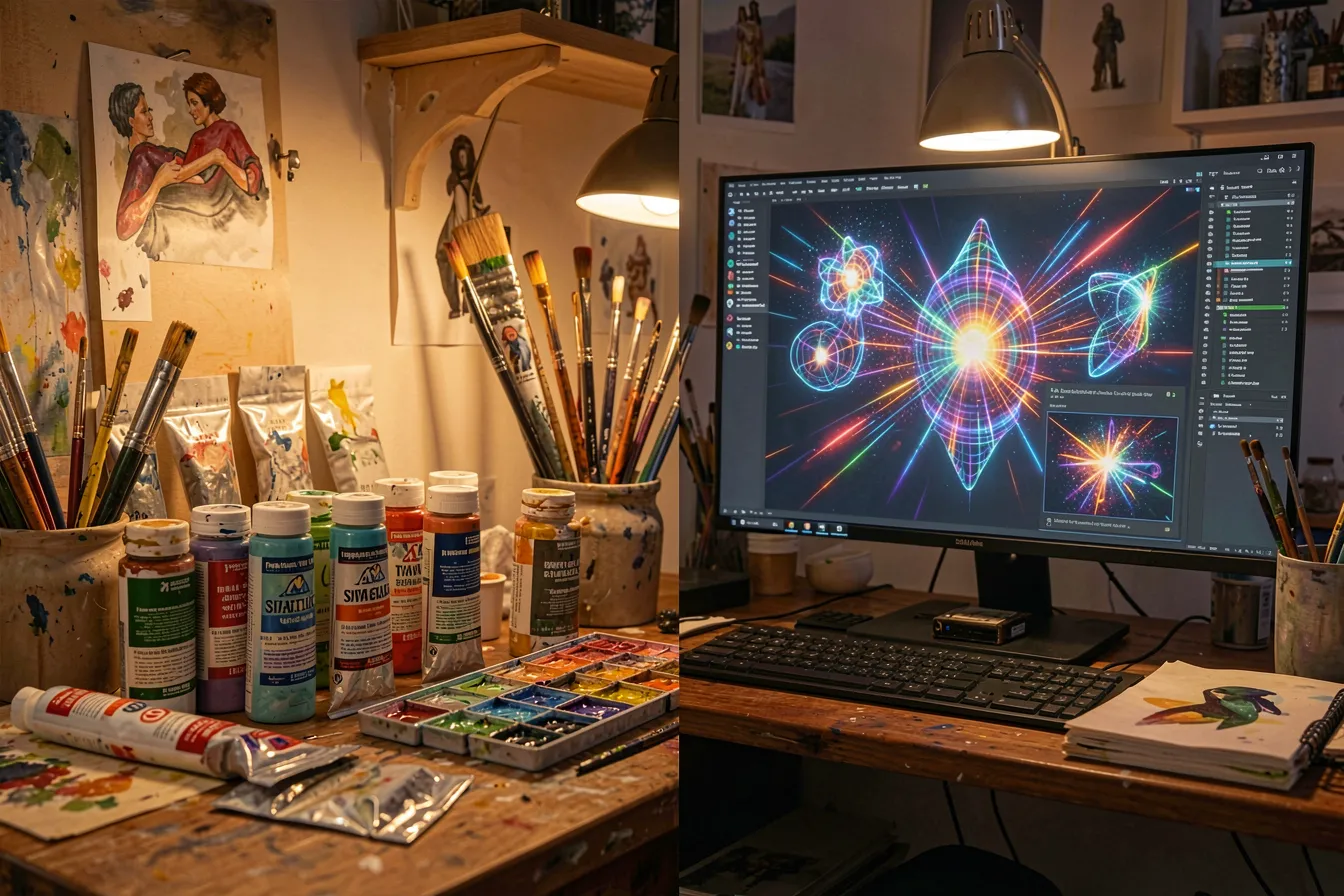
It would be easy to read all this as a rejection of AI. It isn’t. A market that prizes visible authorship is not hostile to generative tools — it simply raises the bar for how they are used. The premium isn’t paid for the absence of AI; it’s paid for the presence of a person clearly steering it. That distinction rewards exactly the kind of practice that makes AI art worth taking seriously: intentional, edited, and unmistakably someone’s.
For collectors, the practical takeaway is to look past the surface polish and ask what human judgment shaped the piece. For artists, it’s an invitation to stop hiding the machine and start showing the hand. The most valuable AI-influenced art of 2026 isn’t the work that looks the most automated — it’s the work where you can feel someone thinking.
Where this leaves us
The 2026 art scene isn’t choosing between humans and machines. It’s re-pricing the thing it was always really about: authorship, intention and the evidence of a mind at work. AI has made images cheap; it has made judgment expensive. That may turn out to be the most creatively productive constraint the art world has had in a generation.
Want to explore where AI-driven creativity and human authorship meet? Discover styles, techniques and ideas at ai-art-designer.de.
Dieser Beitrag ist auch verfügbar auf:
 English