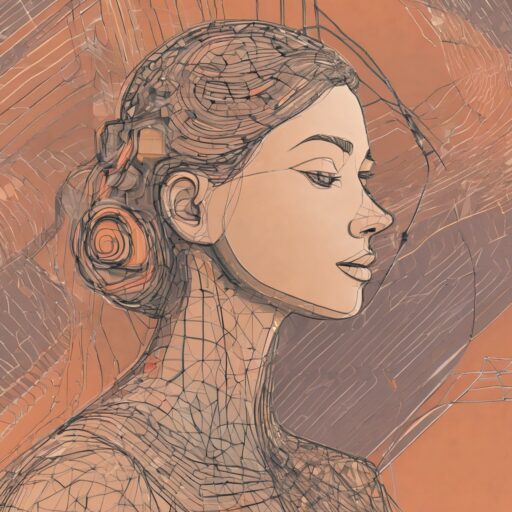
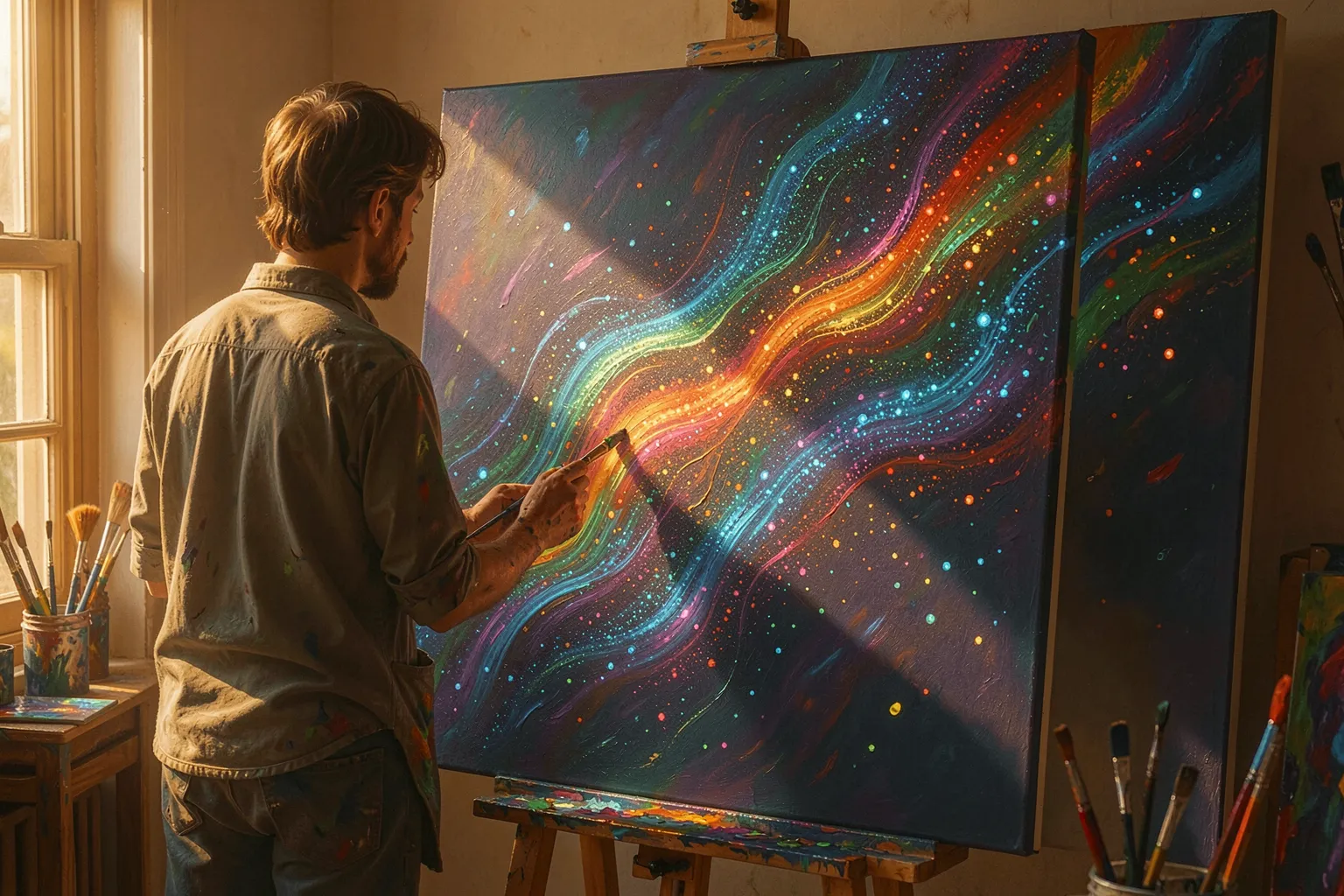
For most of its short public life, generative art has been accused of sameness. Type a prompt, get a picture that looks suspiciously like everyone else’s picture. But a quieter movement inside the studios of working artists is turning that criticism on its head. Instead of borrowing a model’s built-in aesthetic, they are teaching the model their own. By fine-tuning image systems on personal archives — sketchbooks, canvases, photographs, years of visual output — artists are building private models that paint in a voice recognizably their own.
This is the difference between using a tool and owning an instrument. And it is rapidly becoming the most interesting frontier in AI-based art.
From Prompt to Fingerprint
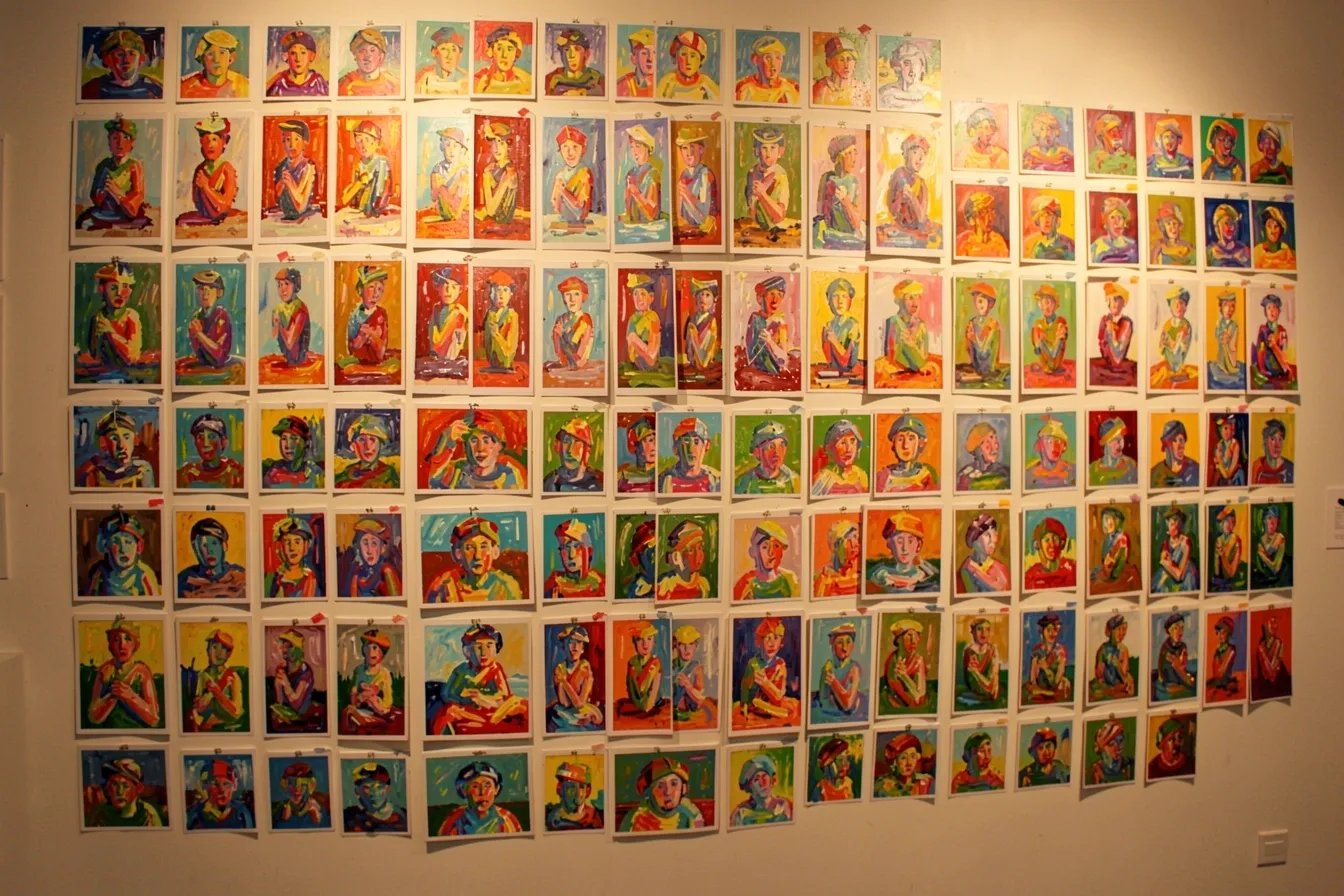
Off-the-shelf diffusion models are trained on oceans of images, which is exactly why their default look feels generic. A personal fine-tune inverts the process. An artist gathers a focused dataset — sometimes as few as twenty to a hundred images — and trains a lightweight adapter (commonly a LoRA) on top of a base model. The result is a system that has internalized their palette, their line weight, their favorite compositions, the way they handle light.
The technical footprint is small, but the creative consequence is large. A landscape painter who has spent a decade developing a particular smoky green can summon that exact green on demand. A collage artist can generate hundreds of variations that all feel unmistakably hers, then choose, cut, and rework by hand. The model stops being a stranger with opinions and becomes a fast, tireless studio assistant that already knows the house style.
The New Studio Workflow
What does a day with a personal model actually look like? For most artists it is not push-button. The fine-tune is a starting surface, not a finish line. A typical loop runs something like this:
- Seed and iterate. Generate dozens of low-effort drafts to explore compositions faster than sketching allows.
- Steer with structure. Use control techniques — depth maps, pose guides, rough under-paintings fed back as image-to-image inputs — to keep the machine on a leash.
- Break and rebuild. Take the strongest output into a paint program, a canvas, or a printmaking process, treating the render as raw material rather than a final artwork.
In this arrangement, the AI accelerates the boring middle of a project — the hundred rejected thumbnails — while the artist keeps authorship of the decisions that matter. The signature style trained into the model guarantees that even the throwaway drafts land in the right visual neighborhood.
Why Ownership Changes the Ethics
Much of the anxiety around generative art comes down to consent: whose work went into the training data? A model fine-tuned on an artist’s own archive sidesteps the sharpest version of that question. The training material is theirs, the derived style is theirs, and — crucially — the output cannot be mistaken for a scrape of someone else’s living practice.
This does not resolve every debate. The base model still carries whatever came before it, and questions about disclosure remain live: audiences deserve to know when a piece was machine-assisted. But personal fine-tuning reframes AI from an extraction engine into something closer to a personal archive that can generate — a way of composting your own past work into new possibilities.
A Medium, Not a Shortcut
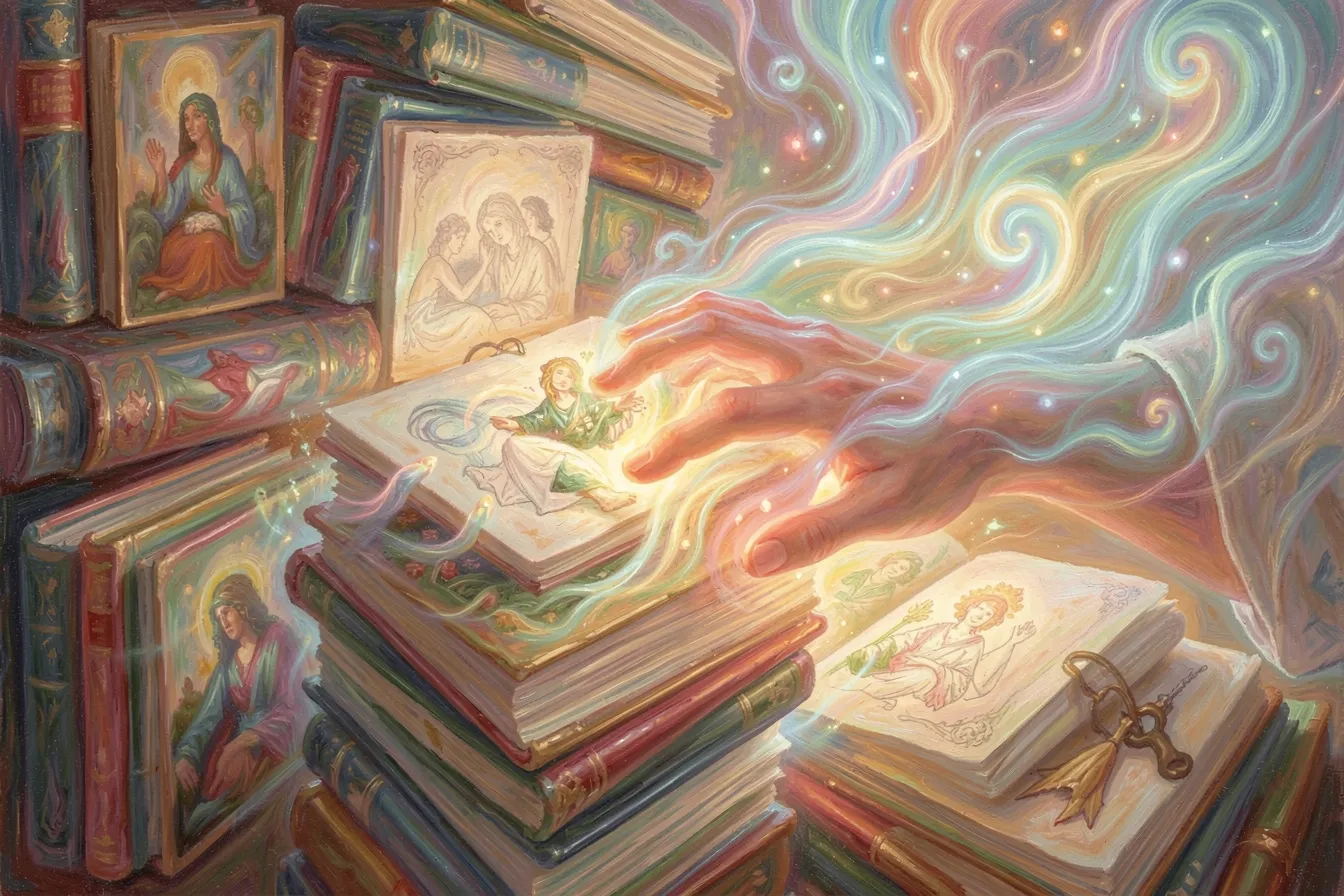
The artists doing this best rarely talk about efficiency. They talk about surprise. A model trained on your own work will occasionally recombine your habits into something you would never have thought to try — a familiar palette poured into an unfamiliar composition. That productive friction, the sense of collaborating with a distorted mirror of yourself, is what elevates the practice from automation to art.
It also demands the same discipline as any medium. A badly curated dataset produces mush. Over-training flattens range into cliché. Learning to build, prune, and coax a personal model is its own craft, closer to mixing paint or building a darkroom than to typing a clever sentence.
Where This Is Heading
As training becomes cheaper and interfaces friendlier, expect personal models to become as normal for visual artists as a signature brush or a favorite film stock. The generic look that defined the first wave of AI art will fade, replaced by thousands of small, idiosyncratic models — each one a fingerprint rather than a template.
Curious how a signature AI style comes together, from dataset to finished piece? Explore more experiments in generative art, design, and architecture at ai-art-designer.de.