
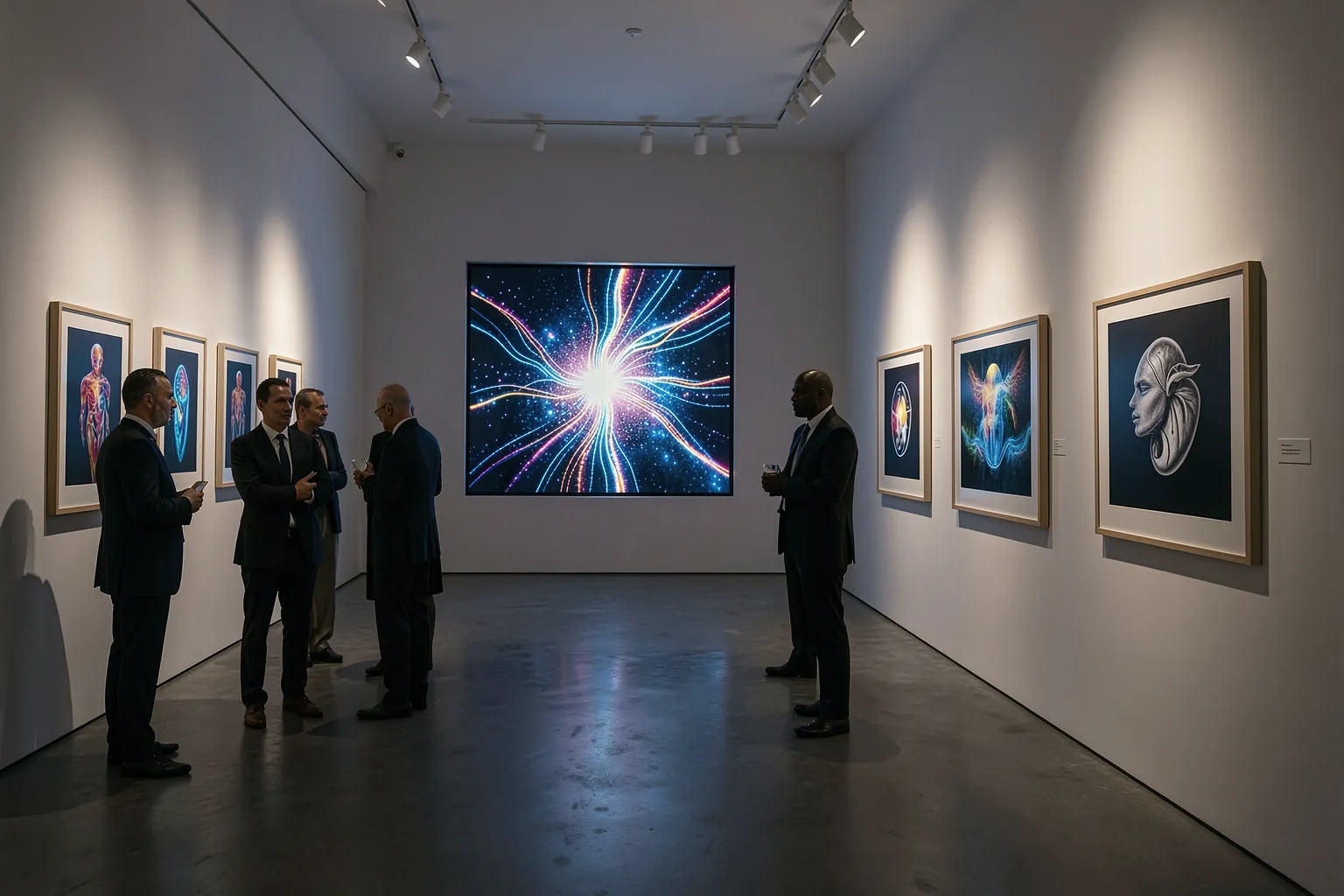
For years, AI art lived on the wall for a weekend. A gallery would mount a themed group show, hang a dozen generated prints, run a panel about “the future of creativity,” and take everything down by Monday. The artists went home with a line on their CV and no gallery behind them. That arrangement is starting to break. In 2026, a handful of dealers stopped treating AI work as a novelty booking and started doing the thing that actually matters in this business: signing the people who make it.
Representation is the dividing line in the art world. A one-off show is publicity. A roster spot is a commitment — the gallery invoices collectors on your behalf, places work in institutions, defends prices at auction, and plans your next three years. Very few AI-native artists had that. Now a few do, and the shift says more about where this medium is heading than any auction headline.
What “represented” actually buys an artist
Think about the plumbing. When a gallery represents you, it fronts the cost of production and framing, handles shipping and insurance, and vets buyers so your work doesn’t flip on the secondary market six weeks later. It writes the wall text, courts the curators, and answers the awkward emails when a museum wants a loan. None of that happens for an artist who just got invited to a themed group show.
Refik Anadol is the obvious counterexample, because he built his own studio into an institution and never really needed a traditional dealer. But he’s the exception that proves the rule. Below the Anadol tier sit hundreds of artists doing serious work with diffusion models, custom-trained checkpoints, and generative video — and until recently almost none of them had a dealer picking up the phone. The interesting story of 2026 is what happens to that middle.
The dealers going first
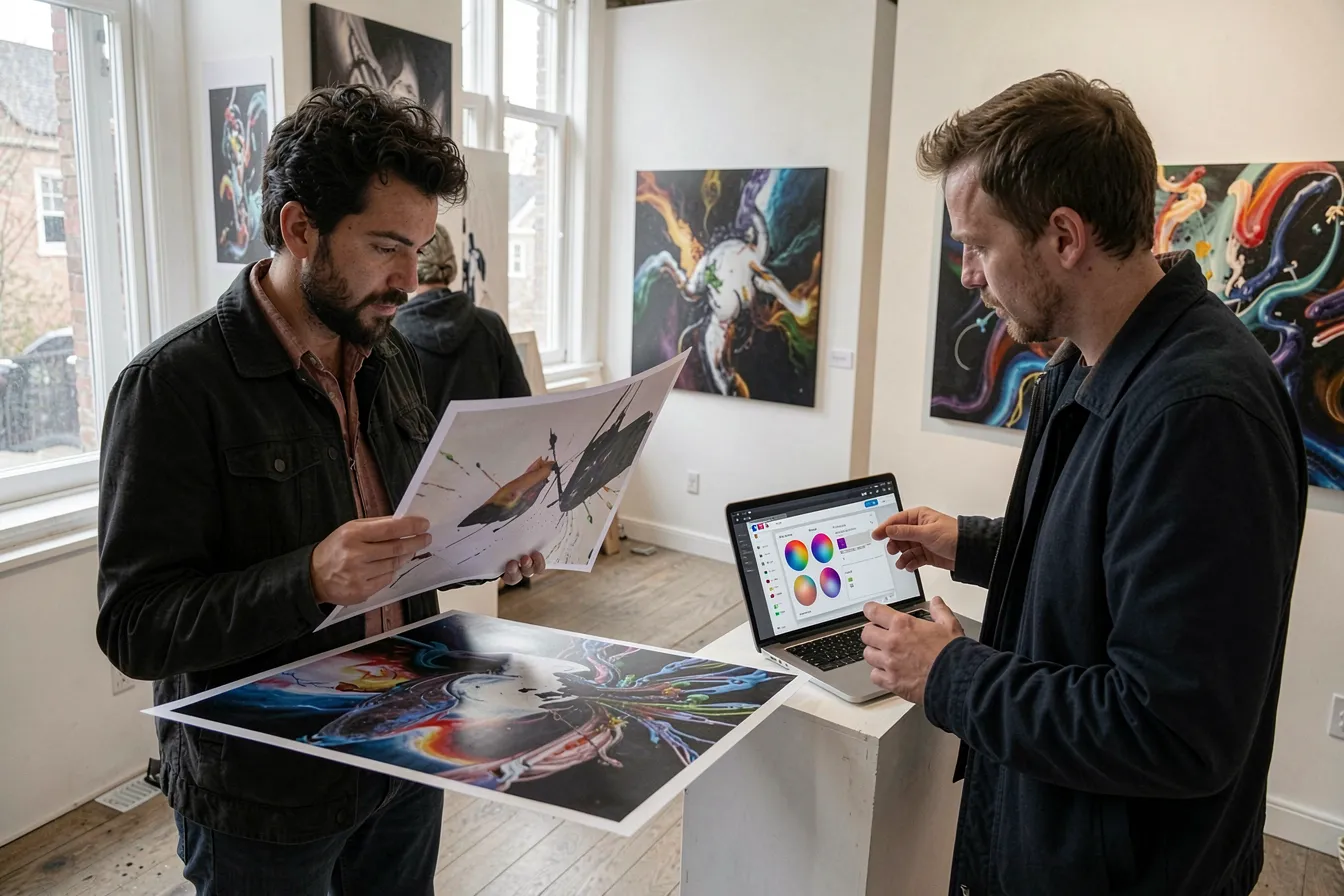
The early movers are not the mega-galleries. Gagosian and Hauser & Wirth still treat AI as a subject to exhibit rather than a practice to represent. The action is one rung down: mid-size and digital-first dealers who have less to lose and a sharper read on where younger collectors are spending.
König Galerie has leaned into digital and screen-based work for years and keeps signing artists whose output is born on a GPU, not a canvas. Bright Moments and a cluster of crypto-native spaces graduated from selling drops to actually stewarding careers, complete with physical shows and long-term contracts. Verse and a few London and Berlin dealers now list generative artists on their main rosters, next to painters, without the apologetic “digital” ghetto label. That placement is the whole point. When a generative artist appears on the same page as the gallery’s painters, the gallery is telling collectors these are peers, priced and defended the same way.
Why now, and not in 2022
Two things changed. First, the tools got good enough that authorship stopped being a fair objection. An artist who trains a model on ten years of their own drawings, builds a ControlNet rig to compose each frame, and hand-finishes the output is not pressing a button. Dealers can look a collector in the eye and describe a practice, not a prompt. That was a hard sell three years ago. It isn’t now.
Second, the buyers grew up. The collectors who cut their teeth on NFTs in 2021 did not vanish when that market cooled — they matured into people who want physical objects, provenance, and a gallery relationship. They are in their thirties and forties, they have money, and they are comfortable owning art that started as code. A dealer who ignores them is leaving a generation of clients on the table.
There’s a supply-side reason too. Painting inventory is finite and slow. A gallery that adds a strong generative artist gains a practice that can produce editions, unique prints, screen works, and large-scale installations without waiting a year for the studio to dry. Handled with discipline — small editions, clear provenance — that’s a healthy line of business, not a firehose of cheap files.
The problems nobody has solved
Representation forces questions that a weekend show let everyone dodge. Pricing is the ugliest. If a work is an edition of twenty digital prints, what stops the artist from quietly minting more? Galleries are answering with burned seeds, notarized edition records, and contracts that make over-editioning a breach. It’s clumsy, and collectors are right to ask hard questions before they buy.
Conservation is the other landmine. A generative video piece that depends on a specific model, a specific renderer, and a specific screen is a nightmare to keep alive for fifty years. Museums that bought early media art already know this pain — half of it no longer runs. Serious dealers now ship a preservation plan with the work: source files, model weights, documentation, and migration rights. The galleries that skip this step are selling their collectors a problem.
Then there’s the training-data question, which hasn’t gone away just because the art got better. A gallery that represents an artist is vouching for how that artist’s models were trained. The careful ones now ask, in writing, what data went into a checkpoint before they’ll put their name behind the output. That diligence is new, and it’s overdue.
What to watch next
The tell will be solo shows. Group exhibitions are cheap signals; a gallery mounting a full solo for a generative artist, printing a catalog, and pricing the work against its painters is putting real money and reputation on the line. A few of those are already scheduled for the winter season. Watch, too, for the first AI-native artist to jump from a mid-size dealer to a blue-chip roster — that transfer, when it happens, will be the moment the establishment admits the medium is permanent.
None of this means AI art has “won.” Plenty of it is still filler, and plenty of dealers are still chasing a trend they don’t understand. But the move from booking to representing is the first sign that galleries see careers here, not just content. That’s how a medium becomes part of the art world instead of a recurring headline about it.
Curious what a serious generative practice can produce? Explore the work and tools at ai-art-designer.com and see where the medium is heading.
Images: AI-Designed
Dieser Beitrag ist auch verfügbar auf:
 English