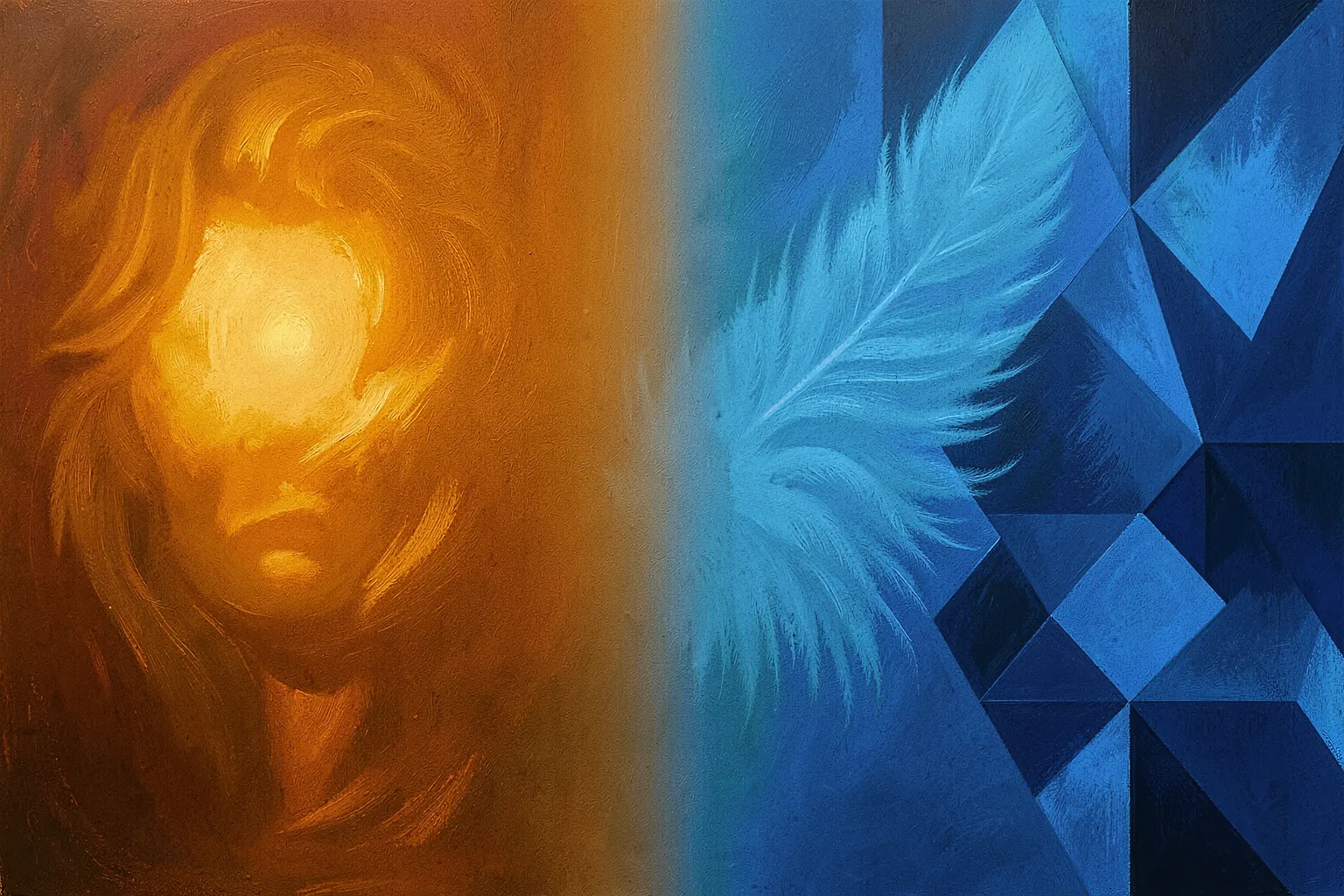
Type “a knight on the left, a dragon on the right” into a diffusion model and watch what happens. You get a knight with scales. A dragon holding a sword. Sometimes a single creature that is half of each, stitched down the middle. The model does not read left and right the way you do. It blends the whole prompt into one soup and pours it across the entire frame.
Regional prompting is how artists fix that. Instead of one prompt for the whole image, you carve the canvas into zones and hand each zone its own instructions. The knight prompt only touches the left. The dragon prompt only touches the right. Two subjects, one frame, no melting.
Why the model smears everything together
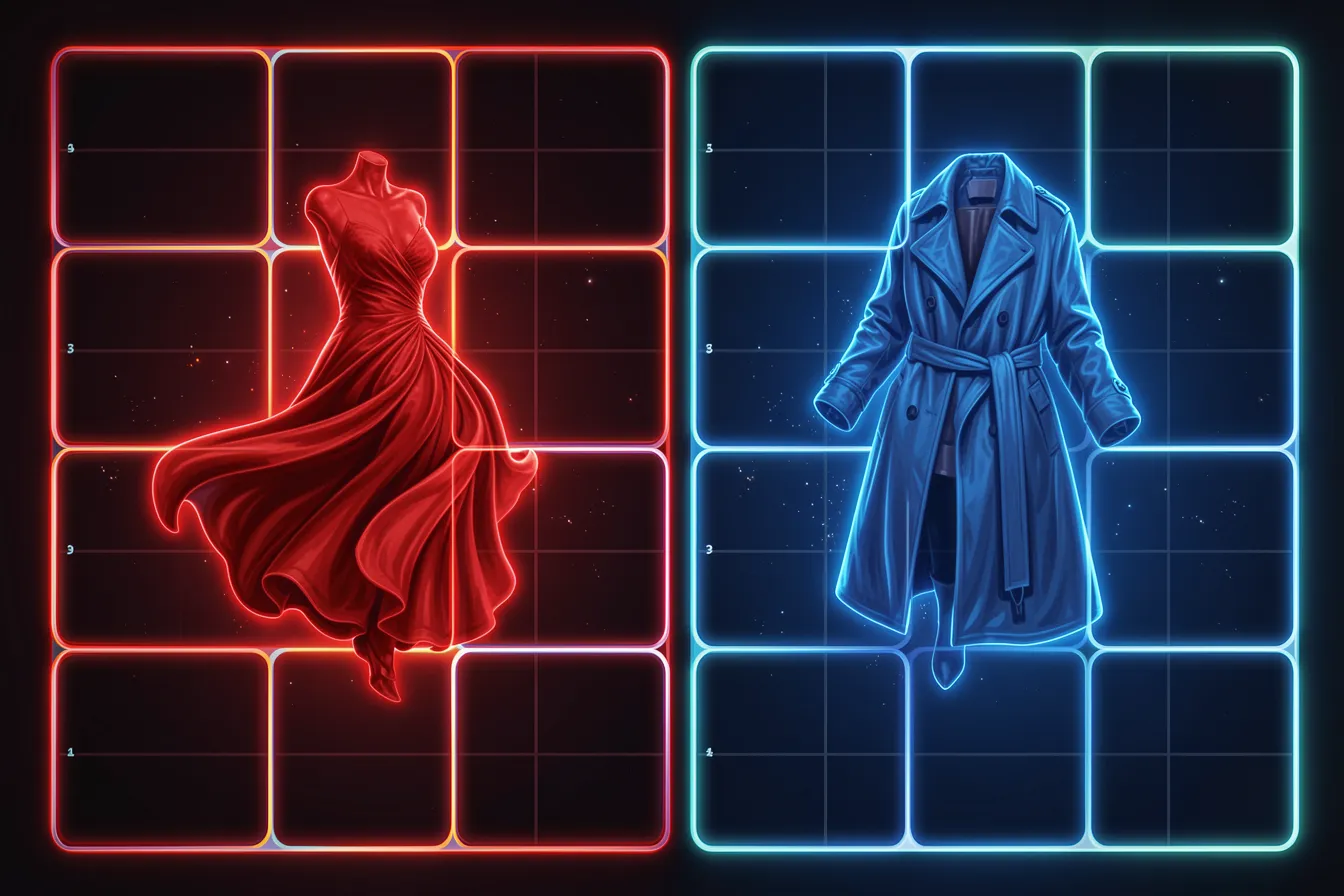
A diffusion model builds an image by denoising a field of random noise, guided by your text. That guidance is global. Every word in the prompt tugs on every pixel. So “red dress” and “blue coat” in the same prompt often produce a purple garment, or a red coat, or a dress that fades to blue at the hem. The model has no built-in idea of “here” versus “there.”
Painters never had this problem. You put the red where you want red. Regional prompting gives that back. It splits the guidance itself, so a word only influences the patch of canvas you assign it to.
How the split actually works
The common approach divides the latent image into a grid or a set of masks. Tools like the Regional Prompter extension for Automatic1111, or Latent Couple before it, let you say something like “left half, right half” or “top third, middle third, bottom third.” You then write a prompt per region, separated by a break token. During each denoising step, the sampler runs your regional prompts against their masks and only lets each one steer its own area.
There are two ways to enforce the split. Attention-based methods keep one pass but mask the cross-attention so a phrase can only attend to its region. Latent-based methods run separate denoising passes per region and composite the results. Attention masking tends to blend edges more naturally. Latent splitting gives you harder separation, which you want for, say, a diptych where the two halves should not bleed.
A base prompt holds it together
Regions alone produce a collage. Two subjects, no shared world. That is where a base prompt earns its keep. You write one global line for the things every region shares — lighting, medium, palette, mood — and weight it, often around 0.2 to 0.4, so it tints the whole frame without overriding the regional detail.
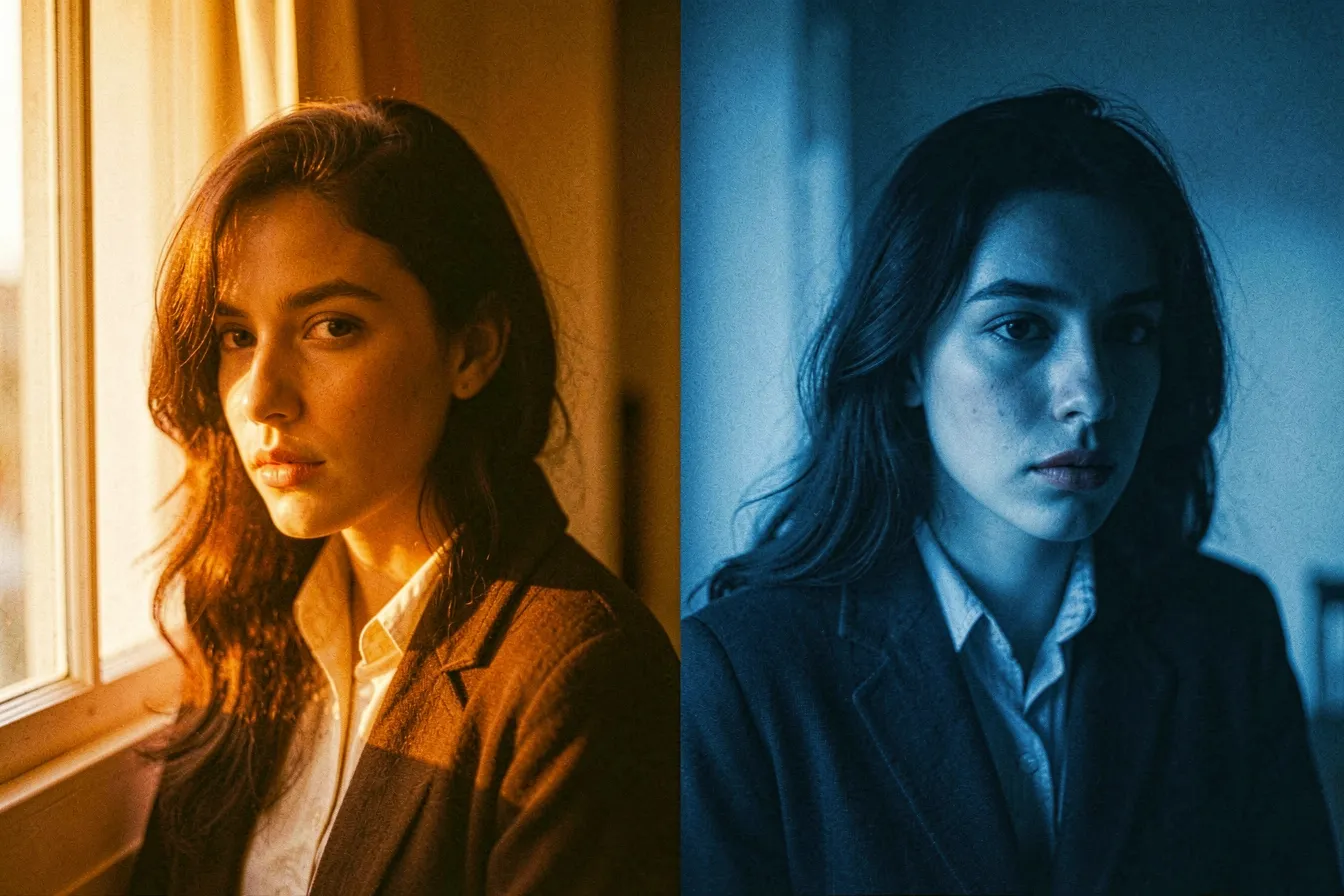
Say you want a twin portrait: one sister in warm afternoon light, one in cold blue shade, same room, same film-grain look. The base prompt carries “35mm portrait, soft grain, shallow depth of field, single room.” The left region says “warm window light, amber tones.” The right says “cool blue shadow, north-facing.” The base keeps them in the same photograph. The regions keep them different people in different light.
Where it changes what you can make
Regional prompting is not a trick for edge cases. It unlocks whole categories of image that a single prompt fights you on.
- Multi-character scenes. Two or three figures who each need distinct clothing, hair, and pose, without their features cross-contaminating.
- Foreground and background as separate briefs. A detailed subject up front, a completely different environment behind, each described precisely instead of averaged.
- Deliberate composition. You decide what sits where before the model touches a pixel. Sky at the top, figure center, texture along the bottom edge.
- Color zoning. A gradient of moods across the frame — warm to cool, day to dusk — that a global prompt would muddy into one flat tone.
The catch, and how artists work around it
Rigid grids leave seams. A hard vertical split down the middle can read as two posters taped together, with a visible line where the regions meet. The fix is overlap and feathering. Most regional tools let you soften mask edges or overlap the zones by a margin, so the model has room to negotiate the border instead of slamming two worlds against each other.
Resolution matters too. Regional prompting shines at wider aspect ratios — a 3:2 or 16:9 frame gives each zone enough pixels to hold detail. Cram three regions into a small square and each one starves. Many artists generate wide and large, then crop, rather than fighting for detail in a cramped latent.
And it rewards restraint. Two or three regions, cleanly briefed, beat a fussy nine-cell grid where you are micromanaging every tile. The point is control over composition, not a spreadsheet of prompts. Start with the split the image actually needs and stop there.
Composition as the real skill
What regional prompting really teaches is that prompting is not just word choice. It is layout. Once you can place intent on specific parts of the canvas, you start thinking like someone blocking out a painting — mass on this side, negative space on that, a color reserved for one corner. The model stops being a slot machine you feed adjectives and starts being a surface you compose on.
That is the quiet shift under all these techniques. Each one hands a bit more of the frame back to the artist. Regional prompting hands over the map.
Want to build multi-zone compositions and shape exactly what goes where? Try it in our tools at ai-art-designer.com and see how far a well-placed prompt goes.
Images: AI-Designed
Dieser Beitrag ist auch verfügbar auf:
 English