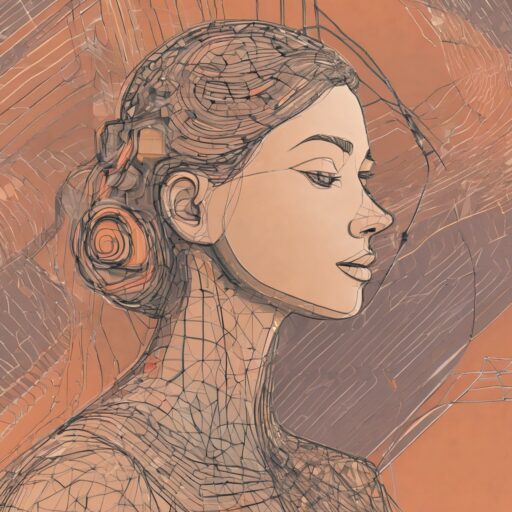
Wabi-sabi resists everything a machine loves. It prizes the crack in the bowl, the fade of old wood, the quiet of an unfinished room. Algorithms chase symmetry, gloss, and control. So what happens when generative AI meets Japan’s oldest design philosophy? The results surprise both skeptics and believers.
Designers now feed wabi-sabi into diffusion models and watch imperfection bloom on demand. The tension is real, and it teaches us something about both traditions.
What Wabi-Sabi Actually Asks For
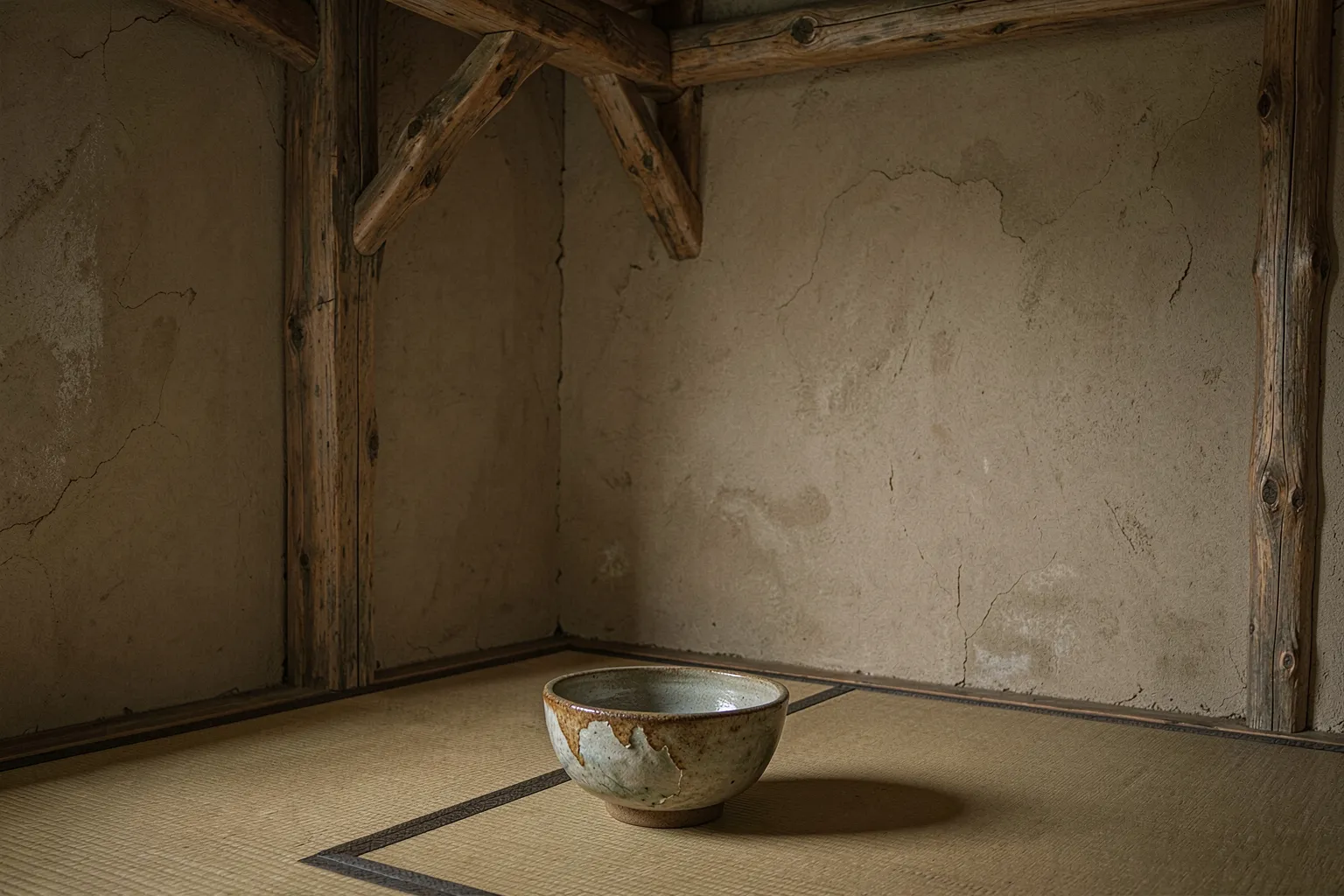
Wabi-sabi celebrates impermanence, humility, and the marks that time leaves behind. A weathered beam beats a polished one. A hand-thrown cup beats a factory copy. The style favors natural materials, muted earth tones, and generous empty space.
These qualities defy easy prompting. You cannot simply type “make it perfect” and expect wabi-sabi. You must ask for the opposite. Designers now write prompts that request rough plaster, chipped glaze, and light that falls unevenly across a bare floor.
Teaching the Machine to Love Flaws
Modern image models learned beauty from millions of pristine photographs. They lean toward clean lines and bright finishes by default. To coax wabi-sabi from them, artists fight that bias with precise language.
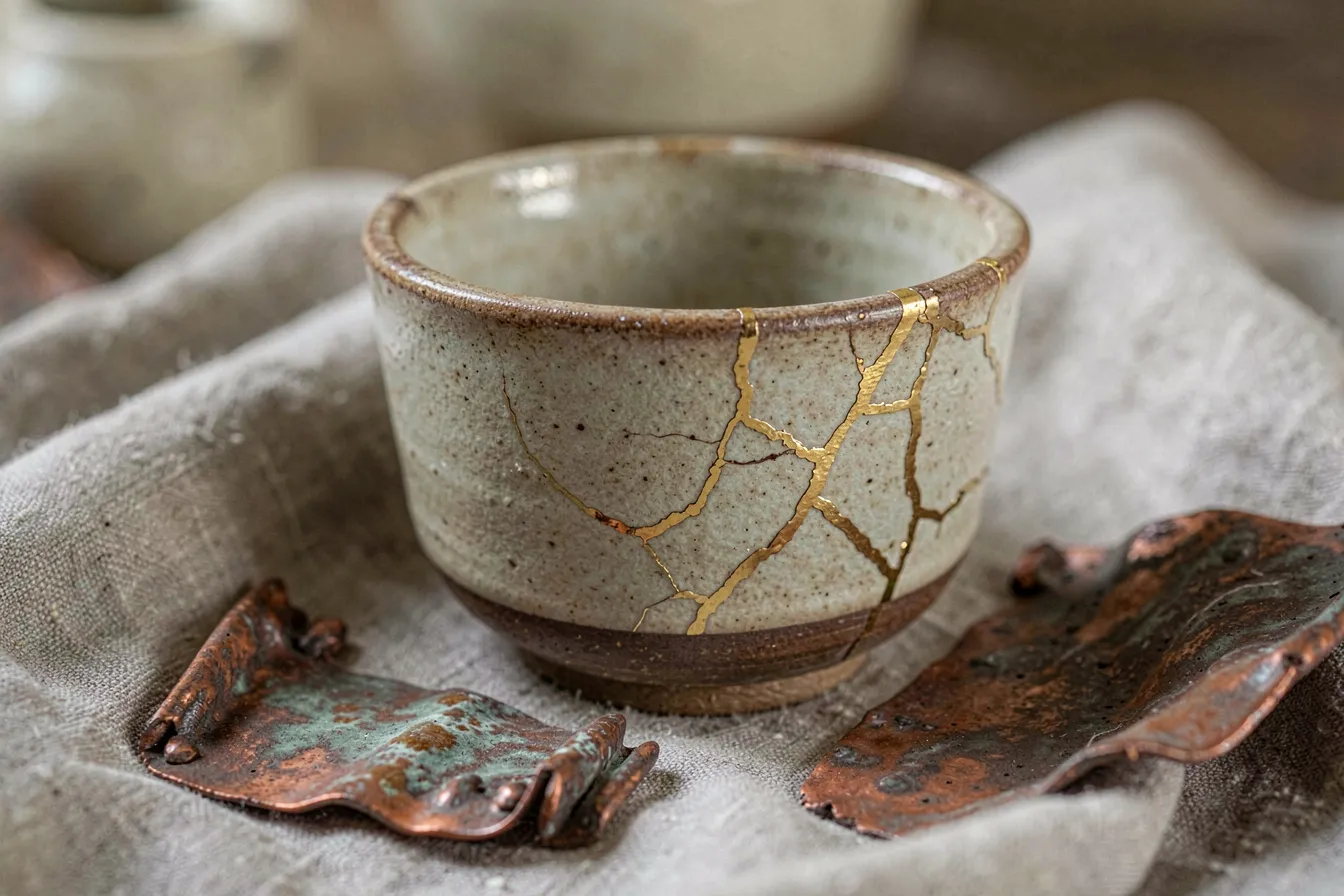
They name specific textures: raw clay, oxidized copper, linen that wrinkles. They demand asymmetry and negative space. They lower the polish and raise the grain. The best prompts read like haiku, short and sensory, guiding the model toward restraint rather than spectacle.
- Material honesty: ask for unpainted wood, stone, and paper, not chrome.
- Gentle decay: request patina, moss, and the softness of age.
- Empty room: leave space, because wabi-sabi lives in what you omit.
- Soft light: favor diffuse morning glow over hard studio lighting.
Where AI Genuinely Helps
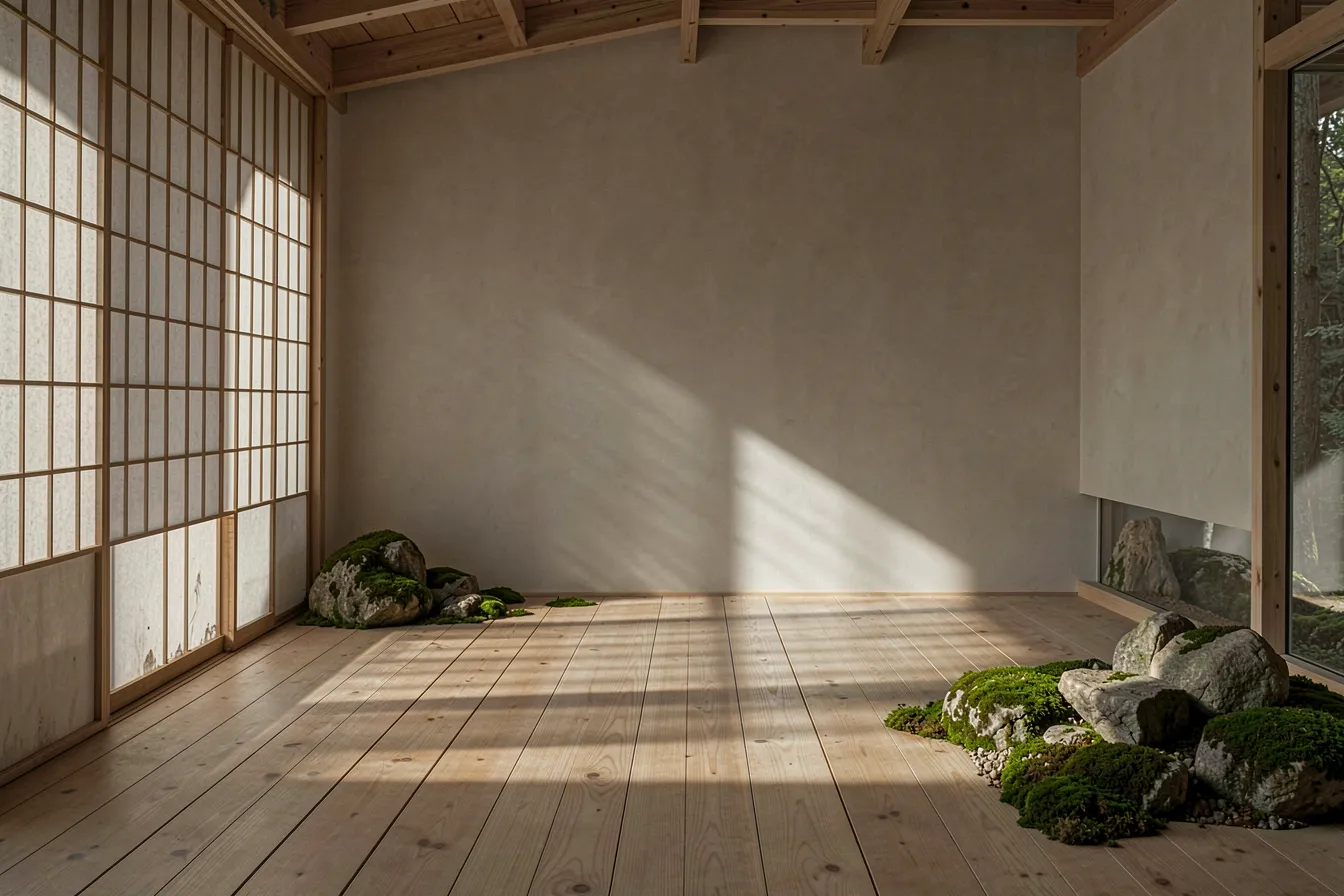
Generative tools shine as a sketchpad for this slow aesthetic. A designer explores twenty tea-room layouts before lunch. They test a shoji screen against three wall finishes in seconds. They study how afternoon light rakes across a tatami floor without building a single set.
AI also mixes eras with ease. It blends a Kyoto teahouse with a Scandinavian cabin, then dials the fusion until it feels honest. This rapid play lets architects chase a mood instead of a blueprint, and mood is exactly what wabi-sabi guards.
The Paradox Nobody Can Solve
Here lies the deep irony. Wabi-sabi honors the human hand and the passage of real time. An AI render ages nothing. It fakes the crack instead of earning it. A perfect image of imperfection is still, at heart, a performance.
Purists argue that a machine can only imitate the look, never the meaning. They have a point. A photograph of a repaired bowl carries the potter’s story; a generated one carries only pixels. Yet the counterargument holds too. Every design tool, from the pencil to the CAD suite, once faced the same charge. The tool never made the meaning. The maker did.
A New Kind of Collaboration
The smartest designers treat AI as a first draft, not a final word. They generate a hundred imperfect rooms, choose the one that stirs something, then build it with real hands and real materials. The machine proposes; the human decides and finishes. The crack becomes genuine only when someone lives with it.
Wabi-sabi may be the ultimate stress test for generative design. It asks the machine to value what it cannot feel. And in that gap, we learn where the human still belongs. We watch a fast, tireless tool serve a slow, mortal philosophy, and the pairing works better than anyone expected.
Want to explore more styles reimagined through AI? Visit ai-art-designer.de and see where tradition and technology meet.
Images: AI-Designed
Dieser Beitrag ist auch verfügbar auf:
 English