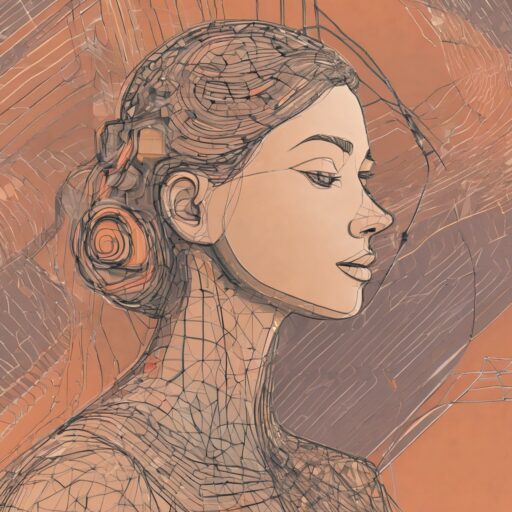
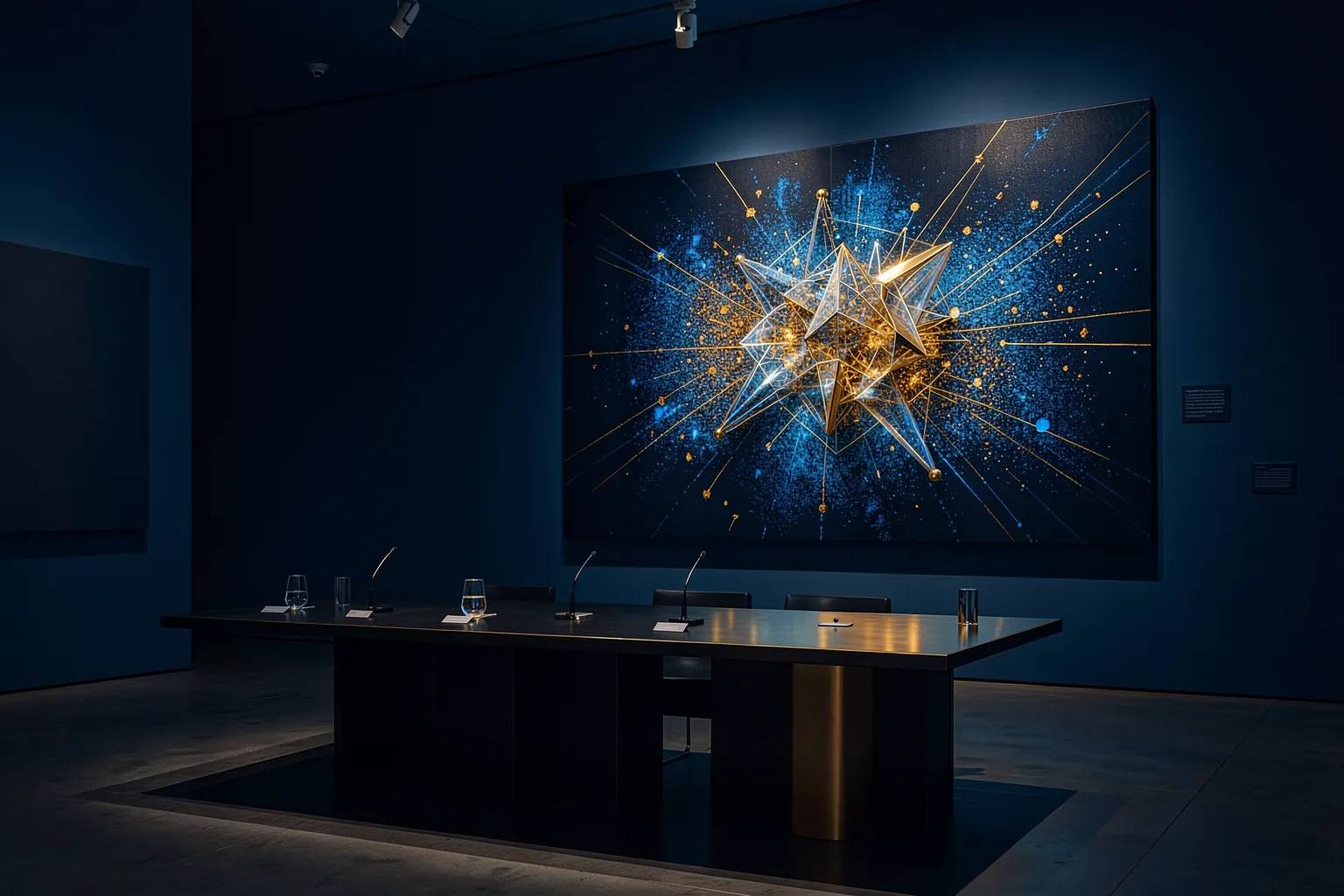
Ask a prize jury how to score an AI-made work and watch the room split. Some panelists want to judge the picture on the wall. Others want to interrogate the process behind it — who prompted, who trained the model, whose images sat in the training set. In 2026 that argument has stopped being hypothetical. Art prizes, long the quiet gatekeepers of what counts as serious, are now the place where the AI question gets decided in public.
For years the big legacy awards treated generative work like a guest who wandered into the wrong party. The Turner Prize never built a lane for it. Most national painting and sculpture prizes wrote rules that assumed a single human hand. That silence did a job: it kept AI art in a separate universe of tech-leaning awards, away from the institutions that confer lasting reputation.
Two prize worlds, barely talking
On one side sit the specialist awards that embraced the medium early. The Lumen Prize has handed out honors for digital and AI-driven work since 2012, and it spent 2026 fielding a record wave of entries built on diffusion models and custom-trained systems. Smaller juried shows — often run by media-art festivals — treat a trained model the way a photography prize treats a camera: a tool, judged by what the artist does with it.
On the other side sit the prestige prizes that still move markets and careers. They have mostly held the line. A few quietly amended their rules to require disclosure of AI use. Others banned it outright for specific categories, usually illustration and photography, after entrants got caught passing off generated images as camera work. The 2023 Sony World Photography Award fiasco — a photographer accepted, then declined, a prize for an AI image he submitted to prove a point — still shapes how photo juries write their fine print.
The result is a two-tier system. An artist can win real money and a line on the résumé from the AI-native circuit, then find that same work ruled ineligible by the award that would actually change their standing. That gap is the story of 2026, and it is starting to close from both ends.
Juries are rewriting the rubric
The interesting movement is happening inside the judging rooms. Panels that used to score craft and concept now add a third column nobody has a clean name for: authorship. How much of this came from the artist’s decisions, and how much from the model’s defaults? A striking image made with three words and a lucky seed reads differently to a jury than one built through months of fine-tuning, inpainting, and hand-correction.
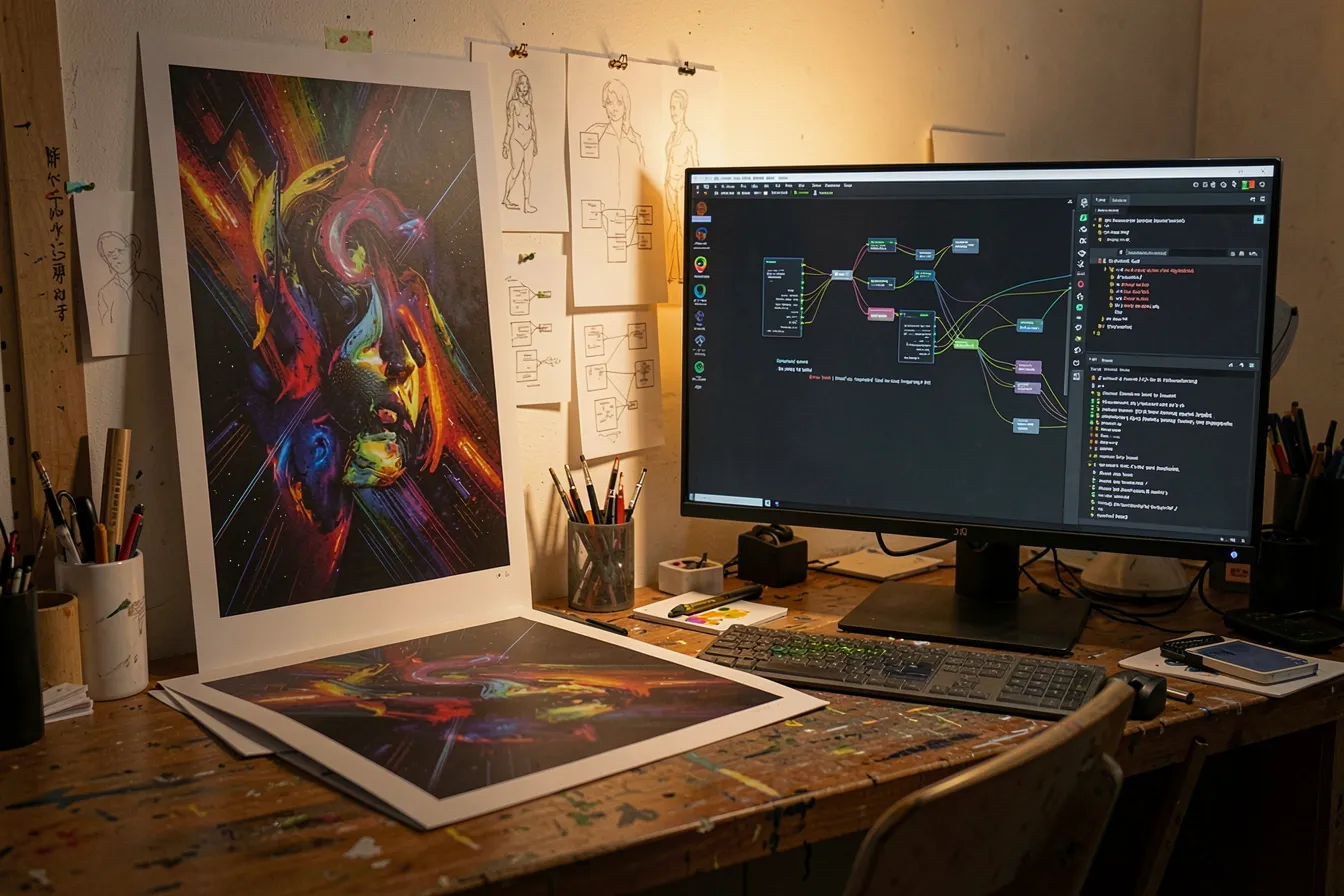
So juries have started asking for the receipts. Several 2026 open calls now request a process statement alongside the work — prompts, model versions, the artist’s own edits, sometimes a short video of the workflow. It is the same instinct that made conceptual art prizes ask for documentation decades ago. The object alone no longer settles the question of merit.
This cuts against a lazy assumption on both sides. Critics who dismiss all AI work as button-pushing have to reckon with artists who clearly labored. Boosters who claim the prompt is the whole art form have to explain why two people with the same prompt produce wildly different results, and why juries can tell the careful ones apart.
The critics are late, and they know it
Art criticism has been slower than the prizes. For a while the standard review move was to not review AI work at all — to treat it as a tech story rather than an art story. That is changing, partly because the work keeps showing up where critics cannot ignore it. Refik Anadol’s data sculptures landed him on the TIME100, and his AI-driven museum project in Los Angeles forced the broad press to write about generative art as a cultural institution, not a gimmick.
The sharper critics have stopped asking whether AI art is “real art” — a dead-end question — and started asking better ones. Does the work have a point of view, or just a style? Is the artist in dialogue with the medium’s history, or recycling its surface? Those are the questions criticism has always asked. Applying them to generative work is less a revolution than a return to form.
What a jury can and cannot see
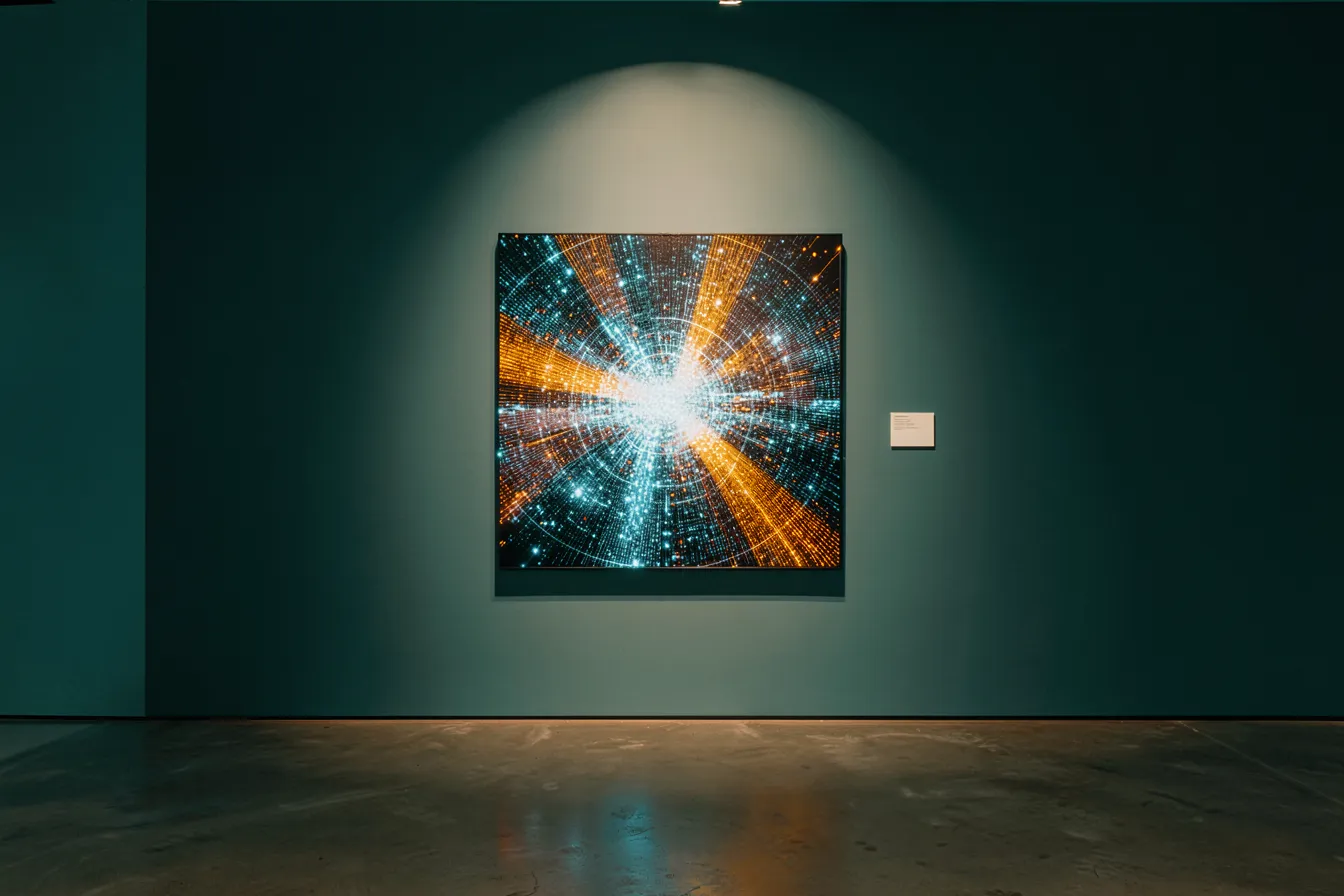
Here is the uncomfortable part. A jury can read a process statement, but it cannot always verify one. An artist can claim weeks of fine-tuning that took an afternoon. Detection tools that promise to flag AI images remain unreliable enough that no serious prize leans on them. So juries fall back on judgment — the same fallible, trained judgment they have always used, now pointed at a medium that is very good at hiding its seams.
That worries some jurors and liberates others. The honest ones admit the truth: they were never really scoring the hours anyway. A photography prize does not measure how long the shutter stayed open. It measures whether the image earns its place. The AI question drags that old, slightly awkward fact back into the light.
Where this lands
The split will not hold. The Artsy AI Survey earlier in 2026 showed a divided but shifting field, with galleries treating AI as a working tool faster than they will admit on the record. Prizes follow the market with a lag. Expect more legacy awards to add disclosure rules, then a dedicated category, then — for the ones that want to stay relevant — quiet acceptance that a trained model is a brush, not a cheat.
The artists who win in both worlds will be the ones who can answer the authorship question without flinching: here is what I decided, here is what the machine did, here is why the difference matters. A prize cannot manufacture that clarity. It can only reward it when it shows up.
Want to make work that survives that scrutiny? Start by building a process you can defend, not just a picture you can post. Explore the tools and techniques at ai-art-designer.com and learn to direct the model instead of letting its defaults decide for you.
Images: AI-Designed
Dieser Beitrag ist auch verfügbar auf:
 English