TIME put Refik Anadol on its 2026 list of the hundred most influential people in art. Read that sentence twice. A man who makes paintings out of data — who trains models on millions of images and lets them bloom across museum walls — now sits on the same roster as painters, curators, and gallerists who have spent decades earning their place. Five years ago, most of those people would have called what he does a screensaver.
So the question worth asking isn’t whether AI art has arrived. That fight is over. The question is what kind of arrival this is, and who it leaves out.
From novelty act to power list
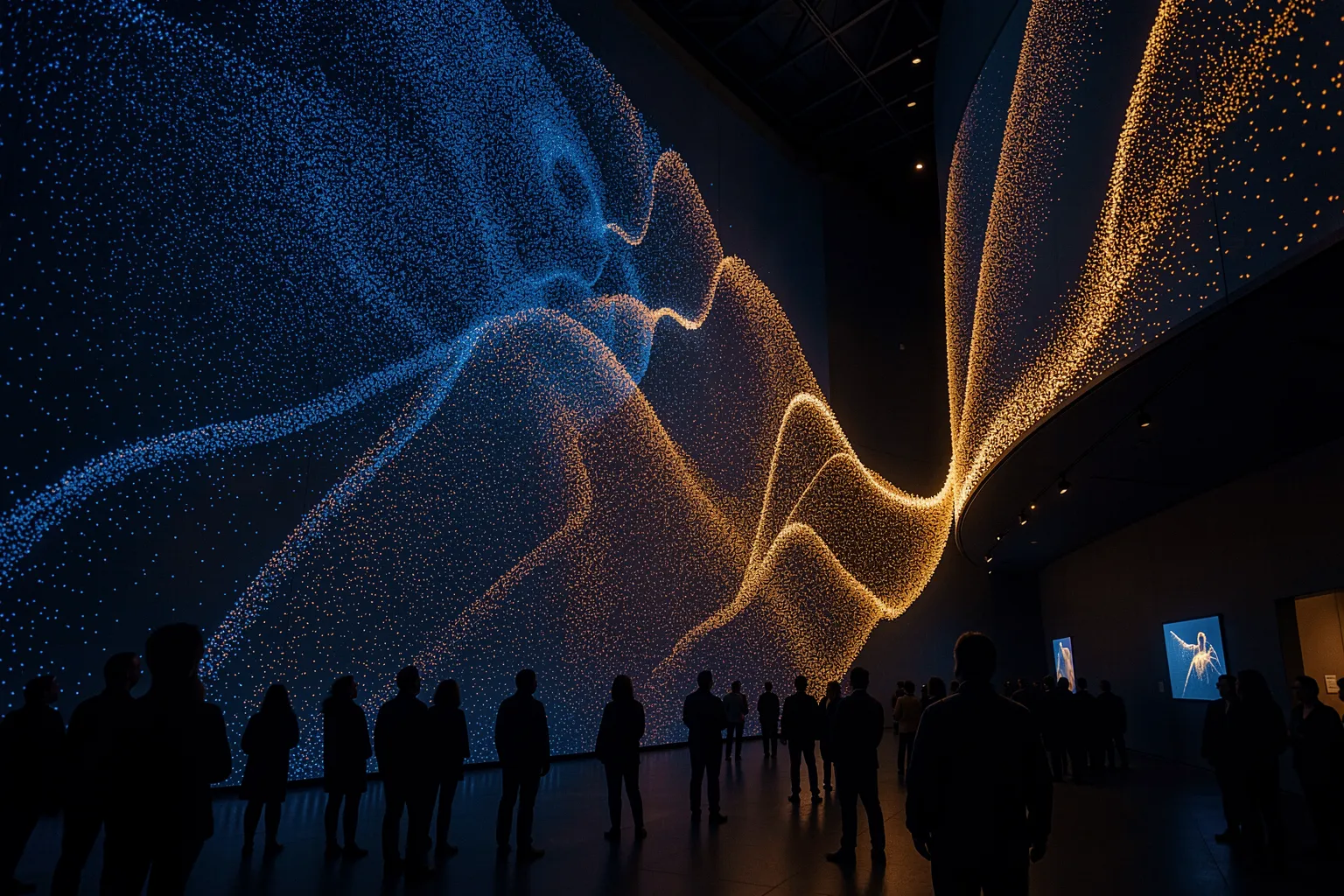
Anadol has been the obvious candidate for this moment for a while. His studio’s swirling data sculptures have filled the atrium at MoMA, the facade of Frank Gehry’s Walt Disney Concert Hall, and the lobbies of half the corporate towers that can afford him. In 2026 he opened Dataland in Los Angeles, the first museum built specifically for AI-generated work. A TIME100 nod is the establishment saying, out loud, that this is culture now — not a tech demo.
What makes the recognition interesting is how narrow it is. Anadol got in as a singular figure, a brand. The list didn’t induct “AI artists” as a category. It inducted one man who happens to be spectacularly good at turning machine output into architecture-scale spectacle, and who built the institutions to house it. That’s a very old story about art careers, dressed in new technology. Talent plus timing plus real estate.
Spectacle sells, but does it satisfy?
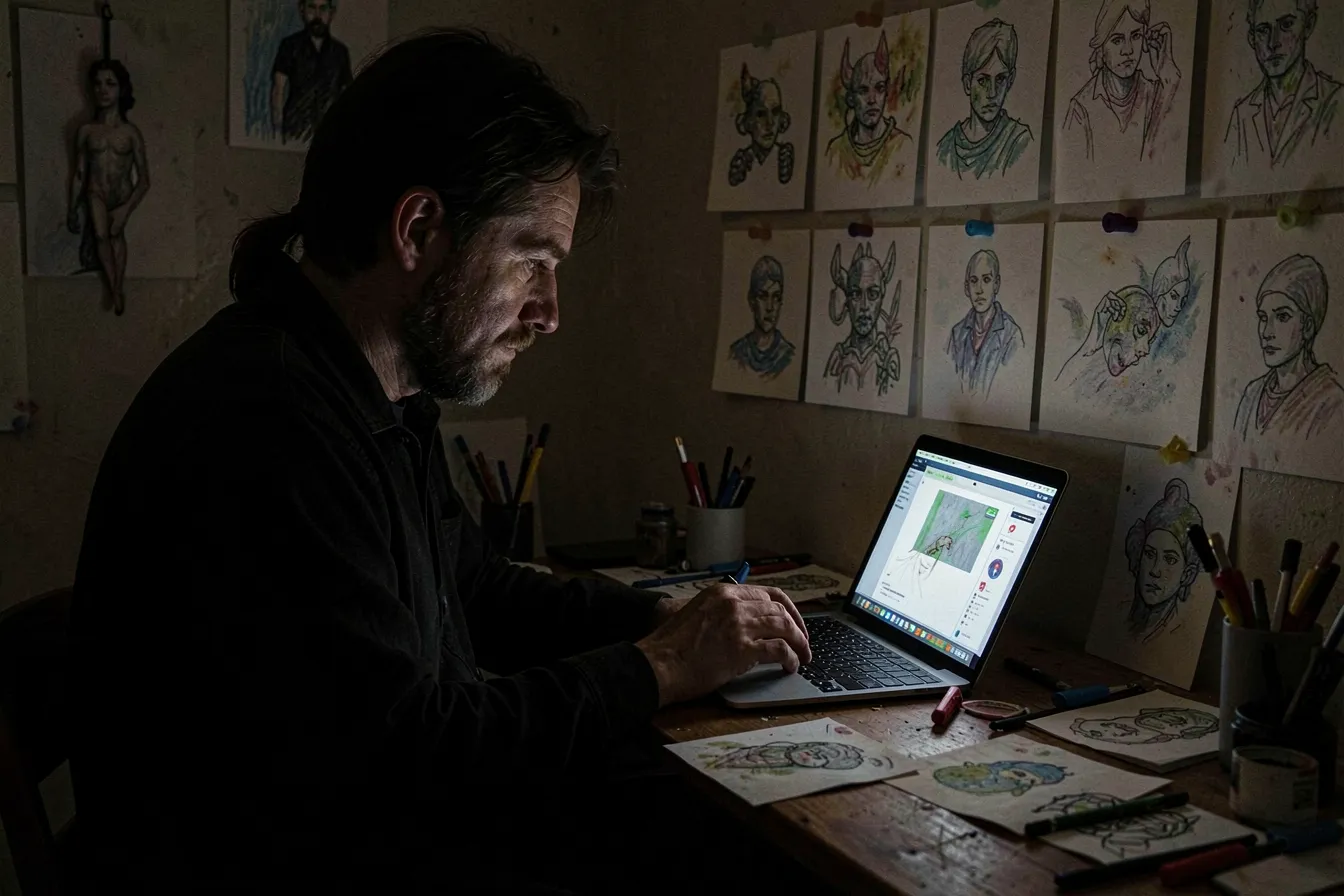
Here’s where I’ll take a position. Anadol’s work photographs beautifully and reads a little thin. The pieces are gorgeous, immersive, and emotionally legible in about four seconds — which is roughly how long most visitors stand in front of them before pulling out a phone. That legibility is the point and also the limit. Data becomes weather. Weather becomes a mood. The mood is always awe.
Compare that to what a painter like Amy Sherald or a video artist like Arthur Jafa asks of you: time, discomfort, a second look. The best contemporary art resists the quick read. A lot of large-scale AI art, Anadol’s included, is engineered for the opposite — the instant, shareable hit. None of that disqualifies it. Warhol was accused of the same shallowness, and he was right and they were wrong. But it’s worth naming the trade honestly instead of pretending scale equals depth.
The names you didn’t see on the list
The TIME100 rewards visibility, and visibility in AI art skews hard toward whoever commands the biggest wall and the loudest opening. That’s a problem, because the more inventive work is happening at smaller scales, often by artists you’ve never heard of.
- Artists training tiny custom models on their own drawings — a few hundred images, not a few million — to build a genuinely personal machine hand.
- Coders who treat the model’s failures as the medium: glitches, hallucinated anatomy, the weird seams where the network guesses wrong.
- People working in the Global South who use open models precisely because they can’t afford the studio-and-GPU-farm economics that make an Anadol possible.
None of them are getting a TIME100 slot, because their work doesn’t fill a lobby. A power list measures power. It’s honest about that. It just shouldn’t be mistaken for a map of where the ideas live.
What the institutions actually decided
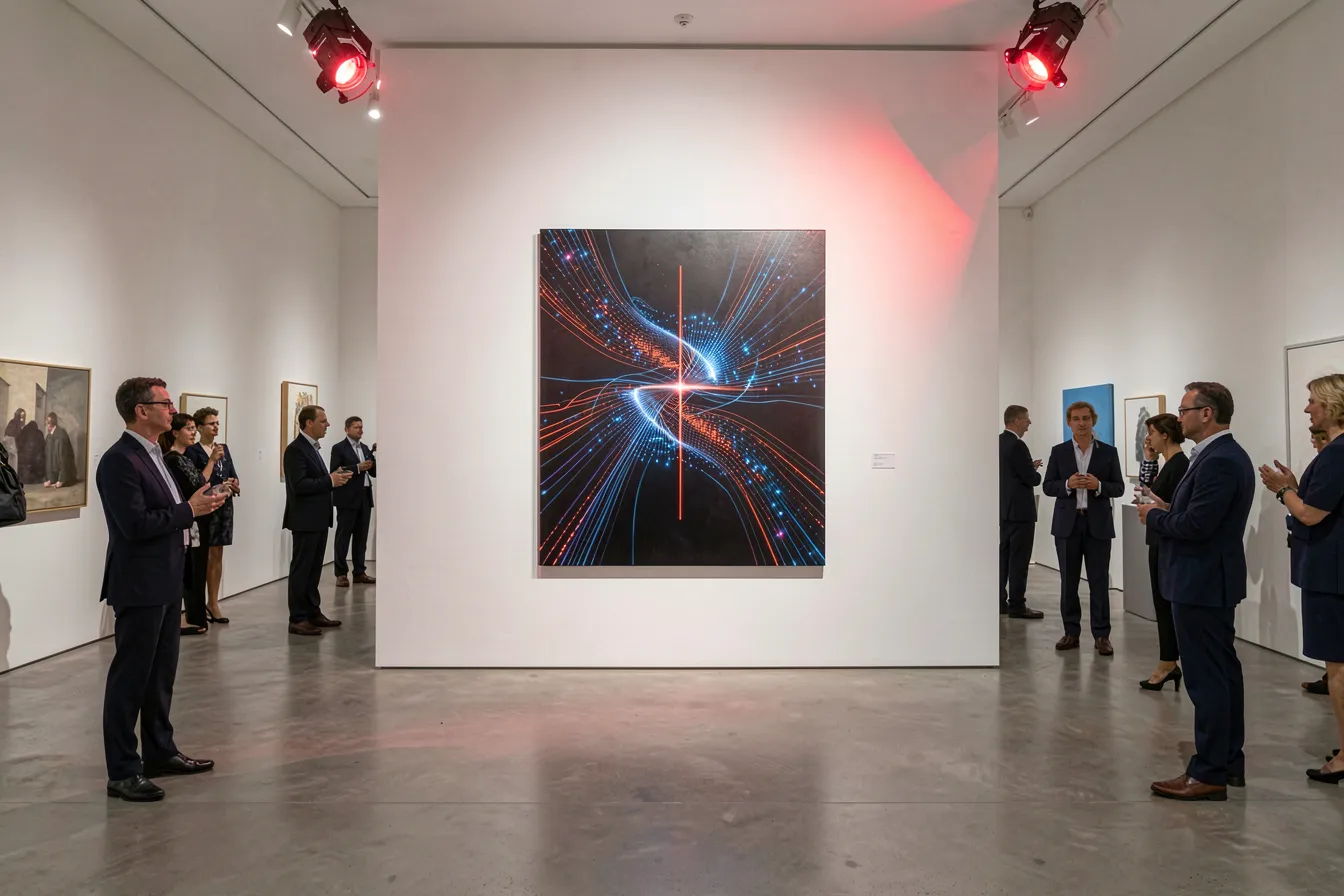
Museums and auction houses spent 2025 nervous about AI art. Christie’s took heat for its “Augmented Intelligence” sale. Curators worried about backlash, about copyright, about looking like they’d been played by a hype cycle. The Anadol induction signals that the nervousness has mostly burned off at the top. The establishment picked its representative, gave him a museum and a magazine cover, and moved on.
That resolution is convenient. Anointing one polished, collectible, litigation-safe figure lets the art world say yes to AI without wrestling with the messier version of it — the training-data lawsuits, the artists whose styles got scraped without consent, the flood of anonymous synthetic images drowning every platform. Anadol is the acceptable face. He licenses his data, credits his sources, and makes work no one will sue over. He’s AI art with the risks sanded off.
Legitimacy is a beginning, not a verdict
I don’t want to be sour about this. A serious artist got serious recognition for serious work, and the category he helped invent is stronger for it. That matters. It gives cover to the next wave of AI artists trying to get a studio visit or a first show. Institutional acceptance is a door, and Anadol just propped it open.
But a door isn’t a room. The TIME100 tells you the art world has decided AI art can be prestigious. It doesn’t tell you the medium has figured out what it’s for beyond spectacle, or that the field has room for the odd, difficult, uncommercial work that usually pushes an art form forward. Those questions are still wide open, and they won’t be settled on a magazine list.
If you want to see where this is actually heading, don’t watch the atrium installations. Watch the artists nobody’s put on a list yet. Explore more on AI art, design, and the changing art scene at ai-art-designer.com.
Images: AI-Designed
Dieser Beitrag ist auch verfügbar auf:
 English