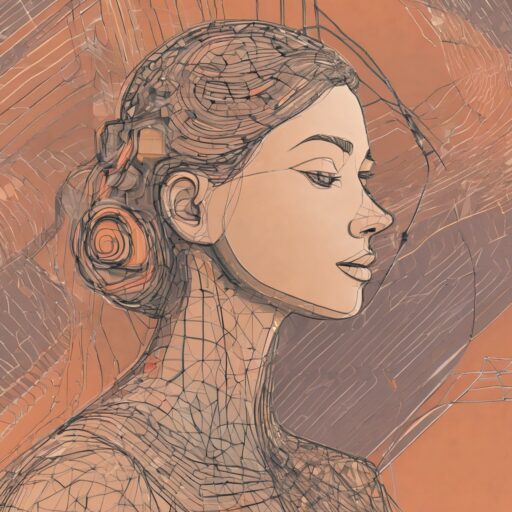
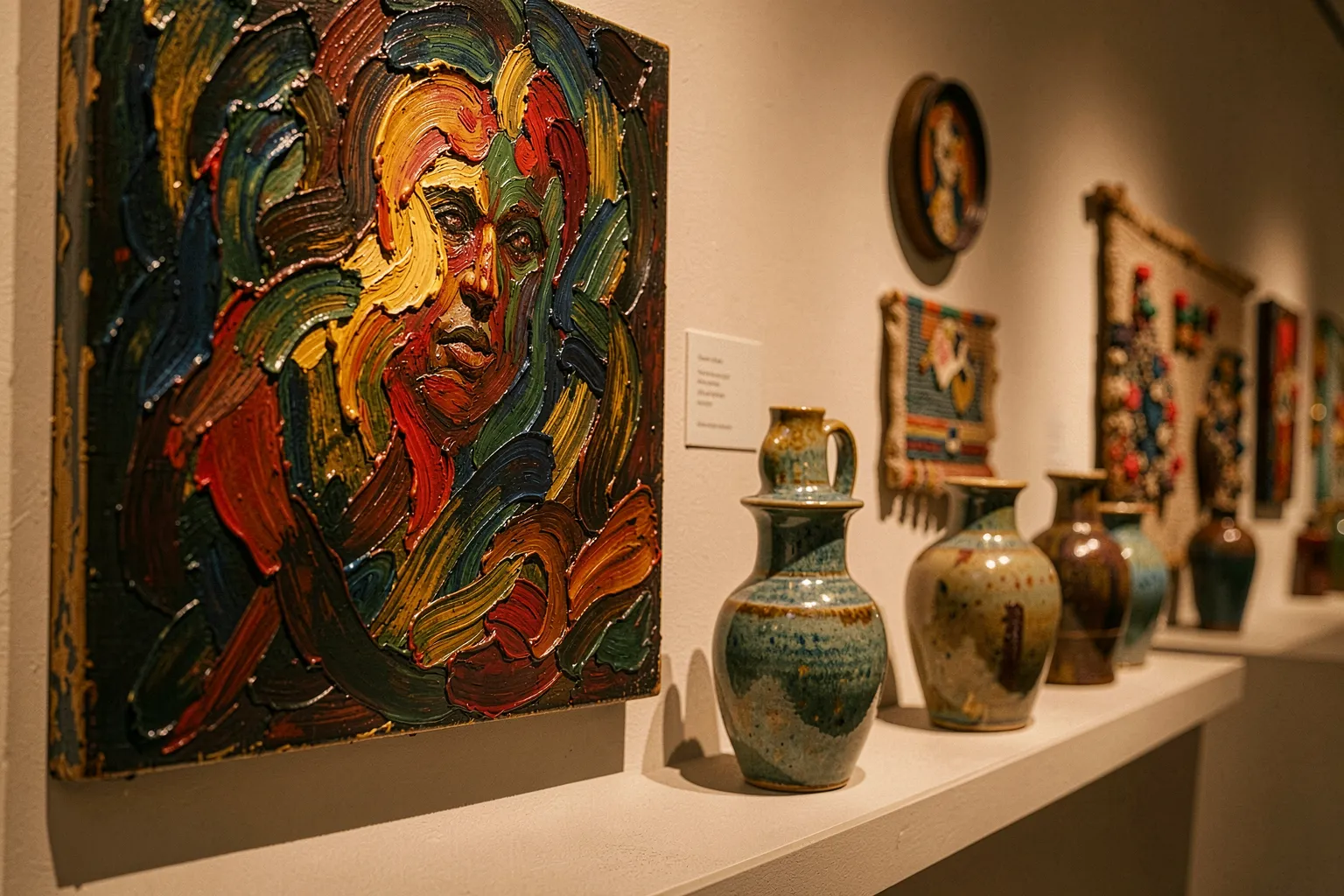
Walk any major fair this autumn and you notice the same thing: more clay, more thread, more thick oil paint you could scrape off with a fingernail. Dealers who spent the last two years talking about screens and tokens are now pushing work you can hold. The reason is not nostalgia. It is supply and demand. AI made pictures almost free, and the market answered by bidding up the things a machine cannot fake with a prompt.
The market split in two
ArtTactic’s 2026 outlook called it a K-shape, and the shape held. The top end kept setting records while the middle thinned. Contemporary art logged more than 132,000 auction transactions in the latest count, a volume record, yet a lot of that activity clustered around work with an obvious human signature. Craft-based, handmade pieces climbed as a direct counterweight to the flood of AI-generated imagery. When everyone can generate a passable landscape in nine seconds, scarcity moves to whatever is slow, physical, and hard to copy.
Collectors talk about this openly now. A ceramic vessel carries fingerprints. A tapestry carries months of a weaver’s time. Those are not features you can regenerate with a different seed, and buyers have started treating them as a hedge — the part of a collection that holds meaning no matter how good the models get.
Why tactility beats the feed
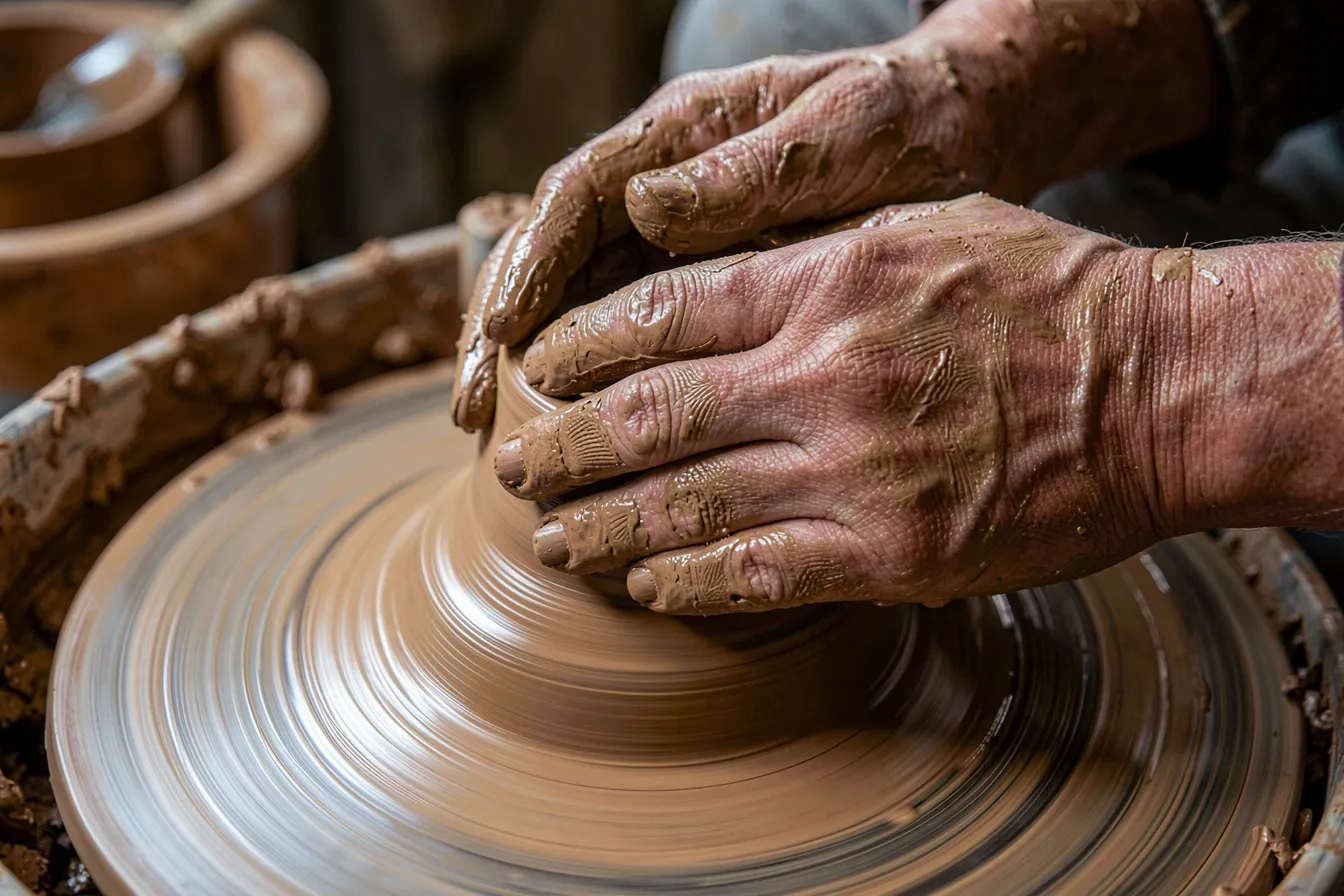
There is a simple test running through the market: can you tell how it was made just by looking? With most AI output, you can’t, and that ambiguity has quietly become a liability. A painting with visible brush loading, a glaze that pooled unevenly, a print pulled slightly off-register — these carry proof of process. The hand is the watermark. You cannot strip it out, and you cannot mass-produce it.
Galleries have caught on. Several that leaned hard into digital drops in 2024 have rebalanced their rosters toward material practice: textile artists, potters, painters who grind their own pigments. It reads as a correction, not a retreat. The digital work still sells — Art Basel’s own report this year showed digital art sales gathering real pace — but it now sits beside the handmade rather than replacing it. Two markets, running in parallel, feeding different appetites.
The authenticity problem nobody solved
Law firms are writing three-part series on it, which tells you the money is paying attention. The core question keeps coming back: when a work is partly or fully machine-made, what exactly is the collector buying? The idea? The output file? The artist’s decision to hit generate? None of those answers satisfy a buyer who wants something singular, and provenance tools haven’t closed the gap. Certificates and on-chain records prove who owns a file. They don’t prove a human sweated over it.
Handmade work sidesteps the whole debate. Nobody asks whether a hand-thrown bowl is authentic. The authenticity is baked into the material. That clarity is worth a premium right now, and the premium is showing up in prices for craft categories that spent decades filed under “decorative” and dismissed.
Where AI still fits
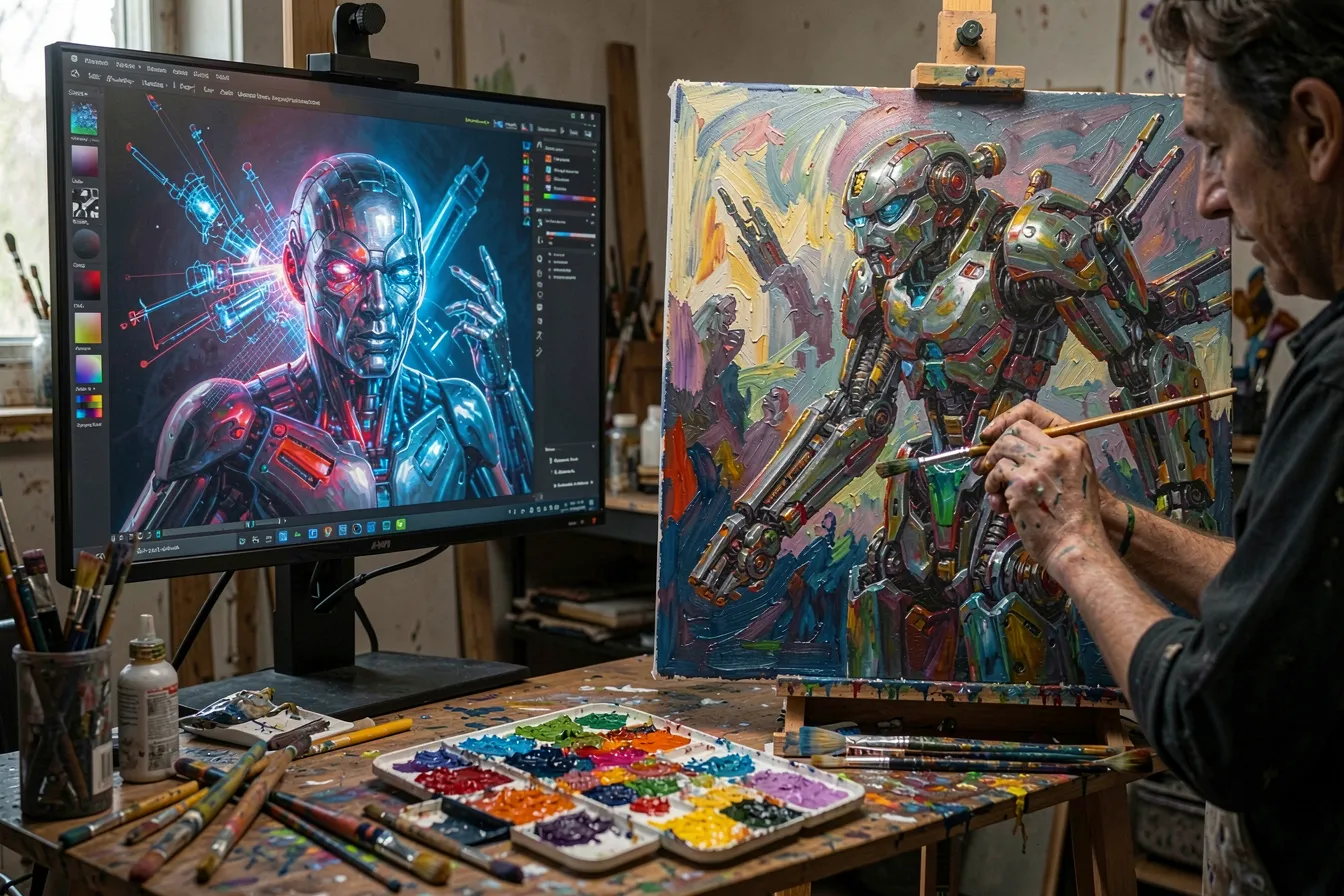
None of this means the tools are losing. It means their role is getting honest. The strongest AI artists in 2026 aren’t hiding the machine — they’re using it as one instrument among several, then finishing by hand or pushing output into physical form. Refik Anadol opened Dataland in Los Angeles, the first museum built entirely around AI arts, and his work lands precisely because it is monumental and site-specific, not because it is a file. Scale and presence are a kind of craft too.
The useful split is between AI as a shortcut and AI as a material. A shortcut competes with every other shortcut and races to zero. A material gets shaped, resisted, combined with other media, and carries the artist’s choices. That second path is the one galleries are willing to represent, because it produces something a buyer can stand in front of and believe in.
What to watch next
Two things. First, whether the craft surge is a cycle or a reset. My read is that it is structural — once image-making becomes free, the premium on the physical rarely gives it all back. Second, how the hybrid artists price. A piece that starts in a model and ends in oil or ceramic or steel is neither pure AI nor pure craft, and the market hasn’t settled on how to value it. That’s the interesting edge, and it is where the next few seasons will be decided.
The lesson for anyone making images in 2026 is blunt: speed is no longer a differentiator, because everyone has it. What you do after the generate button — the hand, the material, the point of view — is the whole game.
Explore AI-assisted art and design styles, and see where the machine ends and the maker begins, at ai-art-designer.com.
Images: AI-Designed
Dieser Beitrag ist auch verfügbar auf:
 English