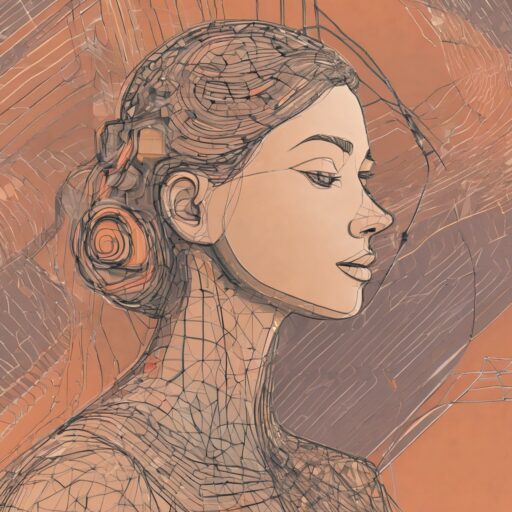
A century after a small German school rewrote the rules of modern design, the Bauhaus is having an unexpected second act — this time inside neural networks. Generative AI has become fluent in the language of primary colors, clean geometry, and radical functionalism, and designers are using it to push Bauhaus ideas somewhere its founders could only dream of. The result is not nostalgia. It is a living dialogue between a 1919 manifesto and a 2026 machine.
Why Bauhaus and AI Speak the Same Language
The Bauhaus was, at heart, a system. Walter Gropius and his colleagues believed design should be reducible to rational parts: the circle, the square, the triangle; red, yellow, blue; form dictated by function rather than decoration. That systematic clarity is exactly what generative models handle well. When you ask a diffusion model for “Bauhaus,” it does not reach for chaos — it reaches for grids, balance, and honest materials.
This makes the movement an ideal training ground for AI-assisted design. The style is legible enough for a model to reproduce convincingly, yet flexible enough to recombine in surprising ways. Feed a model the DNA of Herbert Bayer’s typography or Marianne Brandt’s metalwork, and it can extrapolate variations that feel authentically Bauhaus without copying any single artifact.
Form Follows Algorithm
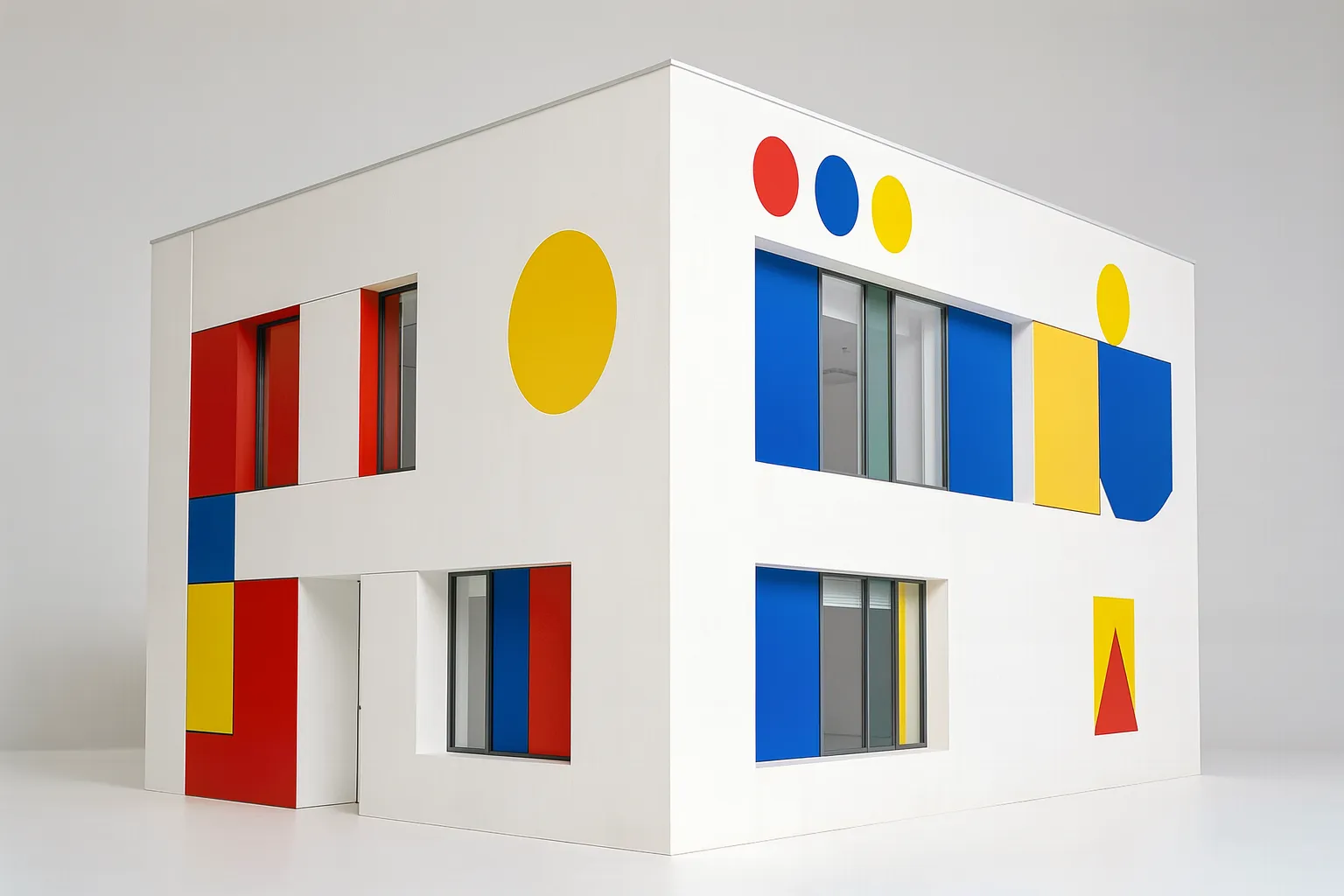
The Bauhaus mantra “form follows function” is quietly mutating into “form follows algorithm.” Architects experimenting with generative tools describe a workflow where constraints — daylight, material cost, circulation, structural load — are fed to a model that returns hundreds of rationalist massing options in minutes. The white cubic volumes, ribbon windows, and flat roofs of the International Style turn out to be remarkably compatible with parametric optimization.
What emerges is a new kind of functionalism. Where the original Bauhaus optimized by hand and intuition, AI can optimize across thousands of variables at once, then present the results in the movement’s own visual vocabulary. The designs look like Dessau; the logic behind them looks like a spreadsheet made spatial.
Furniture, Type, and Objects Reborn
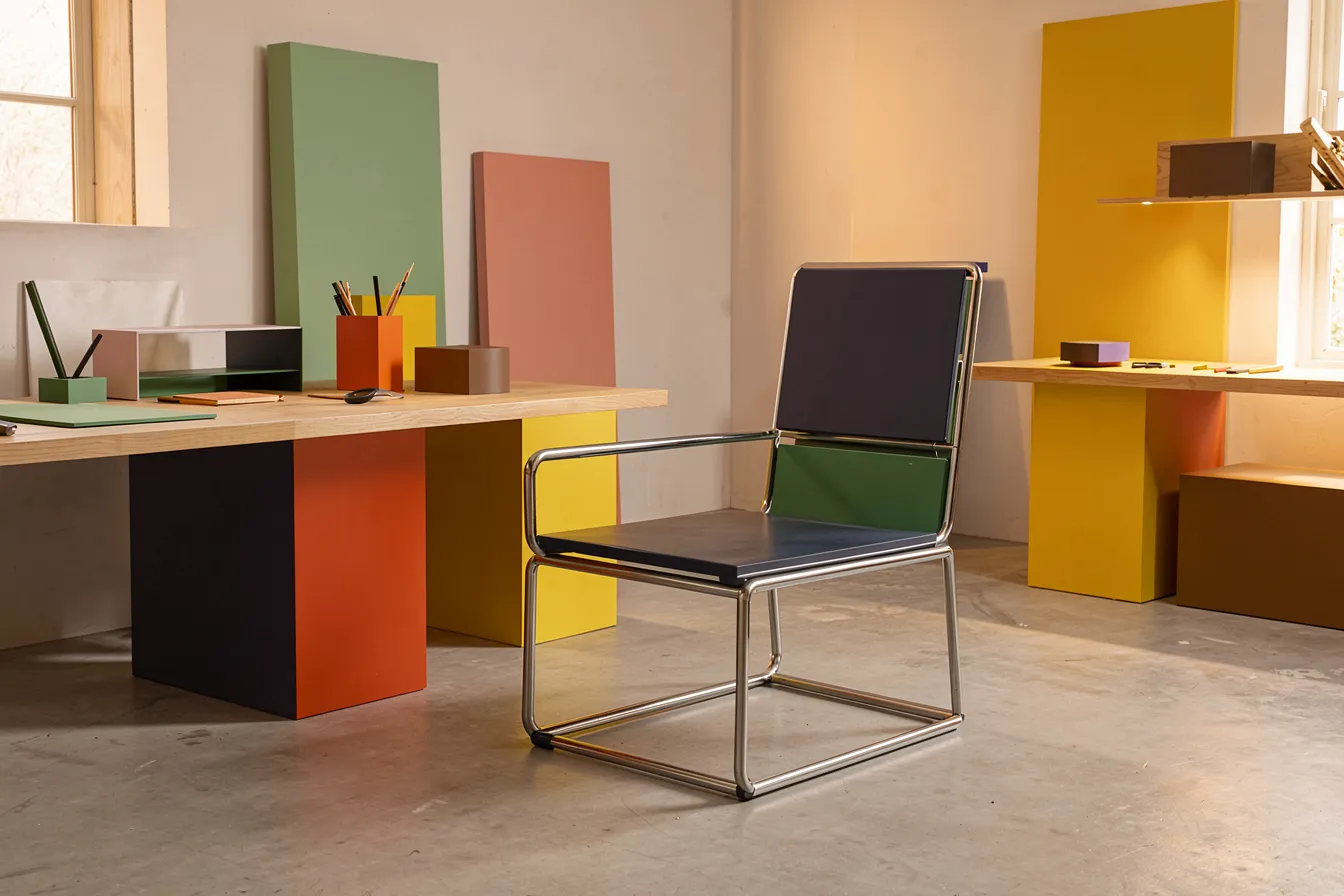
Beyond architecture, the Bauhaus lives most vividly in objects — and this is where AI gets playful. Generative tools are producing:
- Tubular-steel furniture studies that riff on Marcel Breuer’s Wassily chair, remixed with contemporary ergonomics.
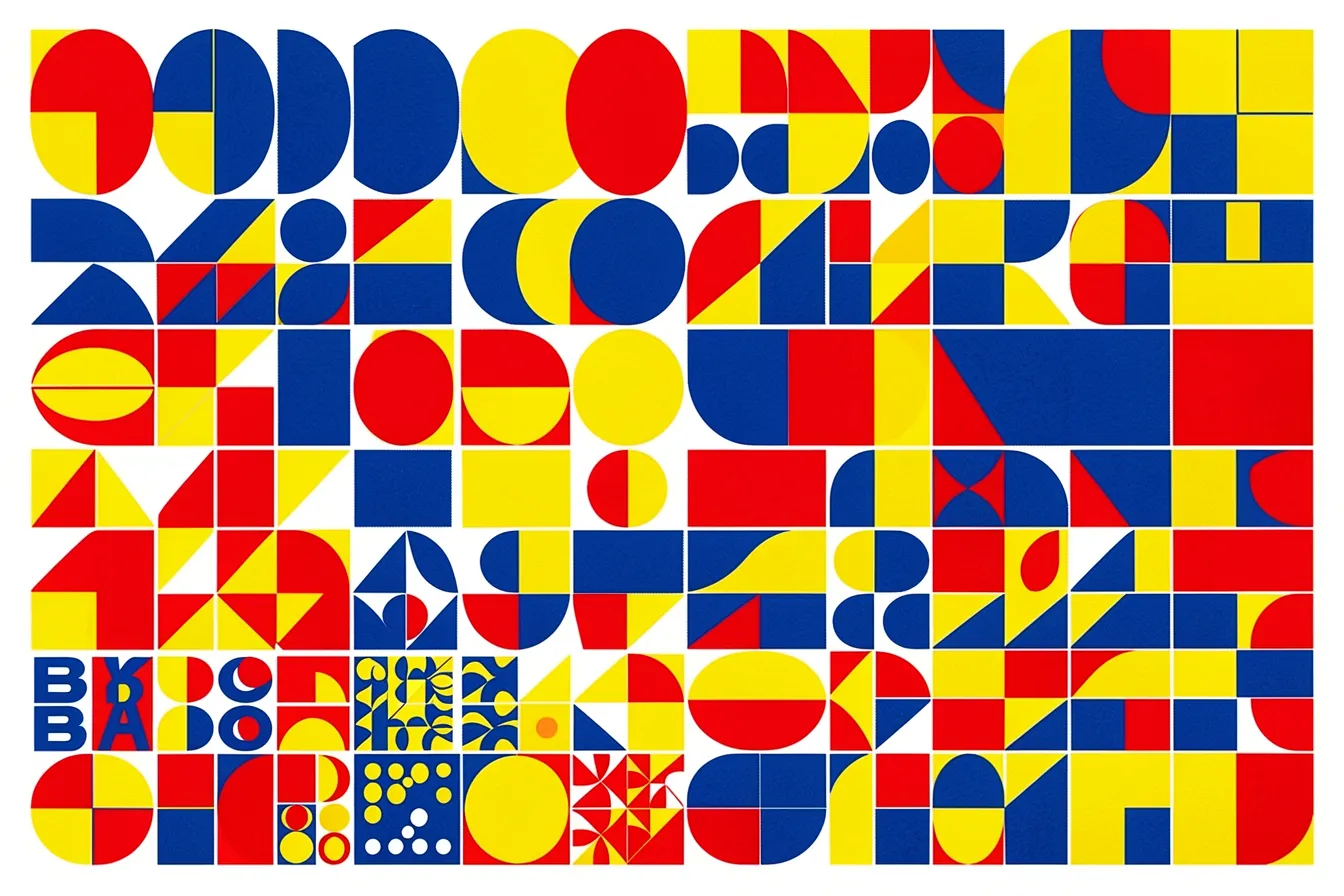
- Geometric sans-serif typefaces that extend the logic of Universal type into hundreds of weights.
- Textile and rug patterns descended from the weaving workshop, generated as endless non-repeating variations.
- Product concepts that honor the “less but better” ethos while testing materials the 1920s never had.
The danger, of course, is pastiche — a flood of red-yellow-blue clichés that mistake surface for substance. The best practitioners resist this by using AI as a sparring partner, not an oracle: generate widely, then edit ruthlessly with a designer’s judgment.
The Ethics of a Systematic Style
There is a deeper resonance worth naming. The Bauhaus dreamed of democratizing good design — bringing well-made, affordable objects to everyone through industrial production. Generative AI makes a similar promise: sophisticated design language, available instantly, to anyone with a prompt. But the same questions haunt both revolutions. Who is credited when a machine handles the craft? Does mass availability erode the value of the object, or expand who gets to make one?
The Bauhaus never fully resolved the tension between the artist and the assembly line. AI reopens that debate on new terms, and the movement’s history offers a useful lesson: tools do not replace vision. The school produced icons because it paired new technology with a rigorous point of view. The same will be true of anyone using AI to work in this idiom today.
A Living Manifesto
What makes this revival compelling is that it is generative in both senses of the word. AI is not embalming the Bauhaus; it is treating its principles as a system to be extended. Clean geometry becomes a starting grammar. Primary colors become adjustable parameters. Functionalism becomes an optimization target. The century-old manifesto turns out to be surprisingly good source code.
Curious how AI reinterprets the design and architecture styles you love? Explore more experiments, galleries, and style deep-dives at ai-art-designer.de — where the history of design meets the future of the machine.