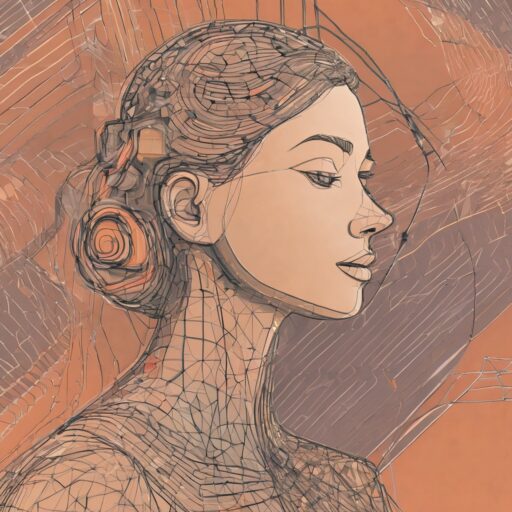
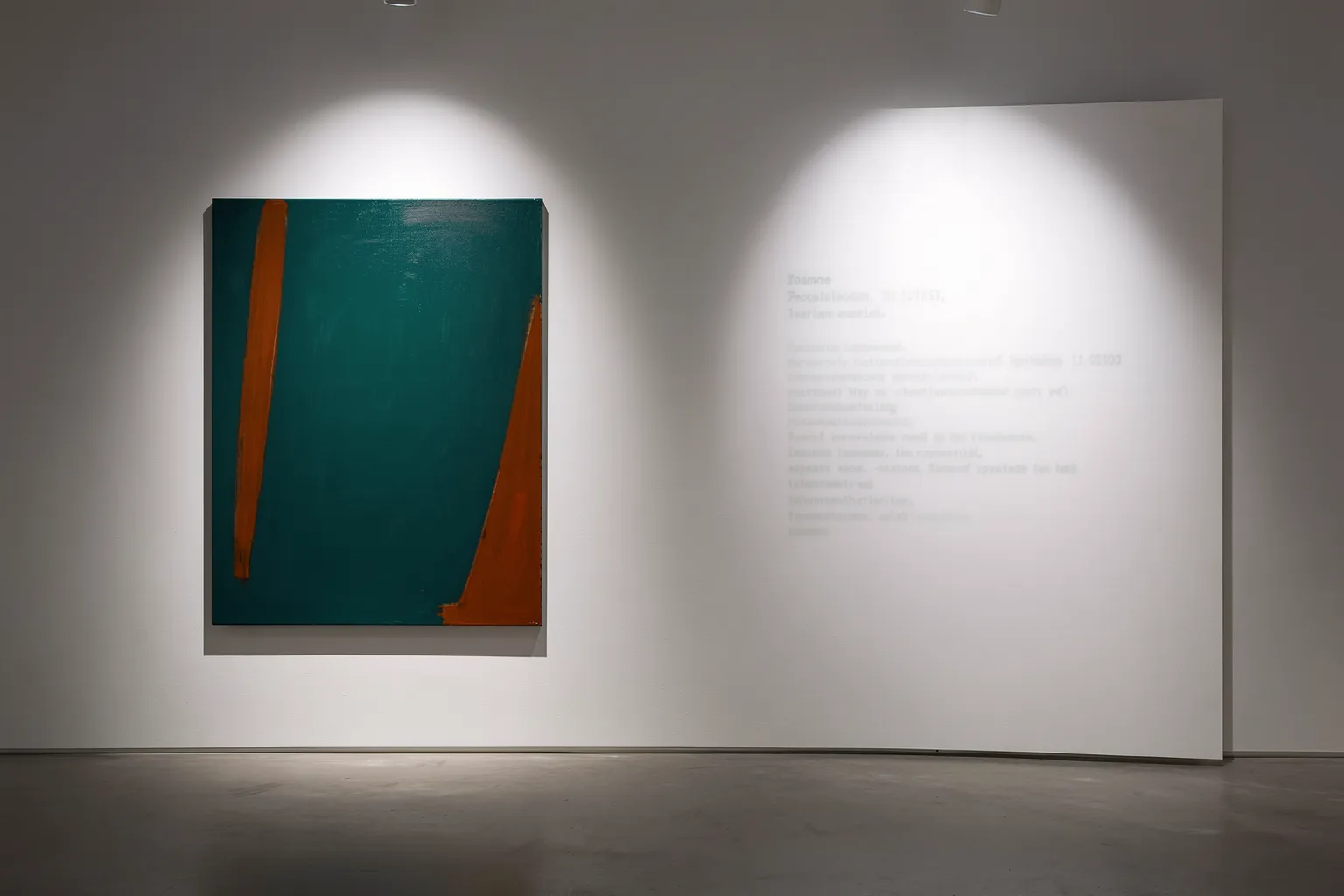
Everyone argues about the pictures. The AI debate in art fixes on images — who made them, who owns them, whether a diffusion model counts as a brush. Meanwhile a quieter substitution has been creeping across gallery walls, press inboxes, and catalog pages. The words are going synthetic. Wall labels, artist statements, show essays, grant applications, the breathless press release announcing a “paradigm-shifting intervention” — a lot of that language now comes out of a chatbot, and the art world is only starting to admit it.
Hyperallergic put a name to it this autumn, calling the flood of machine-written text the art world’s real AI problem. Not the paintings. The prose. And once you notice it, you can’t stop reading labels differently.
The tell is the sentence that says nothing
You know the voice. It is confident, grammatical, and empty. A sculpture “interrogates the liminal space between presence and absence.” A painter “reclaims agency through a poetics of rupture.” Three adjectives where one would do. A thesis that could describe any object in any room. Curators and critics have written bad artspeak for decades — the satirical term “International Art English” is fifteen years old — but a language model trained on exactly that corpus produces it faster and smoother than any overworked gallery intern.
That is the trap. The machine learned to write like the art world at its worst, so its output passes. A tired press officer with four openings this month pastes in a bio, asks for “300 words, elevated tone,” and ships whatever comes back. Nobody lied, exactly. But nobody wrote it either, and the artist’s actual thinking — the reason the work looks the way it does — gets flattened into a template.
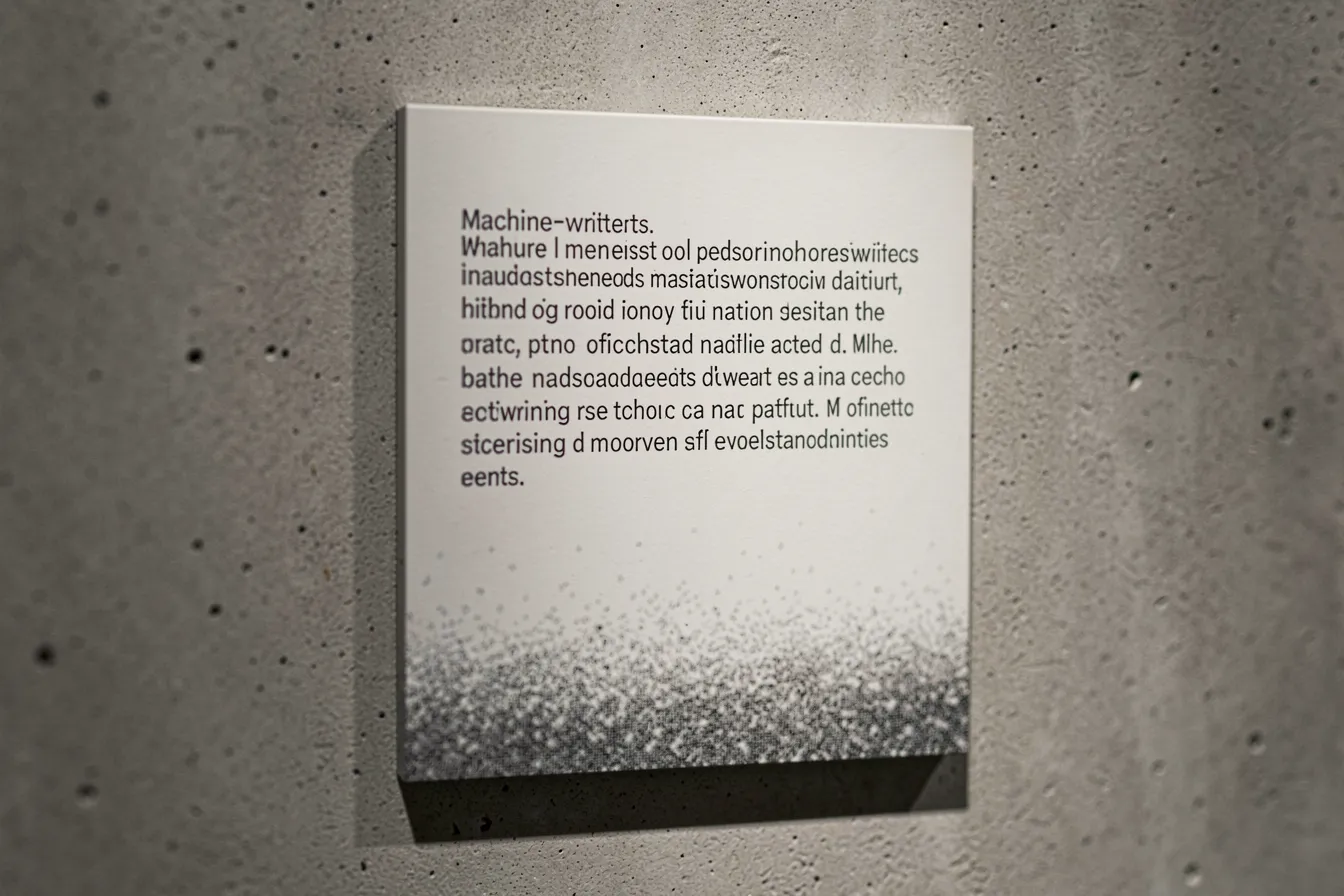
Why the text matters more than people admit
Here is the thing collectors and critics keep relearning: in contemporary art, the words are not packaging. They are part of the work. A Felix Gonzalez-Torres candy spill is a pile of sweets until the label tells you it weighs what his partner weighed before AIDS took him. The text does the emotional work. Strip the writing down to generated filler and you don’t just lose polish — you sever the link between an object and why anyone should care about it.
Galleries feel this in money terms too. A serious collector reads the essay. A museum committee reads the proposal. An editor reads the pitch. When every one of those documents starts sounding like the same agreeable intern, the signal that used to separate a rigorous program from a lazy one goes quiet. Everyone sounds equally articulate, which means nobody does.
Paris Photo drew a line this month
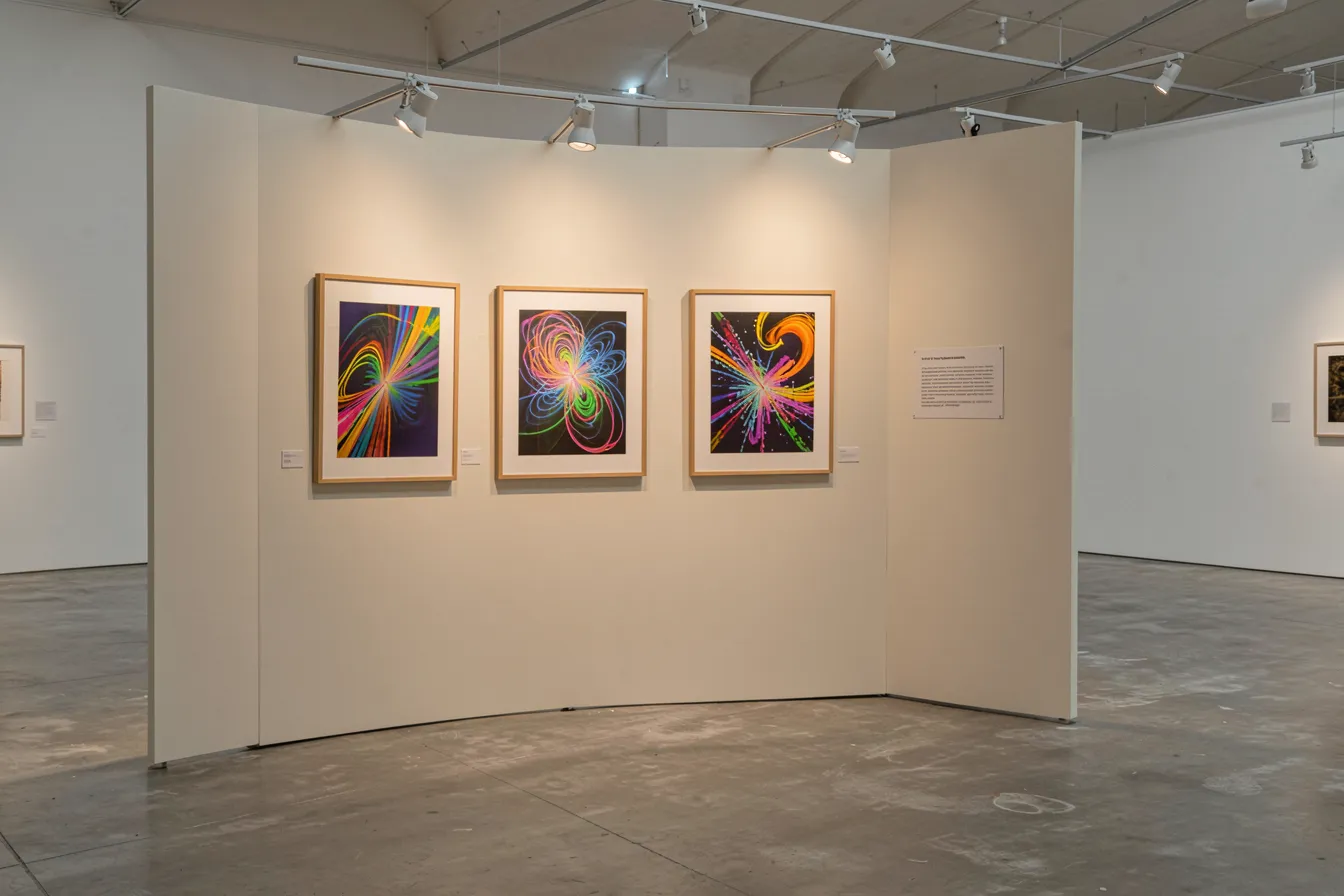
The fair circuit is wrestling with where to put synthetic work, and the answer is getting more careful rather than more permissive. At Paris Photo in mid-November, the digital sector framed AI and generative pieces inside a long art-historical lineage — placing them next to the experiments of earlier photographers and computer artists rather than treating them as a novelty bin. That framing is itself a form of writing. Someone had to think hard about the words that contextualize a machine-made image, and the fair’s choice was to take that labor seriously instead of outsourcing it.
Contrast that with the auction drama. Thousands of artists signed an open letter in early November asking Christie’s to pull an AI-focused sale, arguing the underlying models were trained on their work without consent. Strip away the heat and the fight is about the same thing: attribution. Who made this, and does the label tell the truth? A generated wall text that papers over a generated image compounds the problem — two layers of “nobody here, really” stacked on one object.
Some artists are using the tools on purpose — and saying so
The honest cases are the interesting ones. Plenty of artists now draft with a model openly, the way a writer uses a thesaurus or a sculptor uses a 3D printer. They prompt, edit hard, throw out most of it, and keep the one line that actually lands. The difference is disclosure and judgment. A statement written with AI and then rewritten by a human who means every word reads completely differently from one generated and shipped unread. You can usually feel which is which within a sentence or two.
A few galleries have started asking artists to flag AI-assisted text the same way they would flag a studio assistant’s hand in a painting. Not as a scarlet letter — as basic provenance for the words. It is a small administrative habit that restores something the generated-prose wave took away: the assumption that when a label speaks, a person chose the words.
What a gallery can actually do about it
- Read everything out loud before it ships. Synthetic prose survives on the screen and dies in the mouth. If a sentence has no breath in it, rewrite it.
- Cut the adjectives in half. “Liminal,” “poetic,” “radical,” “nuanced” — delete three of every four and see what claim is left. Often there isn’t one. That is the diagnosis.
- Ask the artist one real question and quote the answer. One concrete sentence in a maker’s own voice outweighs a page of smooth nothing.
- Disclose assistance. If a model drafted it, say a human finished it. Collectors and critics reward the honesty more than they punish the tool.
None of this is a ban. The models are good at grunt work — fixing a clumsy caption, translating a bio, cleaning up a grant form at midnight. Used that way they free up the hours a small gallery never has. The failure is handing them the one job that was never clerical: saying, in human words, what a piece of art is for.
The image debate will grind on for years. But the quieter fix is sitting right on the wall, in twelve-point type next to the work. Read the label. If it sounds like it came from a person who looked hard at the art and had something to say, it probably did. If it sounds like it could hang next to anything — that is the tell, and it is worth fixing by hand.
Want images with intent behind them, not filler? Explore the AI art and design tools at ai-art-designer.com and make work worth writing a real label for.
Images: AI-Designed
Dieser Beitrag ist auch verfügbar auf:
 English