Ask ten AI artists how they keep their work looking like theirs and sooner or later someone says the word: LoRA. Small files, a few dozen megabytes each, trained on a handful of images. They don’t replace the base model. They nudge it. And that nudge is where a lot of recognizable personal style in AI art now lives.
The acronym stands for Low-Rank Adaptation. It came out of a 2021 Microsoft paper about fine-tuning large language models cheaply, then jumped to image models once Stable Diffusion opened the door. The idea is almost stingy in a good way: instead of retraining billions of weights, you train two small matrices that, multiplied together, approximate the change you want. Tiny footprint, big reach. A full checkpoint is 2 to 7 gigabytes. A LoRA that teaches that same checkpoint a specific face, a brushwork, a lighting mood, might be 18 megabytes.
What a LoRA actually does
Think of the base model as a musician who can play anything but has no particular taste. A LoRA is a short, intense rehearsal on one kind of song. Train it on forty photos of a ceramic sculptor’s glazes and the model starts reaching for those cracked, matte surfaces even when you ask for something unrelated. Train it on your own paintings and it learns your palette, your edges, the way you botch a horizon on purpose.
The mechanism matters because it explains the control. When you load a LoRA at inference, you set a weight — usually between 0 and 1, sometimes pushed past it. At 0.4 the influence is a suggestion. At 0.9 it can dominate the frame, occasionally to the point of frying the image into mush. Artists spend real time hunting for the number where the style reads clearly but the composition still breathes. That search is craft, not button-pushing.
Training one without a server farm
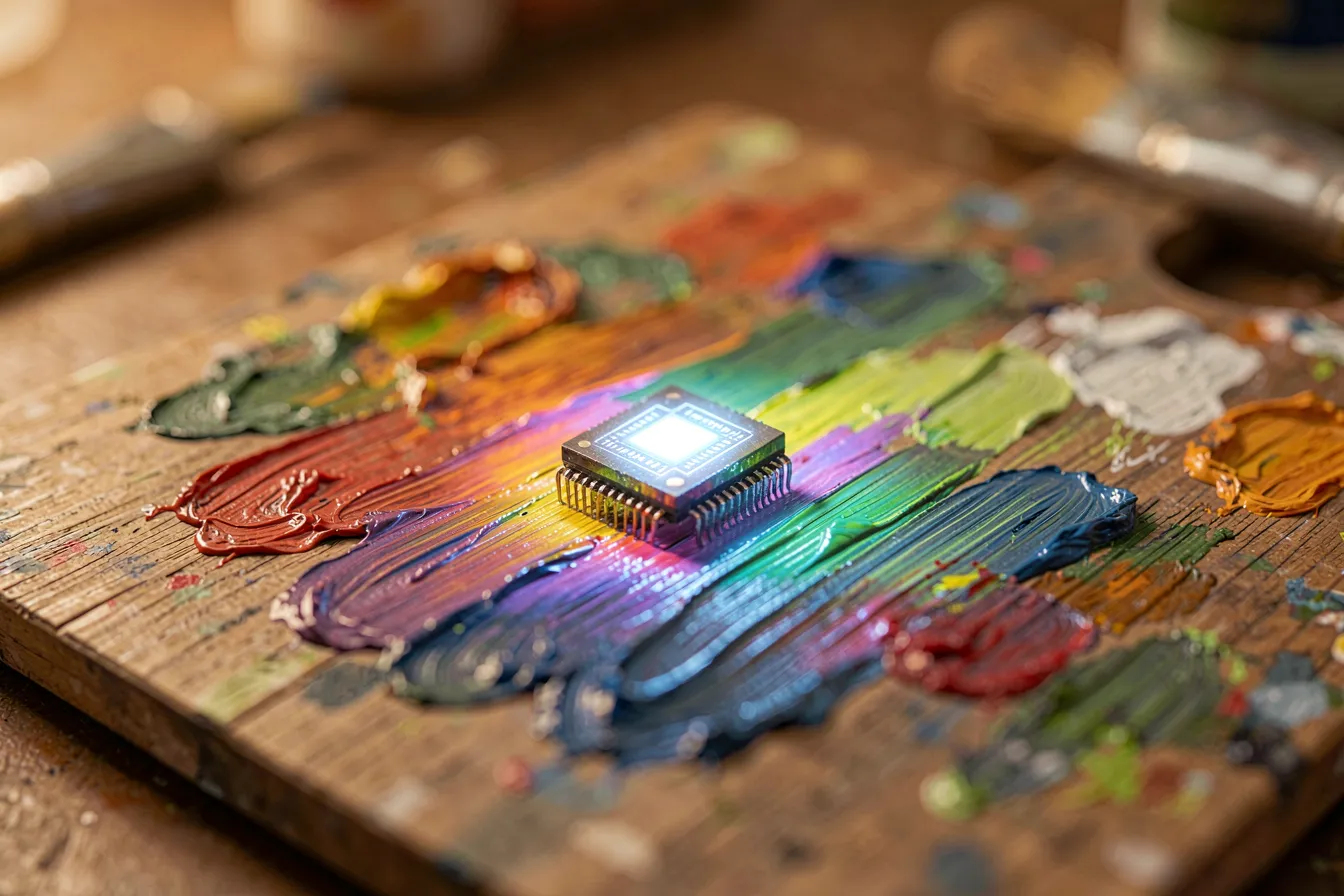
Here’s the part that changed who gets to do this. You can train a usable style LoRA on a single consumer GPU in under an hour. Tools like Kohya’s sd-scripts, OneTrainer, and the various civitai and Replicate trainers turned a research technique into a weekend habit. The dataset is small on purpose — 15 to 50 images for a style, sometimes fewer for a face. Caption each one, pick a trigger word, set a learning rate, let it cook.
The failure modes are honest and quick to spot. Too few images or too many training steps and the LoRA memorizes instead of generalizing — it spits back your training photos with slight warps, a problem people call overfitting. Too few steps and nothing sticks. Captions that are too vague teach the model the wrong thing; caption a portrait only as “woman” and the LoRA quietly decides your subject’s hairstyle is part of the “woman” concept and welds it onto everyone. Good captioning is unglamorous and it’s half the battle.
Stacking: where it gets interesting
One LoRA is a tool. Several at once is a studio. Because each adapter is independent, you can load a character LoRA, a lighting LoRA, and a watercolor-texture LoRA in the same generation and dial each to its own weight. A portrait artist might run their face model at 0.8, a soft-rim-light LoRA at 0.5, and a grain LoRA at 0.3 to kill the plastic AI sheen. The result doesn’t look like any one of those files. It looks composed.
Stacking is also where people get burned. Two LoRAs trained on overlapping concepts fight each other — load two different “anime style” adapters and you often get a smeared average of both, worse than either alone. Weights interact non-linearly, so a combo that sings at one set of numbers falls apart when you bump a single slider. The practical move is to introduce adapters one at a time, lock a weight, then add the next. Sculptors do the same thing with clay: add, step back, look, add again.
The ethics nobody can skip
A technique this cheap to train on this few images runs straight into consent. Train a LoRA on a living illustrator’s portfolio and you’ve built a machine that imitates a specific working artist, by name, without asking. This happens constantly, and it’s the ugliest corner of the whole scene. Some platforms now ban named-artist style LoRAs or require the subject’s permission; enforcement is spotty. The honest artists I’d point to train on their own work, on public-domain material, or on photos they shot themselves — and they say so.
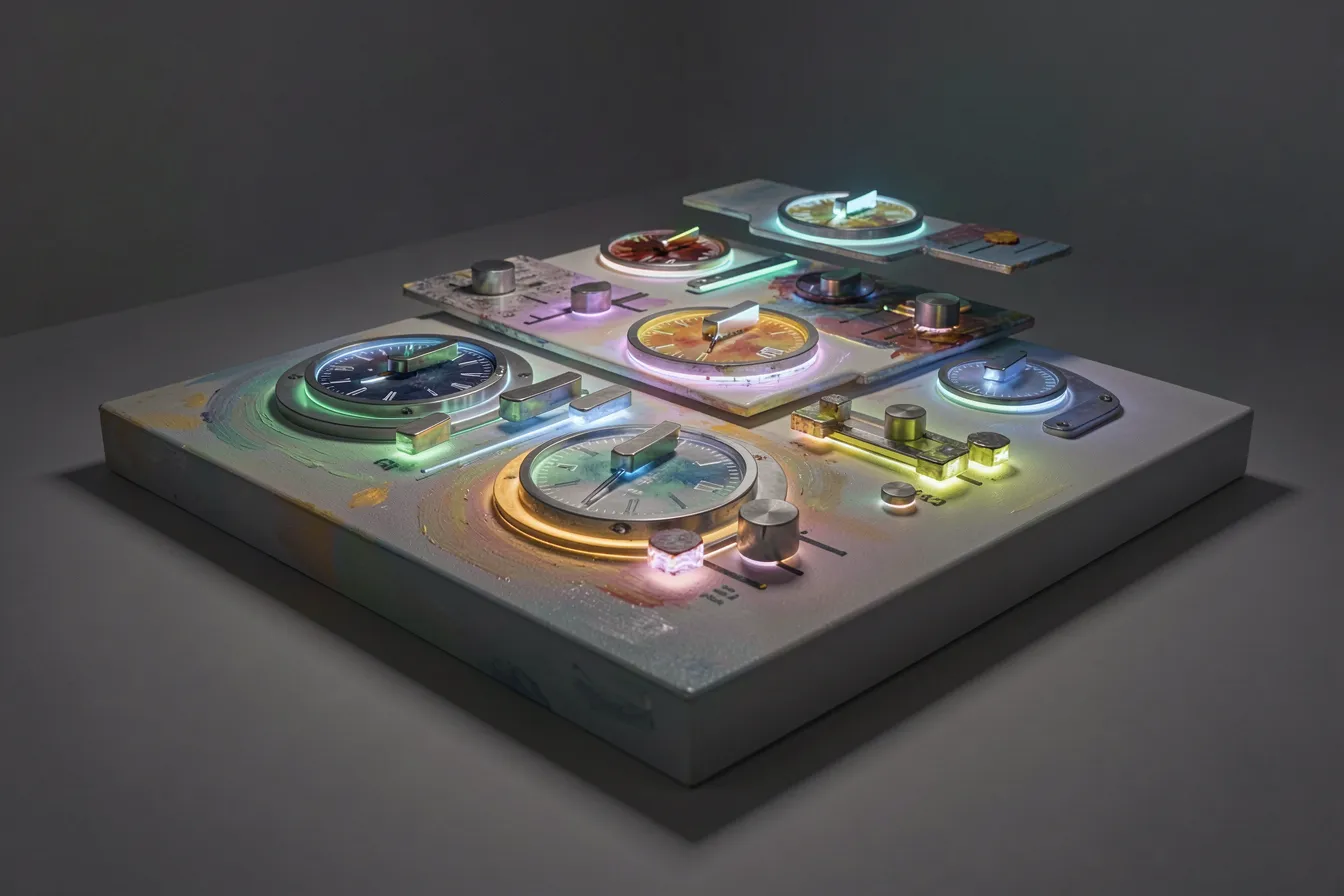
There’s a defensive use too. A growing number of creators train LoRAs on their own catalog precisely so they own the adapter rather than leaving their style scattered across someone else’s scraped dataset. It’s a strange reversal: the same tool that enables imitation also lets an artist fence off and formalize what makes their work theirs.
Why it stuck
Bigger base models keep arriving — Flux, SDXL, the rest — and each time, people worried LoRAs would become obsolete. They haven’t. The reason is boring and durable: generality is the enemy of style. A base model trained on everything averages toward the middle. Style lives at the edges, in specifics, in the quirks a small dataset carries. As long as artists want their work to look like a decision rather than a default, the small adapter beats the giant model.
If you want to feel the difference, generate the same prompt twice — once bare, once with a style LoRA you trained on five of your own images at weight 0.7. The second one will be worse in some technical way and far more interesting in every way that matters. That gap is the whole argument.
Want to see LoRA-driven styles in finished pieces, or build your own look? Explore the gallery and tools at ai-art-designer.com.
Images: AI-Designed
Dieser Beitrag ist auch verfügbar auf:
 English