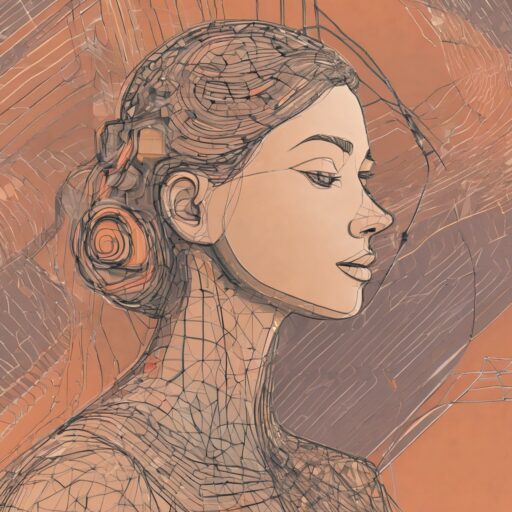
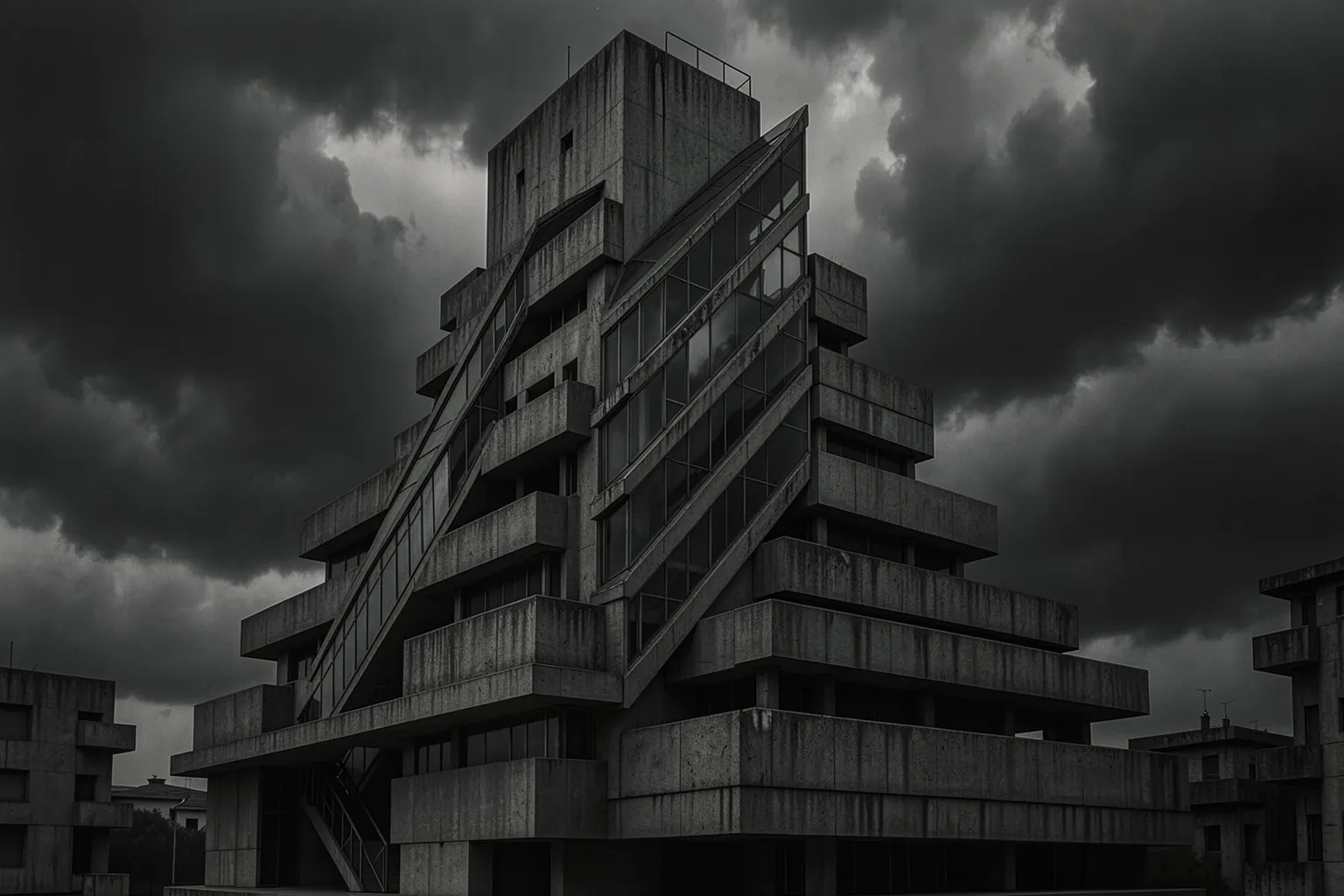
Antonio Sant’Elia drew a city he never got to build. In 1914 he sketched the Città Nuova — towers stacked with external elevators, terraced apartment blocks fed by multi-level roads, power stations that looked like cathedrals. Then he went to war and died in 1916, at 28. His drawings survived. The buildings never did. For more than a century, Italian Futurist architecture has existed almost entirely on paper: a movement of manifestos and perspective studies, gorgeous and unrealized.
AI image tools have quietly become the best way to see what those drawings might have become. Not because the machine understands Sant’Elia — it doesn’t — but because it can hold his line-heavy vocabulary steady across dozens of views and lighting conditions, which no single illustrator ever had the time to do.
What Futurism actually wanted from a building
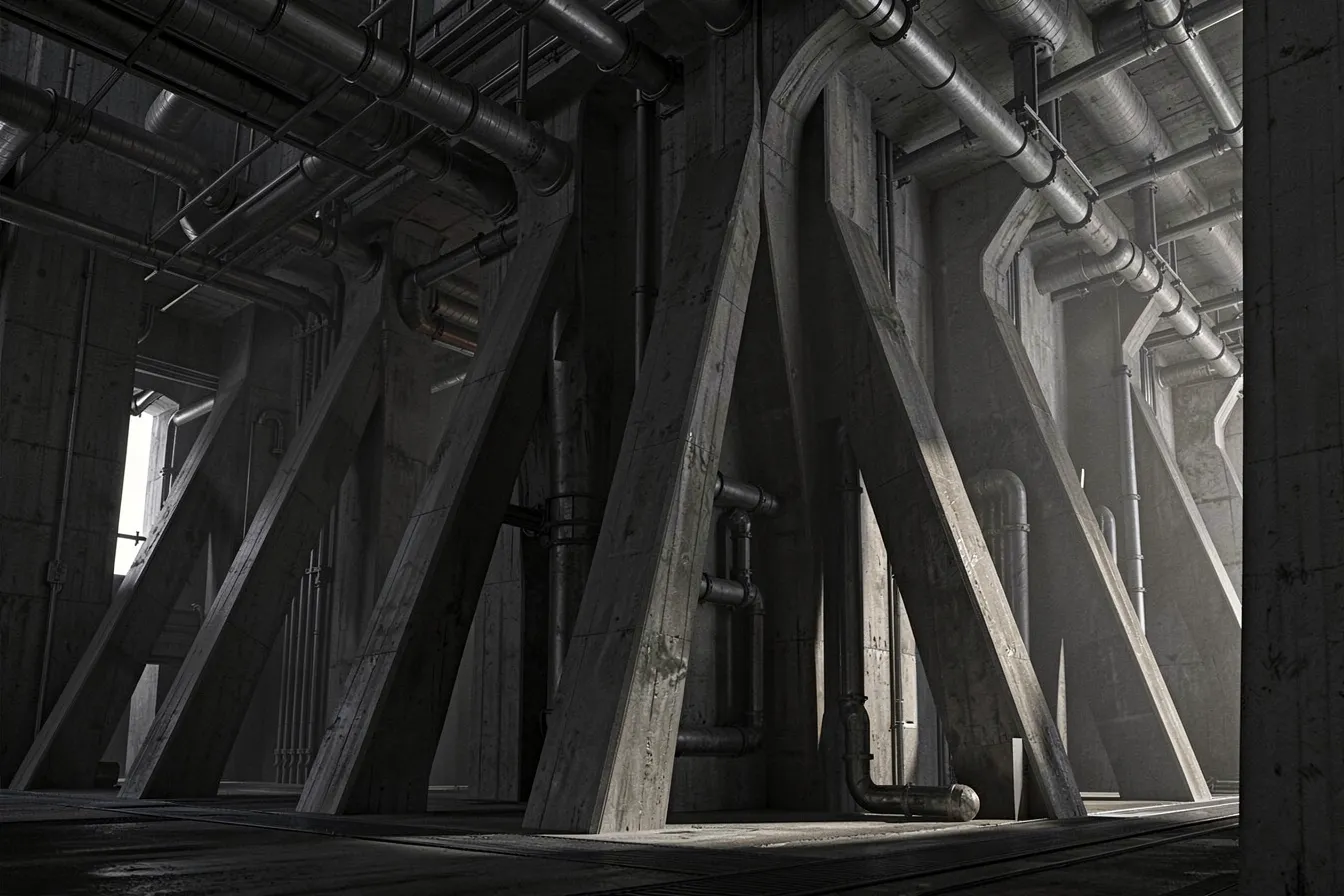
Strip away the manifesto bombast and the Futurist program is specific. Sant’Elia hated the horizontal, decorative city of the nineteenth century. He wanted diagonals and ellipses. He wanted a building to advertise its own systems — stairs on the outside, lifts running up the facade like veins, no cornices, no columns pretending to hold up anything. “The new architecture is the architecture of calculation,” he wrote. Concrete, iron, glass. Buildings meant to last a generation, then be torn down and rebuilt, because a city should move as fast as the people in it.
That last idea killed the style as much as the war did. You can’t fund a city designed to be demolished. So the vocabulary drifted into other movements — Art Deco borrowed the setbacks, science fiction borrowed the mood, and Fritz Lang’s Metropolis put a Futurist skyline on screen in 1927. But the pure thing, Sant’Elia’s stepped towers with their diagonal circulation, stayed on the page.
Why the drawings are hard to render by hand
Anyone who has tried to paint from a Sant’Elia sketch runs into the same wall. His perspectives are dramatic but incomplete. He gives you a monumental front elevation and leaves the sides, the ground plane, the actual programme of the building vague. Turn the corner and you’re inventing. A human illustrator makes a choice, commits, and spends two weeks on one frame. Change the time of day and it’s another two weeks.
Diffusion models flip that economy. Feed one a tight description — stepped concrete tower, external glazed elevators on the diagonal, terraced setbacks, no ornament, storm light — and you get a dozen consistent angles in an afternoon. The style holds because the model has absorbed enough Deco, Brutalist and sci-fi concrete imagery to keep the material language coherent even when it’s guessing at the parts Sant’Elia never drew. That’s the useful trick: it fills the gaps in the same accent.
Where the machine gets it wrong
It also flatters the work in ways that betray it. Ask a model for “Futurist architecture” and it tends to hand back chrome, curves and clean utopia — closer to a car advert than to Sant’Elia, whose drawings are heavy, dark, almost menacing. The Città Nuova is not friendly. It looms. The power station studies feel like machines for a city that has stopped caring about the human standing at street level.
You have to fight the model toward that. Words like “monumental,” “oppressive scale,” “charcoal and concrete,” “storm sky,” “no people” pull it back from the showroom. Drop them and you get Tomorrowland. The interesting failures are instructive too — when a model invents a plausible side elevation for a tower Sant’Elia only drew head-on, it’s making an architectural argument, and sometimes a better one than the reference gives you.
Sant’Elia versus the styles he seeded
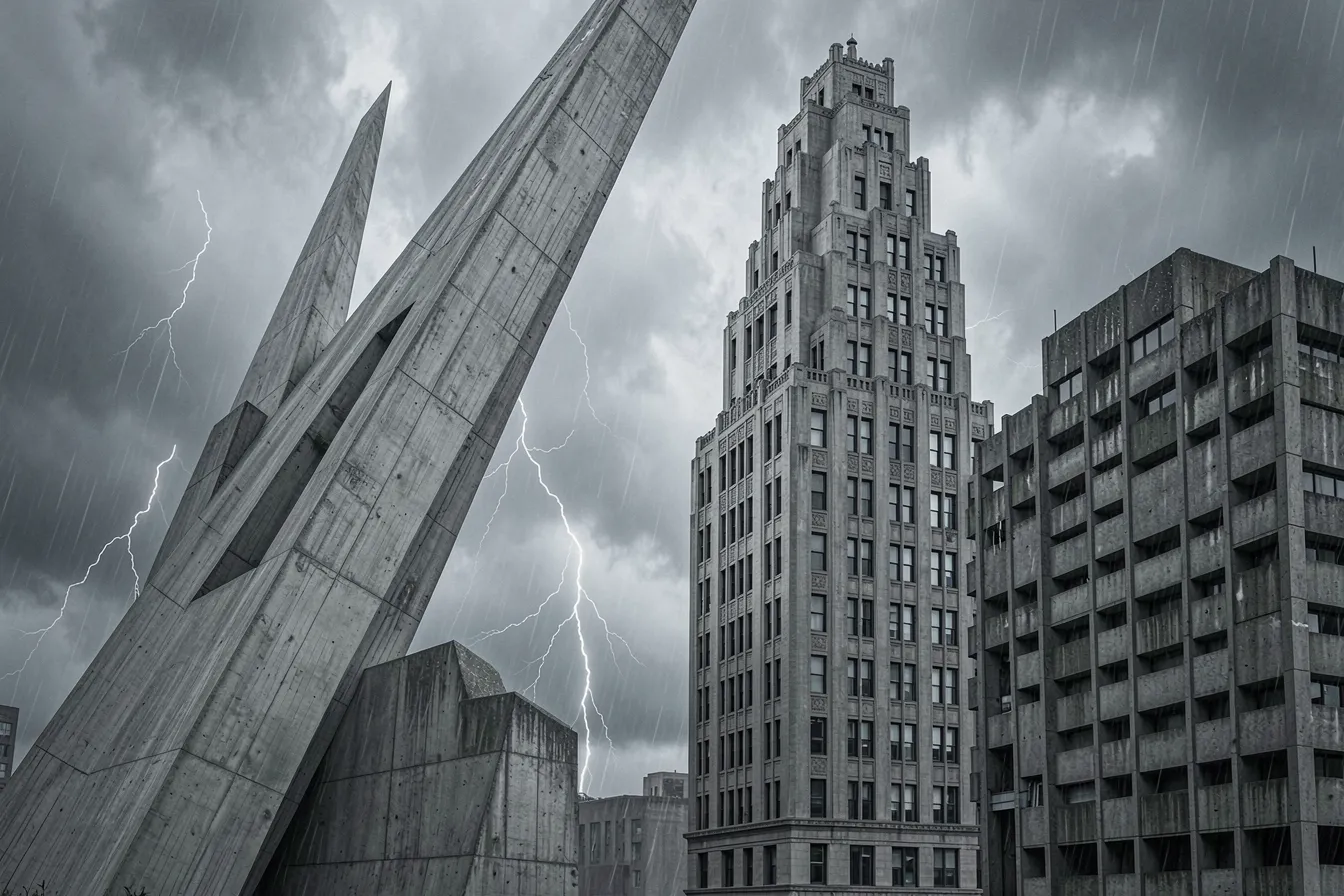
It helps to render Futurism next to its descendants, because the family resemblance is where the style lives now. Put a Sant’Elia power station beside a 1930s Deco skyscraper and the setbacks rhyme, but the Deco tower wears jewelry — spandrels, zigzags, a crown. The Futurist one is stripped. Put it beside 1960s Brutalism and the honesty of concrete matches, but Brutalism sits heavy on the ground while Sant’Elia’s towers strain upward on their diagonal lifts. The AI is good at this comparative work: same prompt skeleton, swap three adjectives, and you can watch one lineage separate from another.
This is where the tool earns its place in a design practice, not just an art one. An architect pitching a transit hub can generate a Futurist-flavored massing study — diagonal circulation made visible, structure worn on the outside — in the time it takes to write the brief. The reference isn’t nostalgia. Sant’Elia’s core move, exposing how a building works instead of hiding it, is exactly what a lot of contemporary infrastructure wants to say.
A century-old sketch, finally in motion
The strongest use I’ve seen isn’t a single glossy render. It’s the sequence: one prompt, the same tower at dawn, noon, dusk, and under a storm, then rotated ninety degrees. Sant’Elia drew maybe a few hundred sheets in his short life. He never saw one of them move through a day. A designer with a diffusion model and a clear eye for what Futurism was actually after — the diagonal, the exposed system, the refusal of ornament — can now do in an evening what he couldn’t do in the years he didn’t get.
The buildings still aren’t real. But the drawings are less alone than they were.
Want to bring a lost architectural style into a room you can actually see? Try building your own Futurist study at ai-art-designer.com.
Images: AI-Designed
Dieser Beitrag ist auch verfügbar auf:
 English