
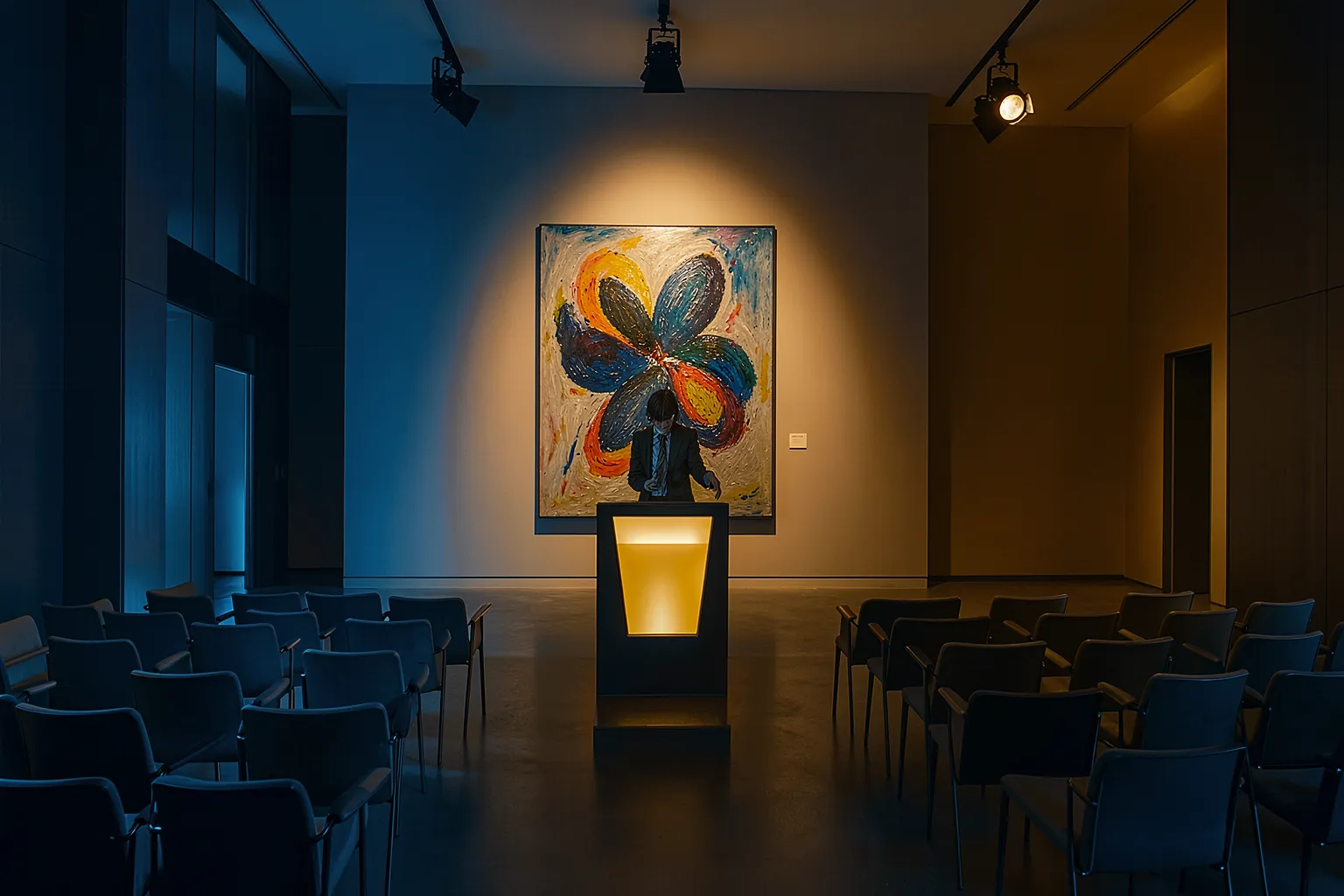
At Christie’s Art + Tech Summit this year, one question sat heavier than the rest. The fortunes now pouring out of AI companies — founders, early engineers, the funds behind them — are enormous and young. Will any of that money end up on gallery walls? Bonnie Brennan and Michael Anders traded arguments about it on stage, and the honest answer they landed on was: nobody knows yet. That uncertainty tells you a lot about where the art market stands in 2026.
The market has a buyer problem, not a supply problem
Top-end sales have been thin for two seasons. The old collector base is aging out. Estates come to auction, but fewer new names step up to replace the ones leaving. Dealers talk about it constantly, usually in private. So when a fresh pool of wealth appears — and AI has minted a striking amount of it fast — the trade starts doing math. A handful of nine-figure buyers can hold up a whole evening sale.
Here’s the catch. New money has always been slow to the walls. The tech wealth of the 2010s took a decade to show up seriously at auction, and a lot of it never did. People who build things tend to spend on other things first: property, boats, their own companies again. Art is a late acquisition, bought once someone decides they want to be seen a certain way. You don’t rush that.
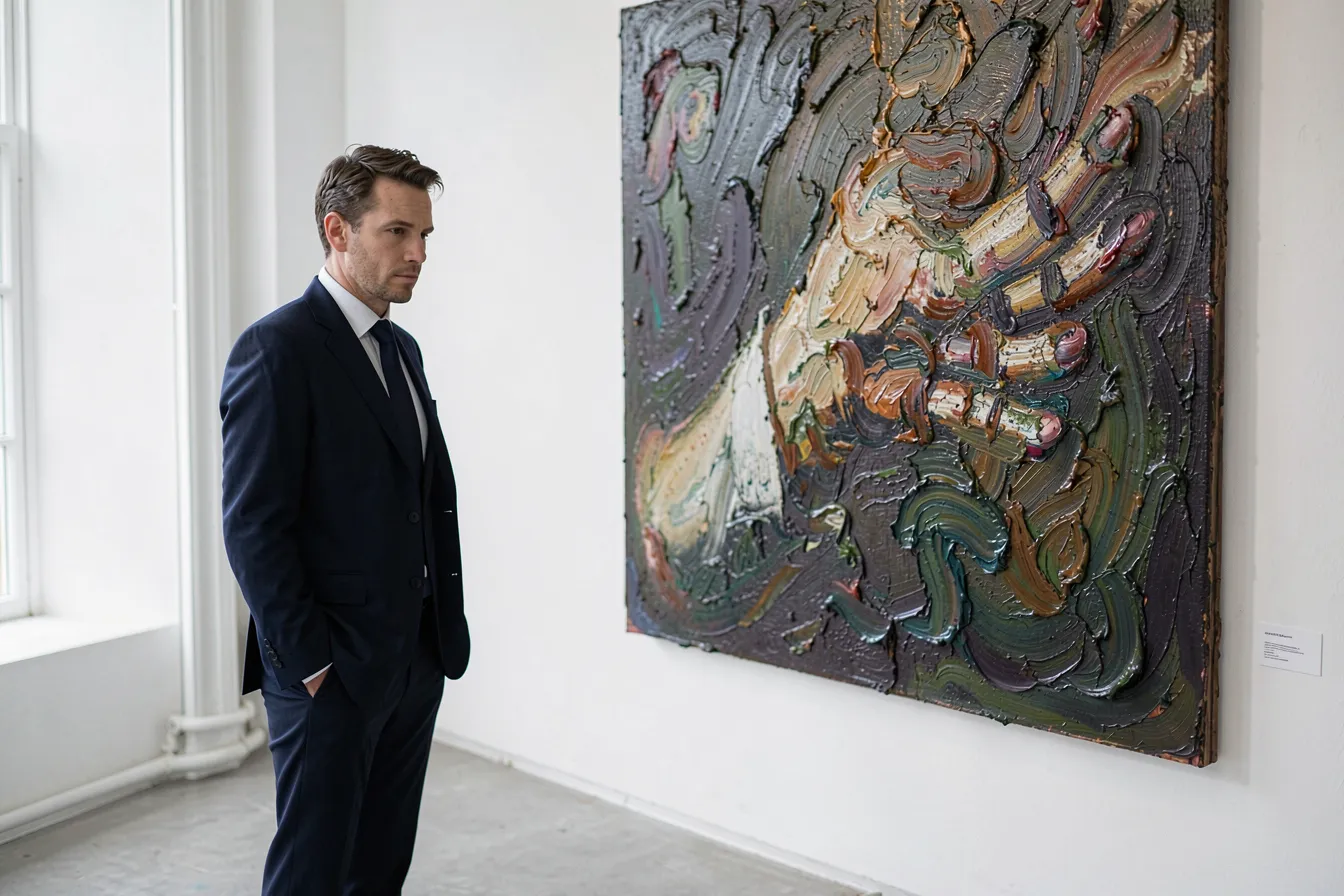
Would AI money buy AI art?
This is where the summit conversation got interesting, because the assumption in the room was almost the opposite of what you’d guess. You might think someone who made a fortune in generative models would want a wall full of generative art. Several dealers I’ve read and spoken to think the reverse is more likely. The people closest to how the sausage gets made are often the least impressed by it. They know how cheap the output is to produce, how little friction stands between a prompt and a finished image. Scarcity is the whole game in art, and infinite reproducibility is scarcity’s enemy.
So the plausible pattern is a flight to the hand-made. AI wealth, if it collects at all, may chase exactly what the machine can’t fake: a Cy Twombly scrawl, a heavy oil surface, something with a body behind it and a paper trail of one owner. Christie’s own all-AI auction last year, the one that drew a wall of backlash from working artists, sold — but it didn’t mint a new class of AI-art whales. It mostly proved there’s a thin, curious market and a loud, angry chorus around it.
What the trade is actually doing
Quietly, the smart galleries aren’t betting the season on tech billionaires walking in. They’re using AI on the back end and keeping the front of house human. Object labels drafted by a model and cleaned up by a curator. Provenance research that used to eat weeks now sped along by pattern-matching against sales archives. Condition reports, catalog copy, translation for international buyers — all getting a machine assist that the client never sees.
That split matters. The part of the business facing the collector stays warm, personal, slow. The part facing the spreadsheet gets faster and cheaper. It’s a sensible division, and it’s the opposite of the headline fantasy where a robot picks the art and a robot buys it.

The debate under the debate
Strip away the money talk and there’s a real anxiety here about taste. If a new generation of buyers arrives shaped by feeds, by endless generated imagery, by the aesthetics of the model rather than the museum — does the definition of good art drift? Some curators fear a flattening, a house style trained into a million images bleeding back into what people want to hang. Others think the opposite: that once you’ve seen ten thousand slick AI landscapes, the crooked, difficult, obviously human canvas becomes the thing you crave.
I lean toward the second. Saturation breeds hunger for the rare. The more the world fills with frictionless images, the more a mark made by a hand starts to look like a luxury — because it is one. AI didn’t invent that dynamic. It just cranked the volume.
What to watch next
Three signals will tell you which way this goes. First, whether any named AI fortune actually buys at a marquee evening sale and lets it be known — that’s the moment the trade is waiting for. Second, whether the AI-art category builds a second act after the Christie’s experiment, or stays a novelty lot. Third, whether the museums opening AI-focused shows in 2026 draw real collectors or just press. None of those has resolved. The summit asked the question out loud and left it open, which was the honest thing to do.
For now the art market is doing what it always does when the ground shifts: watching, hedging, keeping the champagne cold. The AI money is real. Whether it wants what’s on the walls is the open question of the season.
Curious how AI actually fits into art and design without the hype? Explore more at ai-art-designer.com.
Images: AI-Designed
Dieser Beitrag ist auch verfügbar auf:
 English