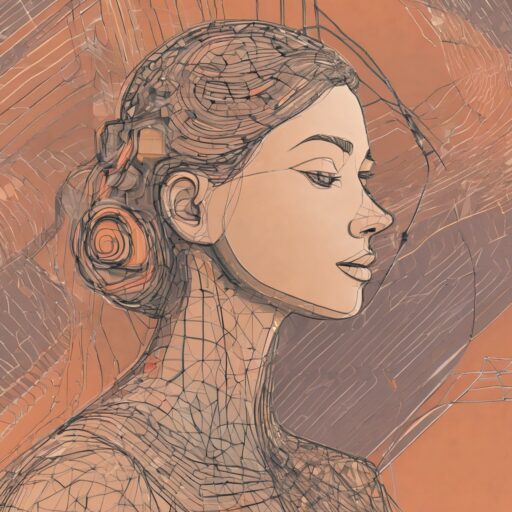
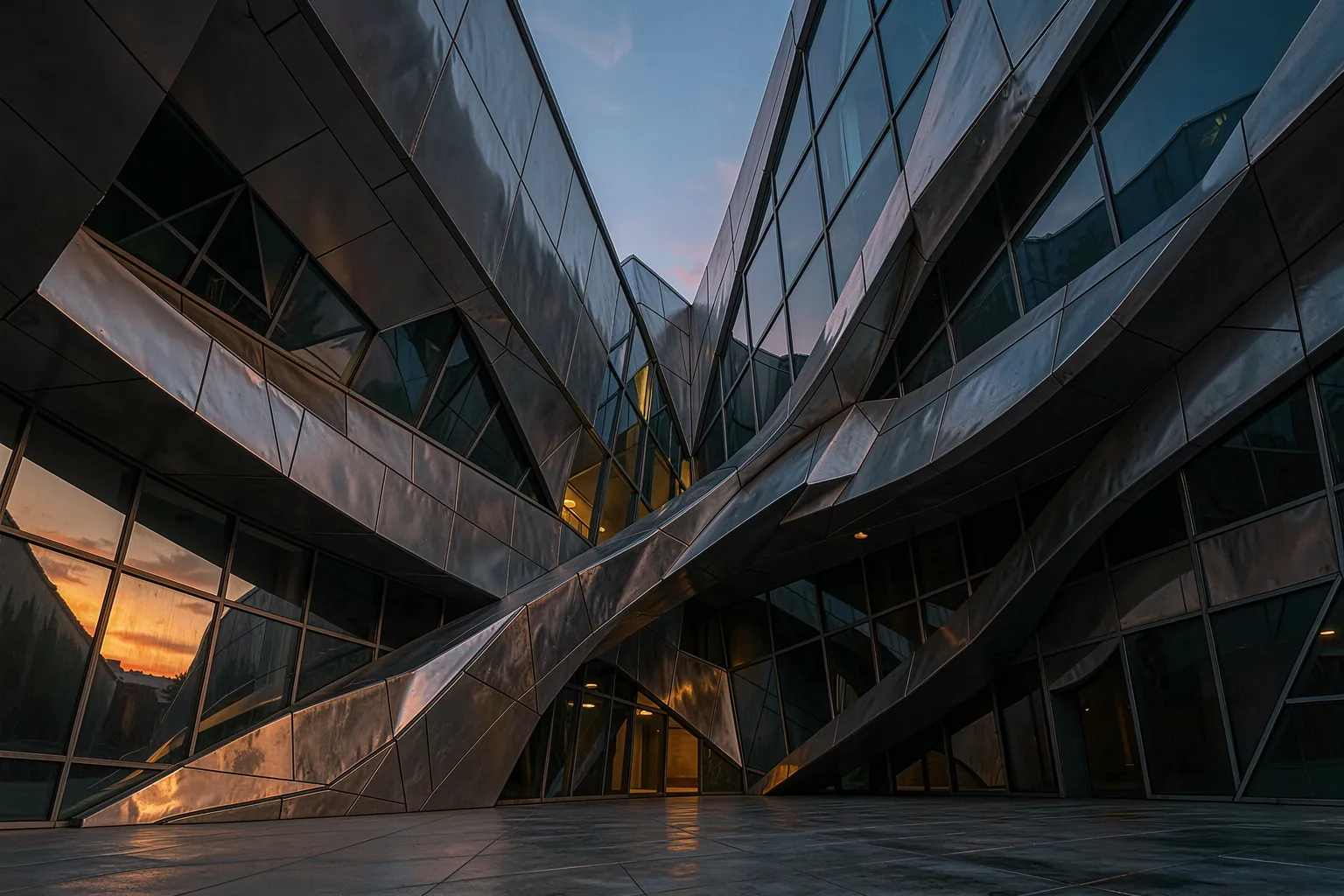
Deconstructivism broke the rules on purpose. Architects like Frank Gehry, Zaha Hadid, and Daniel Libeskind fractured the box, tilted the walls, and let buildings look mid-explosion. For decades, drawing those forms took heroic effort. Now AI generates fractured, gravity-defying facades in seconds — and it is changing how designers explore the style.
What Deconstructivism actually asks for
The style rejects harmony, symmetry, and the clean grid. It splinters volumes, angles surfaces against each other, and celebrates controlled chaos. A Hadid museum curves like poured liquid. A Libeskind wing slices through the ground at violent angles. These forms resist the ruler and the right angle.
That resistance made the style slow to draw. Every jagged plane demanded custom geometry. Designers spent weeks modeling a single fractured shell. AI removes much of that friction. It sketches a hundred impossible facades before lunch.
Why generative models love fractured forms
Diffusion models thrive on ambiguity, and Deconstructivism feeds them exactly that. Ask for a “shattered titanium cultural center, colliding planes, no straight lines,” and the model obliges instantly. It borrows Gehry’s crumpled metal, Hadid’s swooping ribbons, and Libeskind’s sharp voids, then blends them into something new.
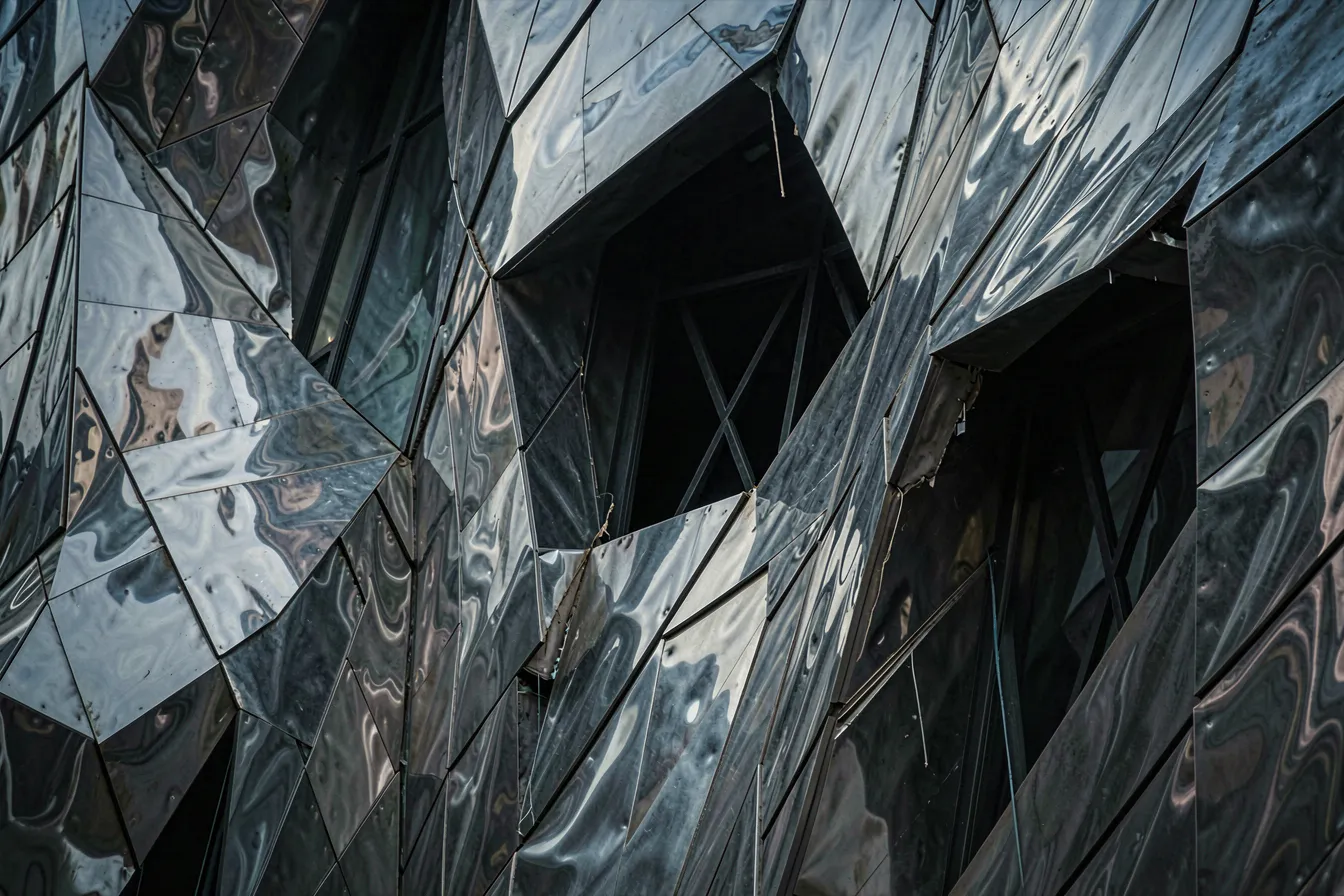
The randomness helps here. Where classical styles punish a model’s small mistakes, Deconstructivism absorbs them. A stray angle reads as intent. A warped surface looks deliberate. The style’s own logic forgives the machine’s happy accidents, so designers keep the surprises instead of fixing them.
From wild image to buildable form
A striking render is not a building. That gap matters. Deconstructivist landmarks still obey physics, budgets, and structural engineers. Gehry’s team famously adapted aerospace software to make his sketches stand up. AI images skip that reality entirely.
So smart studios treat the output as provocation, not blueprint. They mine AI renders for a gesture, a silhouette, a collision of planes. Then they rebuild that spark in parametric tools like Rhino and Grasshopper, where geometry meets gravity. The machine sparks the idea; the engineer earns the standing structure.
A faster path through the design space
The real gain is speed of exploration. A designer can test fifty moods before committing to one. Should the facade shatter like glass or fold like paper? Should the voids feel violent or playful? AI answers each question in a single afternoon.
- Mood-finding: generate dozens of facade languages, then pick the one with the strongest tension.
- Client dialogue: show three bold directions instead of describing them in words.
- Detail seeding: harvest textures, joints, and material clashes for later modeling.

The risk of style without meaning
Deconstructivism always carried a philosophy. Its architects fractured form to question order, authority, and the tidy modern grid. The fractures meant something. AI, left alone, copies the look and drops the argument. It makes chaos decorative.
That hollowing worries critics, and they have a point. A jagged facade with no idea behind it is just noise in titanium. The best designers push back. They pair the machine’s speed with a reason to fracture — a site, a story, a tension worth expressing.
A new sketchbook for a rebellious style
Deconstructivism was born to resist convention. Ironically, the most convention-breaking tool of our decade suits it perfectly. AI hands designers a bottomless sketchbook of impossible buildings, then dares them to make one real. The style’s founders bent steel by hand. Their successors bend latent space — and the collision of the two looks thrilling.
Want to see fractured facades and gravity-defying forms rendered in seconds? Explore more AI-driven design experiments at ai-art-designer.de.
Images: AI-Designed
Dieser Beitrag ist auch verfügbar auf:
 English