
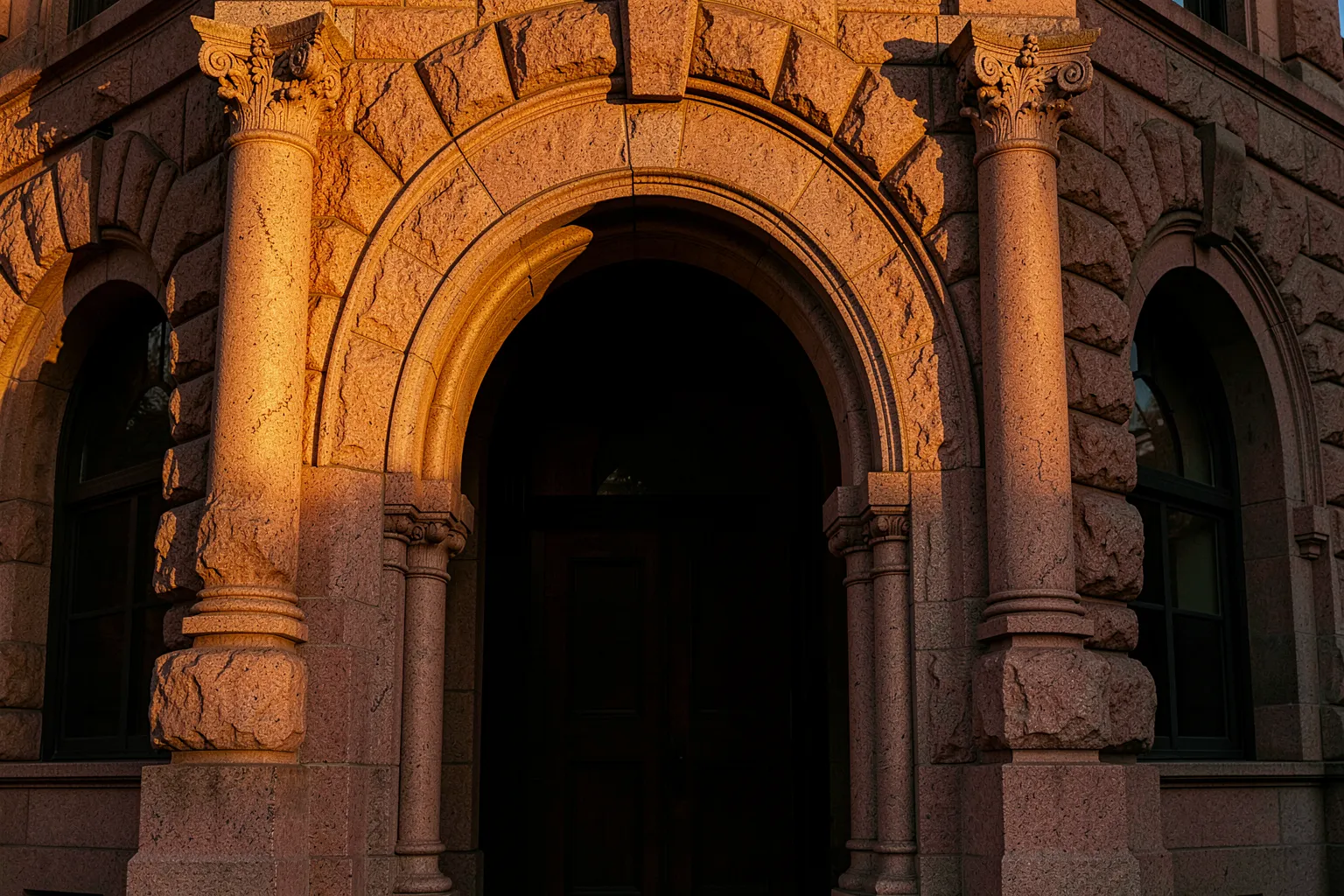
Stand in front of Trinity Church in Boston and the building almost leans on you. The stone is rough, quarried into blocks you could lose a fist in. The arches are fat and low, the color somewhere between dried blood and wet earth. Henry Hobson Richardson built it in the 1870s, and for a brief stretch American cities copied him so hard that his name became a style: Richardsonian Romanesque. Courthouses, libraries, train stations, warehouses — all wearing the same heavy stone brow.
Then it died. By 1900 the fashion had swung to pale classical columns and thin elegance, and Richardson’s dark fortresses looked like relics. Plenty got demolished. The ones that survived are still some of the most physically present buildings in any old downtown. And now AI image tools are pulling the style back out of the archive, which turns out to be a strange test. Romanesque Revival is all about mass, weight, and the way light dies in a deep arch. Those are exactly the things a flat prediction engine struggles to fake.
What Richardson actually did
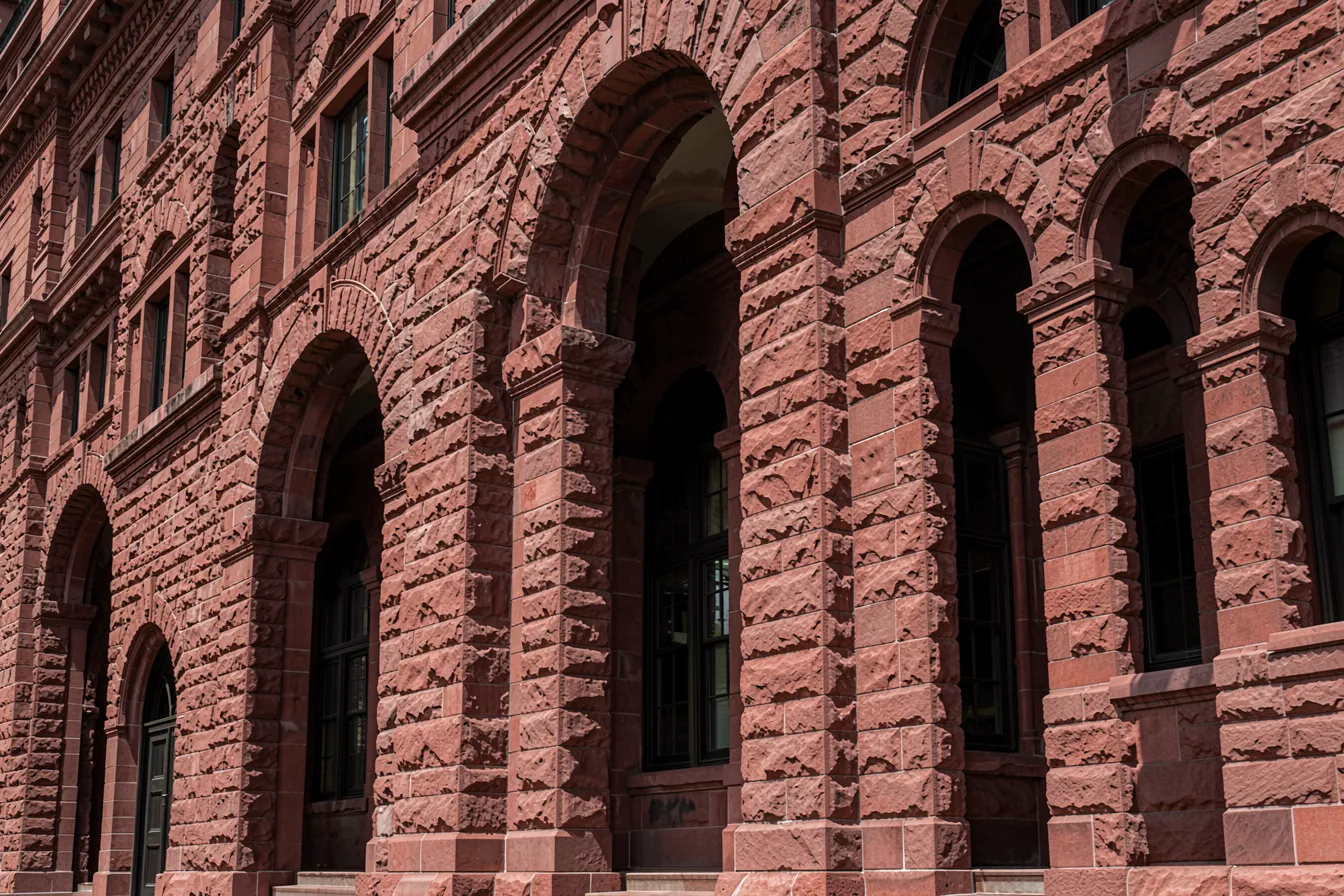
Richardson borrowed from eleventh-century French and Spanish Romanesque churches, but he was not a copyist. He stripped the ornament down and let the masonry do the talking. Rusticated stone with the chisel marks left in. Squat columns with carved foliate capitals. Deep window reveals that throw a band of shadow across the facade. And the signature move: the Syrian arch, a wide semicircular arch springing straight from short, thick columns, usually framing an entrance you have to walk up into.
His best buildings make the logic obvious. Trinity Church (1877) is a crouched pile of pink granite and brownstone. The Marshall Field Wholesale Store in Chicago (1887, demolished 1930) was seven stories of nearly unbroken arcaded stone — Louis Sullivan called it a man among boys. The Allegheny County Courthouse in Pittsburgh still works as a courthouse, its tower and “Bridge of Sighs” intact. These are not decorated boxes. The weight is the point.
Why the style breaks ordinary AI prompts
Type “Romanesque Revival building” into a stock image model and you tend to get mush. The model knows the word reads as “old, stone, arched,” so it gives you a generic castle-church hybrid with symmetrical arches and clean, cartoonish rustication. The rough-quarried texture goes smooth. The arches float on columns that are too slender, because the training data is swimming in Gothic cathedrals and Beaux-Arts facades, and those are thinner, taller, lighter. The model averages toward what it has seen most. Richardson is a minority report.
The failures are specific and worth naming. Arches come out pointed instead of round — that is Gothic contamination. Stonework turns into a repeating tile with no variation in block size, which no real quarry ever produced. Shadows in the deep reveals go gray and even, when the whole drama of the style depends on a reveal that reads almost black against a lit face. Get those three wrong and you have a vaguely medieval building, not a Richardsonian one.
Prompting for weight
The fix is to stop naming the style and start describing the physics. I have had far better luck writing prompts around materials and light than around labels. Instead of “Richardsonian Romanesque library,” try “low wide semicircular stone arch, rough rusticated pink granite, chisel marks visible, short thick columns, deep window reveals in heavy shadow, late afternoon raking light.” You are feeding the model the ingredients, not the recipe name it will misremember.
A few things that consistently help:
- Name the stone. “Pink Milford granite” or “red sandstone, rusticated” pushes the texture rougher than a bare “stone” ever will.
- Force the arch geometry. “Semicircular round arch, not pointed” heads off the Gothic drift before it starts.
- Light from the side. Raking, low-angle light is what carves the reveals and makes the mass read. Flat front light flattens everything into a postcard.
- Short, heavy proportions. Ask for “squat,” “massive,” “low-slung.” Left alone, the model stretches buildings tall.
Negative prompts earn their keep here too. Push out “pointed arch, flying buttress, thin columns, smooth polished marble, symmetrical Gothic cathedral” and you cut off most of the wrong turns in one line.
Where it gets genuinely useful
This is more than a party trick. A lot of Richardsonian buildings are gone — the Marshall Field store, the Cincinnati Chamber of Commerce, dozens of courthouses and depots flattened in the mid-century rush to modernize. The surviving photographs are black-and-white, often a single angle. Feed one of those into an image-to-image tool and you can start rebuilding the thing in color, testing how the sandstone would have warmed at sunset, how the arcade would have cast its rhythm of shadows down a city block. It is informed speculation, not restoration, and anyone using it should say so. But it beats staring at one grainy plate and imagining.
It also works as a design sandbox. Architects reviving heavy masonry for new civic buildings — and a handful are, as a reaction against glass-box sameness — can use AI to sketch how a Syrian arch sits next to a modern glazed wing before anyone draws a real plan. The style’s whole appeal is that it feels permanent and grounded. That is a hard quality to convey in a thin line drawing and a much easier one to feel in a rendered image.
The texture problem is the whole problem
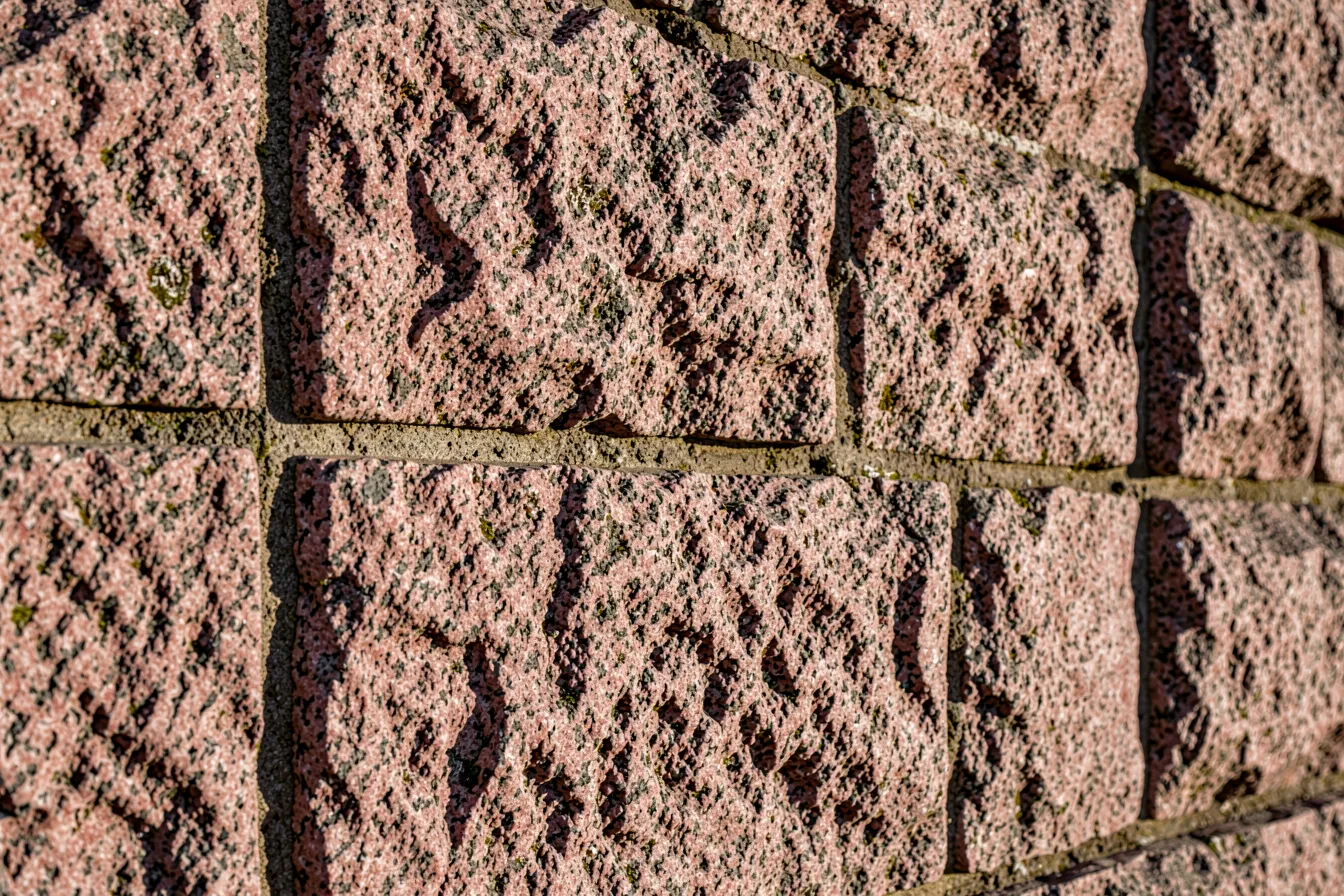
Here is the honest limit. Current models are good at the silhouette of a Romanesque building and bad at its surface. Real rusticated stone has a maddening irregularity — every block faced by hand, every joint slightly off, moss and water stains collecting in the recesses after a century. AI gives you a clean, almost 3D-printed version of that roughness, convincing from across the street and fake up close. The grammar of the arches it can nail. The lived-in grain of the stone, not yet.
Which is a fair reflection of what the style was about in the first place. Richardson made buildings you were meant to touch, to feel the chisel marks under your hand. A system that predicts pixels can show you the shape of that intention. It cannot quite show you the weight. For now, the best AI Romanesque is a strong sketch — enough to bring a demolished warehouse back as a plausible ghost, not enough to fool a mason.
Want to test how a heavy-stone style renders under your own prompts? Try building a few arches, textures, and lighting setups with the tools at ai-art-designer.com and see where the weight holds up — and where it goes thin.
Images: AI-Designed
Dieser Beitrag ist auch verfügbar auf:
 English