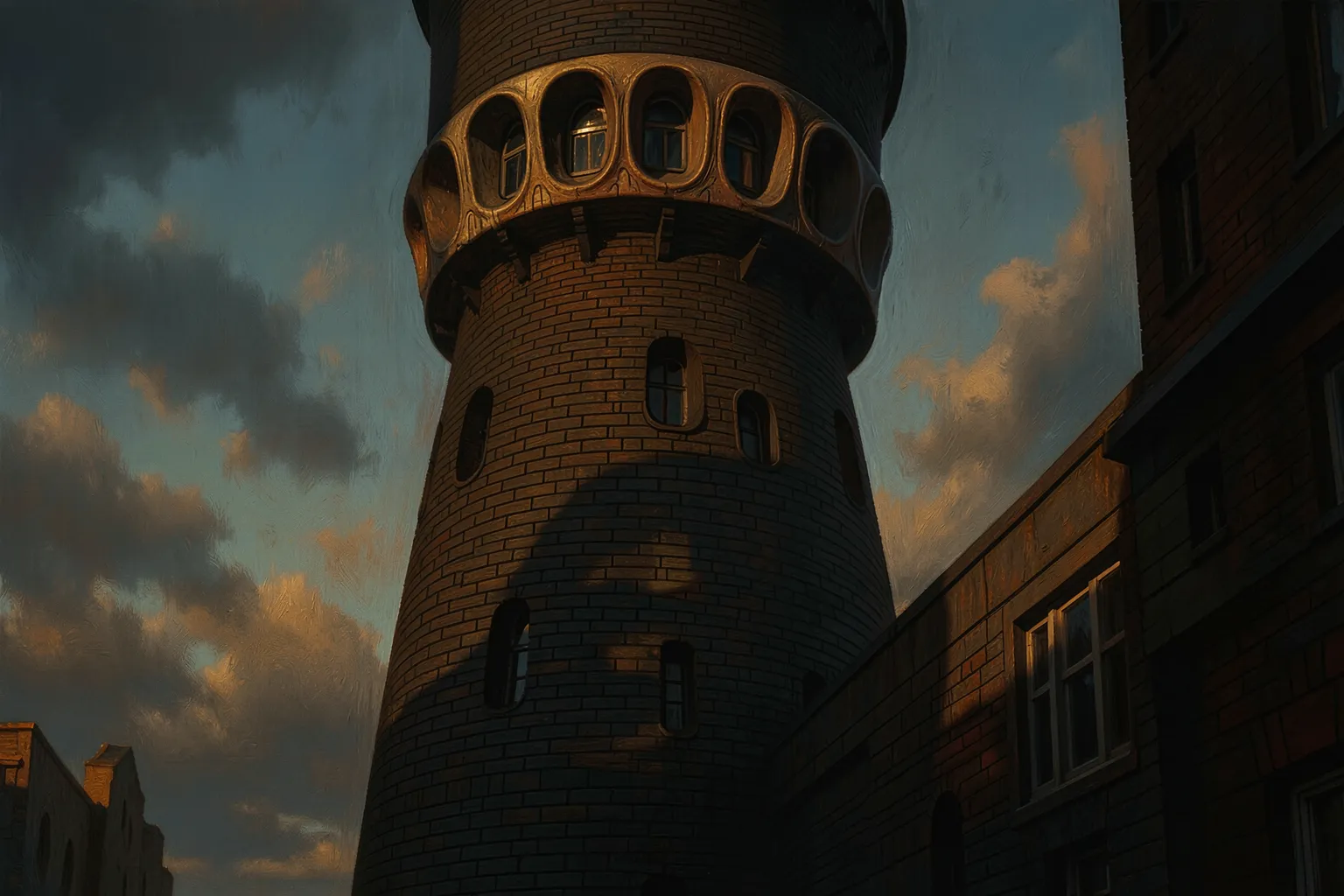
Walk up to the Chilehaus in Hamburg and the building seems to move. Fritz Höger finished it in 1924, and its eastern corner cuts through the block like the prow of a ship, ten stories of dark clinker brick angling toward you. Nobody built it to be efficient. They built it to make you feel something. That impulse — architecture as raw emotion pressed into brick and concrete — is what German Expressionism gave the world in the decade after the First World War, and it is exactly the kind of thing generative AI struggles with and, increasingly, gets right.
Expressionism never became a comfortable style. It had no rulebook the way Bauhaus did, no grid like De Stijl. Architects like Erich Mendelsohn, Hans Poelzig, and Bruno Taut chased feeling over function, and their best work looks less designed than grown. That messiness is the interesting test for a machine trained on millions of tidy building photos. Can a model that loves symmetry learn to make something deliberately strange?
What the style actually was
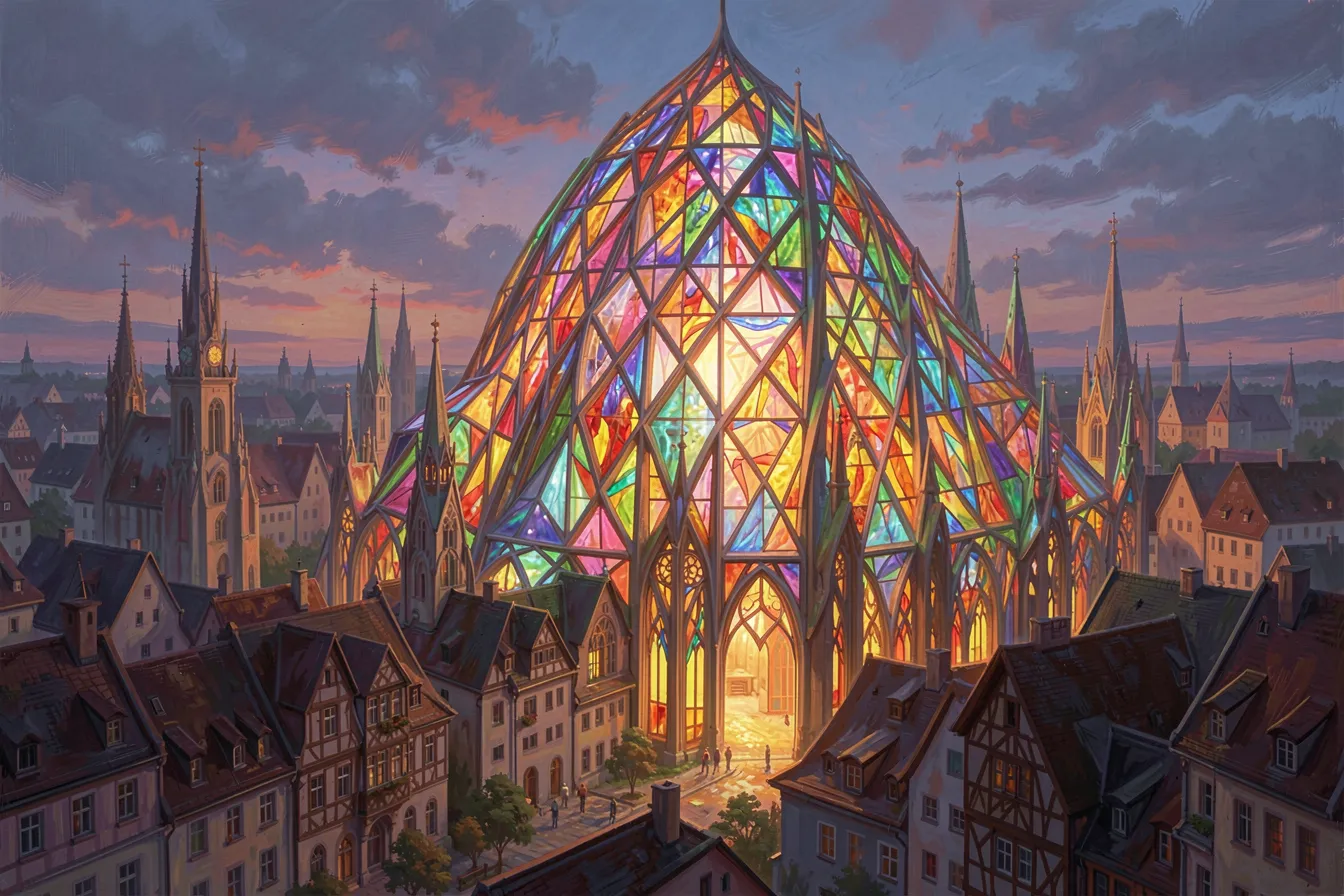
Forget the vague label. Expressionist architecture had specific obsessions. Curves that refuse to sit still. Brick laid in jagged, sawtooth patterns to catch shadow. Towers that taper and lean. A fascination with glass as something spiritual rather than practical — Taut wanted whole “city crowns” of colored glass glowing over German towns.
Mendelsohn’s Einstein Tower in Potsdam, built between 1919 and 1921, is the clearest single example. It was meant to be poured concrete, one continuous flowing form with rounded window hoods that look half-melted. The construction was a nightmare; they ended up building much of it in brick and rendering over the top to fake the seamless concrete look. The result still reads as a single gesture, a small observatory that looks like it is exhaling. It is one of the most photographed early modern buildings in Germany, and it is the sort of shape a diffusion model finds genuinely hard.
Why AI trips over it
Most image models have seen a mountain of glass boxes, neoclassical columns, and suburban houses. They have seen comparatively little Expressionism, and what exists is often black-and-white, shot at odd angles, or half-ruined. So the raw material is thin. Ask a base model for “Expressionist building” and you frequently get a generic dramatic skyscraper, or something that borrows German Expressionist film instead — the warped sets of The Cabinet of Dr. Caligari, all painted shadows and tilted walls. That is a different art form, though the two grew from the same nervous postwar mood.
The deeper problem is that the style breaks the rules the model has quietly absorbed. Straight verticals, repeated windows, bilateral symmetry — these are the statistical comfort zones. Expressionism wants the opposite. Get the prompt wrong and you get a normal office block with a slightly weird roof. The emotion drains out and you are left with a costume.
How to actually get it right
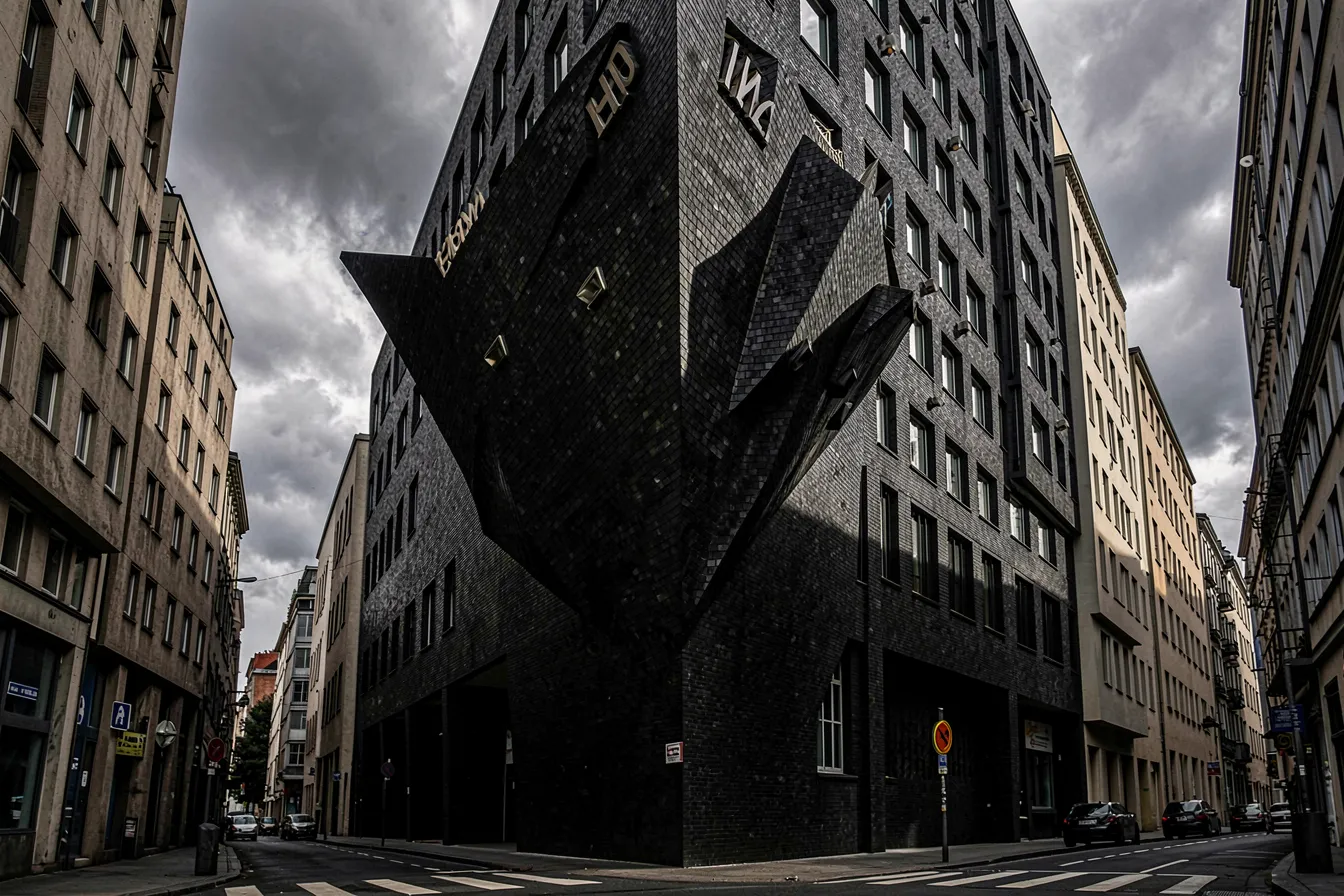
The fix is specificity, and it is worth spelling out because the same trick works across historical styles. Name the materials: “dark clinker brick,” “sawtooth brickwork,” “board-marked concrete.” Name the forms: “tapering tower,” “rounded window hoods,” “faceted prow-shaped corner.” Anchor it to a real reference the model has seen — mentioning Mendelsohn or the Einstein Tower pulls the output toward the right cluster far more reliably than the word “Expressionist” alone.
Then fight the symmetry directly. Add “asymmetrical composition,” “off-center,” “dynamic diagonal.” Push the light hard, because this style lives on shadow — “low winter sun, long raking shadows across textured brick” does more work than any adjective about mood. A control tool that fixes edges from a rough sketch helps enormously here; you draw the leaning tower yourself and let the model handle brick and light. Left to its own devices it will straighten your tower back up within a few steps.
Where it goes from decoration to design
The obvious use is mood boards and concept art — a fast way to test “what if this cultural center leaned into brick Expressionism” before anyone opens CAD. That alone saves designers days. But a few practices are pushing further, feeding AI-generated massing studies into real early-stage design, using the machine to break their own habits. An architect who defaults to clean rectangles can ask a model for twenty Expressionist variations of the same brief and steal one good move — a corner, a roofline, a way of turning glass into something warmer.
There is a caution here worth stating plainly. Expressionism was a response to a specific crisis: a defeated country, hyperinflation, a generation looking for meaning after the trenches. Bruno Taut’s glass utopias were half politics. Strip that away and you get shapes without reasons, which is a fair charge against a lot of AI architecture right now. The forms come easily; the conviction does not. A jagged brick tower generated in four seconds carries none of the weight Höger poured into every course of the Chilehaus.
Still, the style and the tool suit each other in one honest way. Both are about pushing past the sensible. Expressionist architects rejected the idea that a building should merely be useful, and a good AI session is at its best when you stop asking for the expected answer and start asking for the strange one. Point the machine at Potsdam and Hamburg rather than at another glass tower, and it will surprise you.
A style worth reviving
Real Expressionist buildings are rare — the movement burned bright for barely fifteen years, and much of what got built was destroyed or never funded. That scarcity is precisely why generative tools matter here. They let you see the unbuilt: the projects Mendelsohn sketched and abandoned, the glass cathedrals Taut only drew, a version of your own city where the town hall curves and glows instead of squatting in a grid. It is speculative history you can render in an afternoon.
Want to try turning a plain brick façade into something that leans, tapers, and catches the light? Bring a reference and a clear idea of the emotion you want, and experiment with the tools at ai-art-designer.com — the strangeness is the point.
Images: AI-Designed
Dieser Beitrag ist auch verfügbar auf:
 English