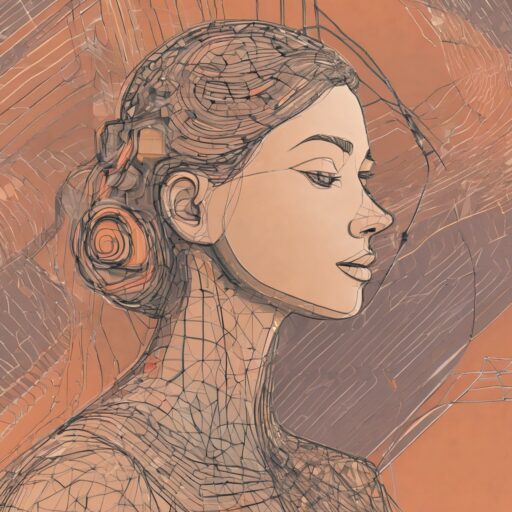
For decades, Brutalism was architecture’s most divisive dialect — a language of raw concrete, heavy geometry, and unapologetic mass. Loved by a devoted few and loathed by many, it fell out of fashion as glass towers and soft minimalism took over the skyline. But something strange is happening in 2026: Brutalism is back, and this time it is being rewritten by artificial intelligence. Across mood boards, design studios, and generative art platforms, “neo-Brutalism” has become one of the most requested aesthetics — and AI is the tool giving it a second life.
Why Brutalism Speaks to the AI Era
There is a poetic logic to the pairing. Brutalism was born from honesty: concrete that showed its formwork, structures that revealed their purpose, buildings that refused to pretend they were anything other than what they were. Generative AI, for all its magic, shares that appetite for structure. When you ask a model to imagine a Brutalist form, it leans into repetition, modularity, and bold volumetric contrast — exactly the traits that make the style so photogenic.
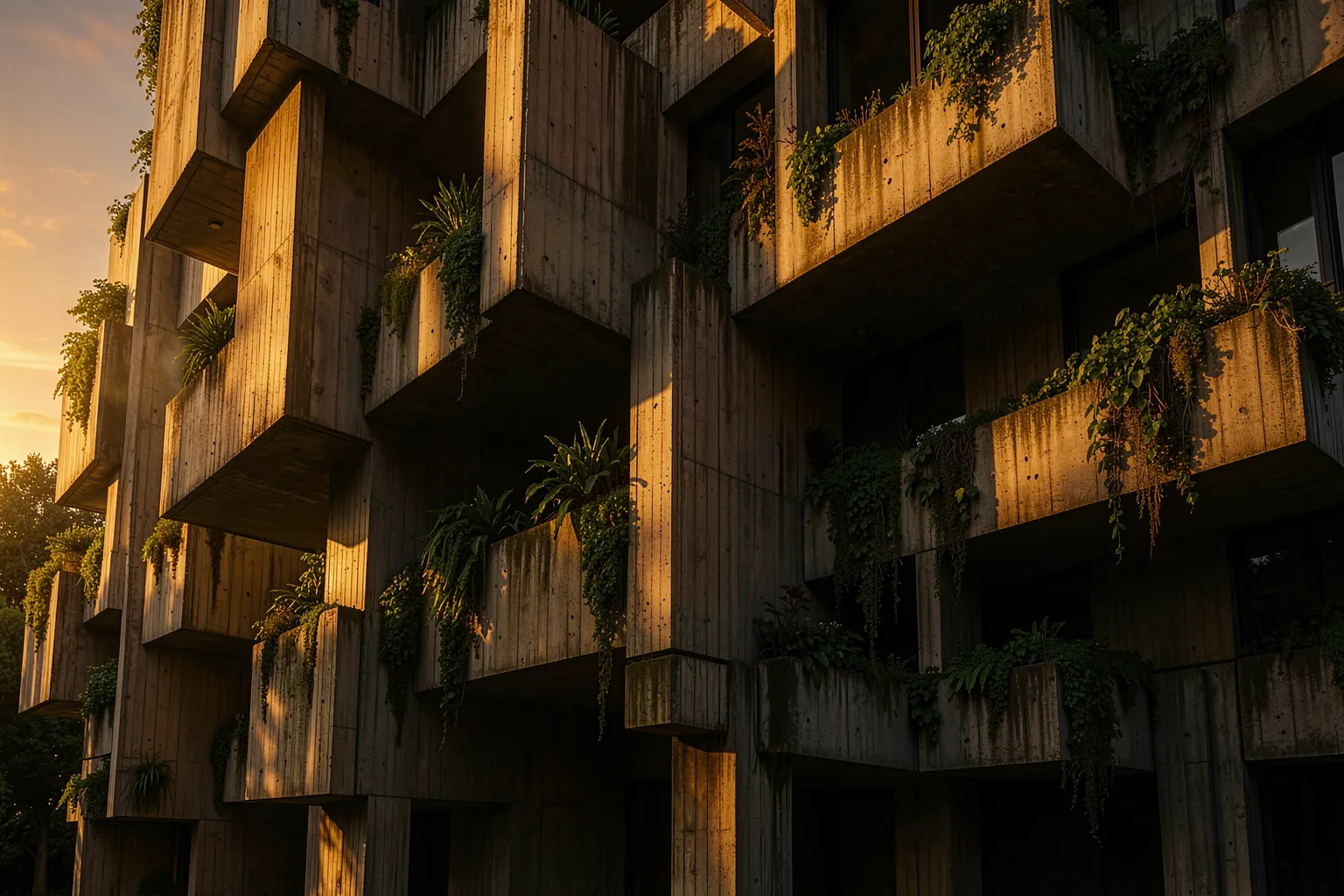
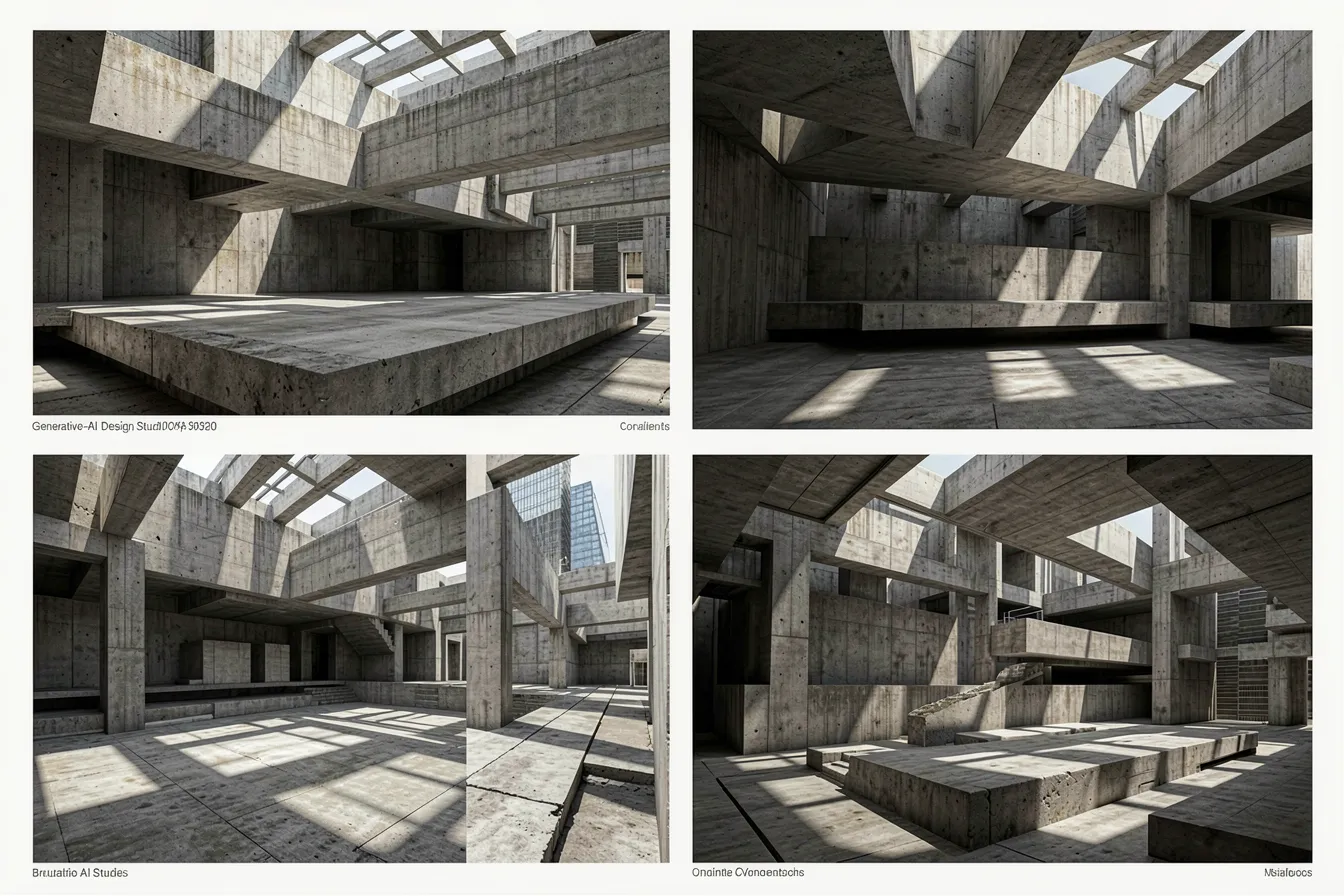
The result is a flood of images that feel both nostalgic and futuristic: monolithic housing blocks softened by hanging gardens, concrete cathedrals lit by impossible skylights, civic plazas that look like they were carved from a single stone. These are not blueprints. They are provocations — visual essays about what Brutalism could have been if warmth and technology had arrived sooner.
From Cold Concrete to Living Texture
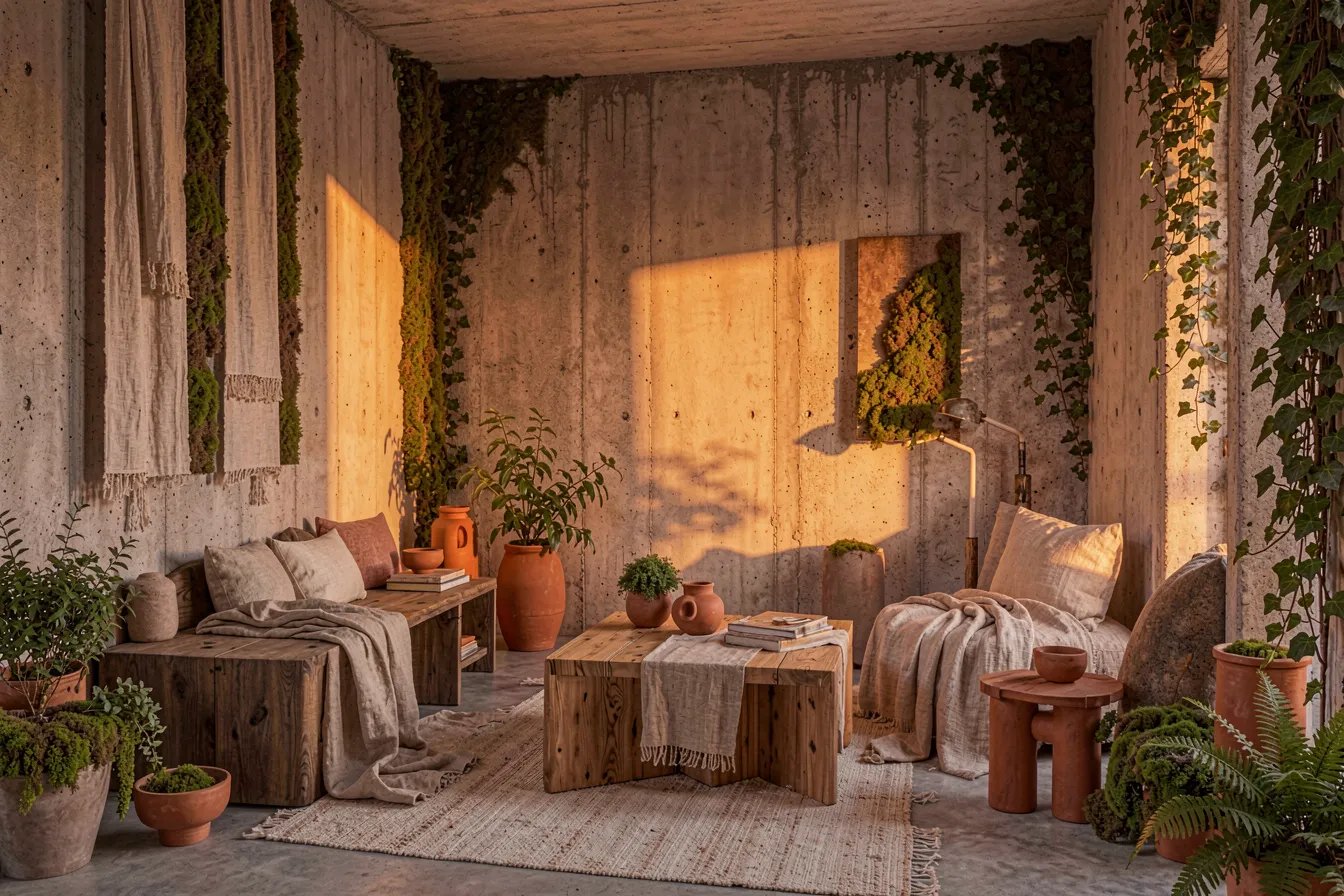
The most interesting shift is emotional. Classic Brutalism was often accused of being inhuman — grey, cold, and hostile. AI-generated reinterpretations tend to do the opposite. Designers are prompting for concrete that glows at golden hour, for raw surfaces draped in moss and ivy, for brutalist interiors flooded with warm wood, textiles, and diffuse light. The heaviness stays; the hostility disappears.
This “soft Brutalism” is quickly bleeding into real practice. Interior designers use AI renders to pitch clients on exposed concrete accent walls balanced by linen and terracotta. Product designers borrow the chunky, sculptural silhouettes for furniture. Even branding studios have adopted a flat, high-contrast “Brutalist web” look, all thick borders and stark typography. The aesthetic that once symbolized austerity now signals confidence and craft.
How Artists Are Actually Working
The workflow behind these images is more thoughtful than a single lucky prompt. Practitioners who take Brutalism seriously tend to build their results in layers:
- Anchor the material: Start with precise language — “board-formed concrete”, “béton brut”, “monolithic mass” — so the model commits to the core texture.
- Introduce contrast: Add a single warming element (afternoon sun, greenery, warm interior light) to escape the cold cliché.
- Control the geometry: Specify cantilevers, repeated modules, or a heavy horizontal emphasis to keep it architecturally coherent.
- Refine, don’t restart: Use image-to-image editing to nudge proportions and lighting rather than rerolling from scratch.
Treated this way, AI becomes less of a slot machine and more of a sketching partner — one fluent in a style that few human illustrators can render quickly.
A Style Worth Reconsidering
Not everyone is convinced. Critics argue that endlessly generating beautiful Brutalist fantasies risks turning a serious architectural movement into aesthetic wallpaper — all surface, no substance. It is a fair concern. Brutalism was political; it was about affordable public housing, civic ambition, and social ideals. Reducing it to a texture pack would be a loss.
But used well, AI does the opposite. It invites a whole new generation to look again at buildings they were taught to dismiss, to ask why these forms move us, and to imagine how their honesty might be carried into warmer, greener, more human spaces. The best AI Brutalism is not a filter — it is an argument.
Design the Next Concrete Dream
Whether you are an architect testing bold forms, an interior designer selling a client on raw texture, or simply someone who finds beauty in mass and shadow, generative AI has made the whole vocabulary of Brutalism instantly explorable. The barrier to imagining is gone; what remains is taste.
Want to experiment with Brutalism — or any style reimagined by AI? Explore more design ideas, style deep-dives, and generative tools at ai-art-designer.de and start shaping your own concrete dreams.